 Largo Siding
 Why Cedar Gets a Long Look
Cedar siding has a real appeal, and it's not hard to understand why. It's a natural material with visible grain, warm color, and a look that no manufactured product perfectly replicates. Western red cedar and other cedar species contain natural oils that give the wood some built-in resistance to insects and decay compared to other softwoods, and cedar takes stain beautifully. On a mood board or a builder's sample wall, cedar looks like the obvious premium choice.
We're not going to pretend otherwise. Cedar is a legitimate building material with a long track record in drier, more temperate parts of the country. The problem isn't the wood itself — it's what happens to that wood once it's installed on a home in Pinellas County and left to face a Florida climate year-round.
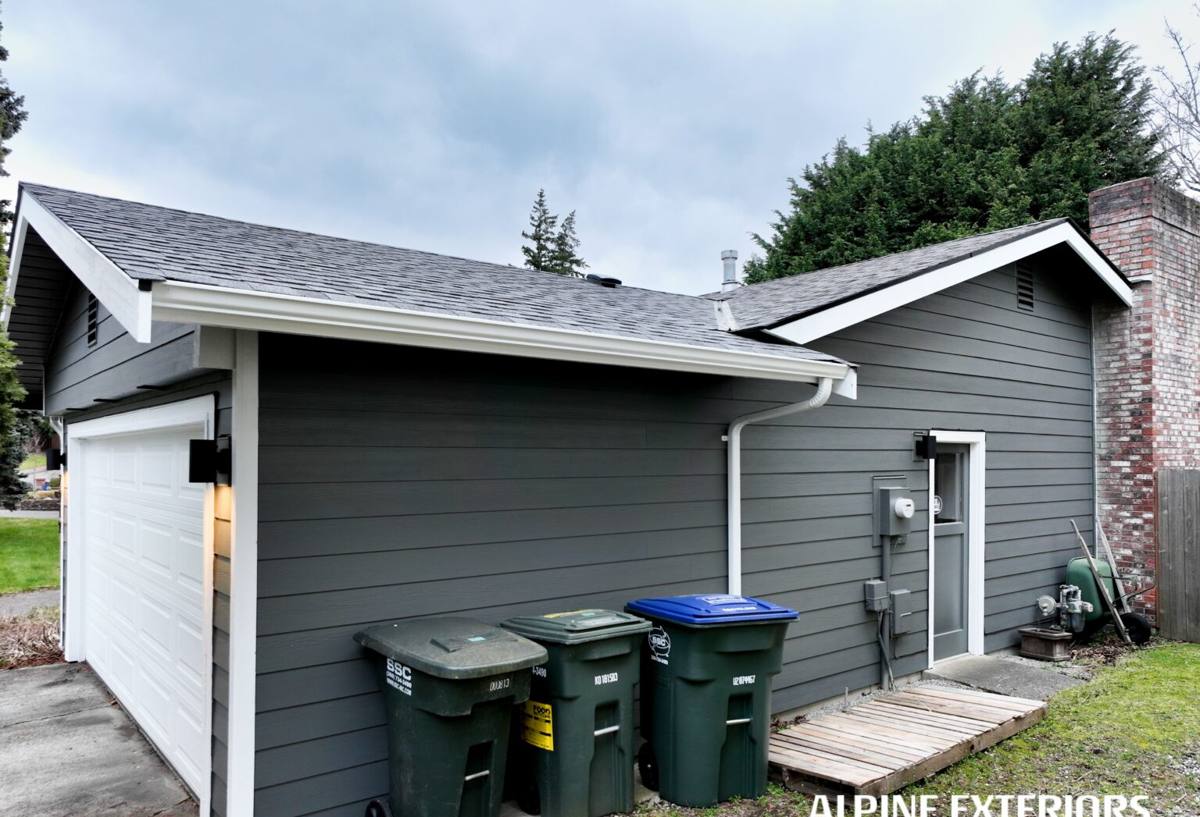
What Florida's Climate Actually Does to Cedar
Largo sits close enough to Tampa Bay and the Gulf that homes here deal with a specific combination of stressors that cedar siding was never really designed to handle all at once:
Humidity and Moisture Cycling
Florida's humidity rarely lets up. Wood siding needs to dry out between wet periods to stay stable, and in this climate that drying window is short. Cedar boards absorb moisture from humid air, rain, and wind-driven rain, then shrink again as they dry. That constant swelling and shrinking stresses the wood fibers, opens up joints and fastener holes, and eventually leads to cupping, cracking, and splitting.
Intense, Year-Round UV
Florida sun is stronger and more consistent than in most of the country. UV breaks down the lignin that holds wood fibers together, which is why unmaintained cedar turns gray and starts to feel fuzzy or fibrous to the touch. Stains and clear finishes that might last five or more years in a milder climate often need reapplication every two to three years here just to keep UV degradation in check.
Wind-Driven Rain and Hurricane Exposure
Pinellas County homes are built to withstand real storm seasons, and wind-driven rain during a tropical system doesn't behave like a normal rainstorm — it gets forced sideways and upward into laps, seams, and fastener penetrations that were designed for water running straight down. Cedar's tendency to swell and shift makes those joints more vulnerable to water intrusion exactly when storm exposure is highest.
Salt Air
Even well inland from the immediate coastline, salt-laden air moves through the Tampa Bay area and accelerates corrosion of fasteners and hardware. Corroding nails and staples loosen their grip in wood siding over time, which shows up as boards that work loose, squeak, or pull away from the wall.
The Maintenance Schedule Nobody Puts on the Brochure
Cedar siding is not a "finish it once and forget it" product anywhere, and in Florida the maintenance clock runs faster than most homeowners expect when they first fall in love with the look.
| Task | Typical Interval in Florida | What Happens If Skipped |
|---|---|---|
| Re-stain or re-seal | Every 2-4 years | UV breakdown, graying, moisture entry through the wood surface |
| Repaint (if painted finish) | Every 4-7 years | Peeling, cracking, moisture trapped under failing paint film |
| Caulk joints and penetrations inspection | Annually | Water tracking behind boards, hidden rot at seams |
| Fastener inspection | Annually | Loose or corroded fasteners, boards working free in wind |
| Full wash / mildew treatment | 1-2 times per year | Mold and mildew staining, surface breakdown |
| Board replacement (rot, insect damage) | As needed, ongoing | Spreading rot into sheathing and framing |
None of that is a one-time cost. It's a recurring line item for as long as the siding is on the house, and in a coastal Florida climate the intervals tend to land at the aggressive end of what's listed above rather than the conservative end.
Moisture, Rot, and Insect Pressure
Cedar's natural oils give it some resistance to decay and insects compared to untreated pine or spruce, but "some resistance" is not the same as immunity, and that resistance concentrates in the heartwood — the sapwood portions common in siding-grade boards have much less of it. Once a finish starts failing and moisture gets a foothold, cedar is still wood, and Florida gives fungal decay everything it needs to establish itself: warmth, humidity, and repeated wetting.
Subterranean and drywood termites are active throughout Pinellas County, and wood siding in direct or near-direct contact with framing gives them an entry point that fiber cement simply doesn't offer. Carpenter bees are another common complaint we hear about on cedar and other softwood sidings in this region — they bore into the surface to nest, and repairing that damage means patching or replacing individual boards indefinitely.
What This Costs Over the Life of the Siding
The sticker price comparison between cedar and other siding options only tells part of the story. The number that actually matters to a homeowner is total cost over the years the siding is expected to last:
- Upfront material and labor — cedar is typically a premium-priced product before a single coat of finish goes on.
- Recurring refinishing — staining or painting every few years, priced as its own project each time.
- Repair and replacement — individual board swaps for rot, insect damage, or storm damage add up over a couple of decades.
- Labor availability — wood refinishing and repair work requires a specific skill set, and scheduling it around Florida's rainy season narrows the window further.
When homeowners run those numbers out ten or twenty years, cedar's total cost of ownership in this climate usually surprises them. It's not a bad product — it's a product whose maintenance demands are mismatched to the environment it's being asked to perform in here.
Insurance, Wind Rating, and Code Considerations
Florida's building code and insurance underwriting both pay close attention to exterior materials, especially in wind-borne debris regions that include Pinellas County. Wood siding systems can meet code when installed and fastened correctly, but insurers increasingly look at exterior wall covering as part of their overall risk assessment for wind and water intrusion, alongside roof age and opening protection. A non-combustible, engineered siding system with a documented wind rating is generally viewed more favorably than a traditional wood siding installation, and that can matter at renewal time or when a homeowner is shopping for a new policy.
Why We Install James Hardie Instead
We don't install cedar, and it's a fair question to ask why. The honest answer is that after years of doing exterior work on homes across the Tampa Bay area, we got tired of installing a product that we knew was going to send the homeowner back into a maintenance cycle within a couple of years, and that carries real rot and insect exposure in this specific climate.
James Hardie fiber cement siding is engineered specifically for this kind of exposure. It's non-combustible, it doesn't swell and shrink with humidity the way wood does, and Hardie's HZ5 product line is engineered for the hot, humid, storm-exposed climate zone that includes Florida. The ColorPlus factory finish is baked on under controlled conditions and carries its own finish warranty, which means homeowners aren't stuck on a repainting or restaining treadmill every two to three years. It also comes with a strong transferable product warranty when installed to Hardie's specifications — something that matters if the home ever changes hands.
We're not saying cedar has no place anywhere. We're saying that for a home in Largo, dealing with Gulf humidity, intense sun, wind-driven rain, and salt air, we don't think it's the responsible choice, and we'd rather tell a homeowner that upfront than sell them a beautiful product we know will become a burden.
If You Already Have Cedar Siding: A Practical Maintenance Checklist
Plenty of homes in this area still have cedar on them, and replacement isn't always the immediate answer. If that's your situation, here's what actually matters for keeping it in decent shape:
- Walk the exterior at least twice a year and check for cracked, cupped, or splitting boards, especially on south- and west-facing walls that take the most UV.
- Reapply stain or sealant before the finish fully fails — waiting until the wood looks gray means moisture has already been getting in.
- Check and refresh caulking around windows, doors, and any penetrations every year.
- Keep sprinklers and irrigation from spraying directly onto siding.
- Trim back landscaping so foliage isn't holding moisture against the boards.
- Look for small round holes (carpenter bee activity) and soft or spongy spots (rot) and address them promptly rather than waiting for a bigger repair.
- After any named storm, inspect for loosened boards, fastener pull-through, and water staining at seams.
If you're weighing whether to keep maintaining cedar or move to a lower-maintenance system, we're happy to take a look at the current condition and give you a straight assessment — no pressure, no sales script. Reach out for a free estimate and we'll walk the exterior with you and talk through what makes sense for your home.