 Largo Siding
 Why St. Petersburg Homes Wear Out Their Siding Faster
St. Petersburg sits on a peninsula, which means almost every home in the area deals with some combination of onshore humidity, salt-laden air, and direct sun exposure for most of the year. Add Florida's summer storm pattern — sideways rain driven by gusting wind, sometimes reaching hurricane force — and you have a climate that is genuinely tougher on exterior building materials than most of the country. Siding here isn't just a cosmetic layer. It's the first line of defense against wind pressure, wind-driven moisture intrusion, and UV breakdown, and it has to hold up to all three at once, year after year.
Homes closer to the water take the brunt of salt air, which accelerates corrosion on fasteners and trim and can degrade lower-quality siding finishes faster than the manufacturer's marketing implies. Homes further inland still deal with the UV load — Florida gets some of the most intense year-round sun exposure in the continental U.S., and siding that isn't engineered for it will fade, chalk, or become brittle well before its rated lifespan is up.
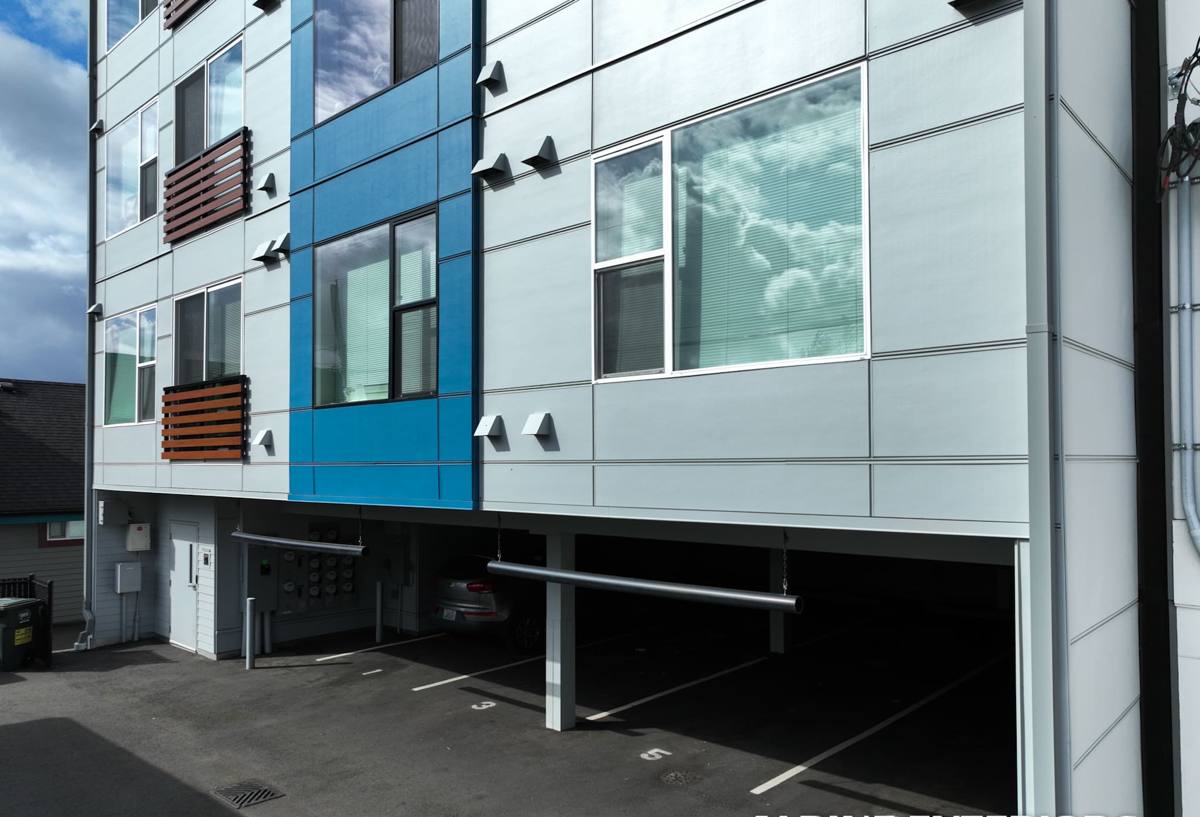
Signs a St. Petersburg Home Needs Siding Replacement, Not Repair
Not every siding problem calls for full replacement. But in this climate, a few warning signs usually mean the damage has moved past what a patch or a fresh coat of paint can fix:
- Soft, spongy, or crumbling spots when you press on the siding — usually a sign of moisture that's already gotten behind the surface
- Visible warping, buckling, or panels that have pulled away from the wall line
- Paint that keeps failing within a year or two of repainting, even with quality paint
- Cracking or splitting concentrated on the sun-facing (usually west and south) walls
- Rot or staining around window and door trim, which often signals a bigger moisture problem behind the cladding
- Visible mold or mildew that keeps coming back no matter how often it's cleaned
If you're seeing more than one of these at once, it's usually a sign the water-resistive barrier or flashing behind the siding has failed, not just the siding itself — which is why a proper replacement addresses what's underneath, not just what's on the surface.
What a Correct Siding Replacement Actually Involves
A lot of the difference between a siding job that lasts 30+ years and one that fails in five comes down to what happens before the new siding ever goes up. In a climate like St. Petersburg's, skipping these steps is where most premature failures start.
Full Tear-Off and Substrate Inspection
We remove the old siding down to the sheathing and inspect for rot, delamination, or water damage that's been hidden for years. Any compromised sheathing gets replaced before anything new goes up — installing over a damaged substrate just locks the problem in.
Weather-Resistive Barrier
A continuous, properly lapped moisture barrier goes on next. In a wind-driven rain climate, the lapping direction and seam taping matter — water finds gaps, and a barrier installed carelessly gives it a path straight to the framing.
Flashing at Every Penetration
Windows, doors, hose bibs, light fixtures, and any other wall penetration need proper flashing integrated with the barrier, not caulked over after the fact. Caulk is a maintenance item, not a waterproofing strategy — flashing is what actually keeps water out long term.
Fastening to Manufacturer and Wind-Zone Spec
Pinellas County falls under wind-borne debris and high-velocity design requirements in parts of the coastal zone, and fastener spacing, type, and embedment all affect how well siding holds up in a wind event. This is also where corner and butt-joint detailing matters — done wrong, these become the first points of failure in a storm.
Why We Install Only James Hardie Fiber Cement
We don't install vinyl, LP SmartSide, or other fiber cement brands, and that's a deliberate standard, not a limitation of what we're capable of installing. James Hardie's fiber cement is non-combustible, dimensionally stable in heat and humidity swings, and backed by ColorPlus factory-applied finish technology that resists fading better than field-applied paint. Hardie also engineers specific product lines (their HZ5 and HZ10 formulations) for different climate zones — Florida's humidity and moisture exposure call for a different formulation than a dry, cold climate would, and Hardie is one of the few manufacturers that actually builds that into the product rather than selling one formulation everywhere.
Vinyl siding is lightweight and inexpensive, but it softens and warps under sustained heat, and in a wind event it's more prone to cracking or blowing off than fiber cement. LP SmartSide is a wood-strand product with a resin-saturated engineered core — it performs reasonably well when installation and caulking are kept up on schedule, but any wood-based product is more sensitive to moisture intrusion than fiber cement, and gaps in maintenance show up faster in a humid coastal climate than they would somewhere drier. We'd rather put a product on your home that tolerates a missed caulking cycle or a few years of deferred maintenance without becoming a structural problem — and that's fiber cement.
| Factor | James Hardie Fiber Cement | Vinyl | LP SmartSide |
|---|---|---|---|
| Moisture tolerance | High — cement-based, doesn't rot | High but can trap moisture behind panels | Moderate — wood core needs sealed edges |
| Wind/impact resistance | Strong when fastened to spec | Can crack or detach in high wind | Good, but edge damage compromises the core |
| UV/fade resistance | Factory ColorPlus finish, long fade resistance | Can chalk and fade over time | Depends on field-applied paint quality |
| Fire performance | Non-combustible | Combustible | Combustible |
| Maintenance | Low — occasional wash and repaint over many years | Low, but limited repair/repaint options | Moderate — caulking and touch-up on a schedule |
How Our Process Works for St. Petersburg Homeowners
Because we work in and around St. Petersburg regularly, our process is built around what actually shows up on inspections in this area — coastal-adjacent moisture, storm exposure, and older housing stock that may have been sided more than once already.
- On-site inspection: We walk the exterior, check soft spots, look at trim and penetrations, and where possible get a look at the sheathing condition before quoting.
- Written estimate: You get a clear scope — what's being torn off, what substrate work (if any) is anticipated, the Hardie product and profile recommended, and the color.
- Scheduling around weather: Florida's storm season affects sequencing. We plan tear-off and dry-in stages to minimize how long your home's substrate is exposed.
- Installation to spec: Barrier, flashing, fastening, and joint detailing done to manufacturer and local wind-zone requirements — not shortcuts to save a day of labor.
- Final walkthrough: We go over the finished work with you before calling the job done.
Why a Local Largo Crew Matters for This Job
St. Petersburg and Largo sit close together in Pinellas County, and a crew that regularly works both areas has a practical advantage over an out-of-town or one-off contractor: we already know what this coastal climate does to a siding job over time, because we've seen it firsthand on homes nearby. We're not learning Pinellas County's wind and moisture patterns on your project — we're applying what we've already seen work and not work on homes just down the road. That also means faster response for punch-list items, warranty service, or a follow-up question after the job is done, instead of waiting on a contractor who has to drive in from out of the area.
What Affects the Cost of a Siding Replacement
Every home is different, but the factors that actually move the price on a St. Petersburg siding replacement are fairly consistent. We'll always give you a specific number after an inspection — broad ranges below are for planning purposes only.
| Cost Factor | Why It Matters |
|---|---|
| Substrate condition | Rotted or water-damaged sheathing found during tear-off adds material and labor |
| Home size and wall complexity | More corners, gables, and trim detail mean more cutting and labor time |
| Siding profile and plank width | Hardie offers multiple plank widths and textures at different price points |
| Color and finish | ColorPlus factory finishes vs. field-painted affect both cost and long-term fade performance |
| Access and site conditions | Landscaping, fencing, or tight lot lines can add labor time |
Questions to Ask Before Hiring a Siding Contractor Here
Pinellas County has no shortage of contractors offering siding work, and quality varies widely. A short list of questions will filter out most of the risk:
- Are you licensed and insured to work in Pinellas County, and can you provide proof?
- Will you inspect and document the sheathing condition before quoting, or only after tear-off begins?
- What weather-resistive barrier and flashing details do you use, and why?
- Are you a certified installer for the siding brand you're recommending?
- What does the manufacturer's warranty cover, and does it require a certified installer to stay valid?
- Can you walk me through your fastening schedule for our specific wind zone?
Any contractor who can't give straight answers to these — especially the ones about the substrate and the barrier — is worth a second look before you sign anything.
Get a No-Pressure Estimate
If your St. Petersburg home is showing signs of siding wear, or you're just planning ahead before the next storm season, we're happy to take a look and give you an honest assessment — no pressure, no obligation. Use the form below to request a free estimate, and we'll walk you through exactly what your home needs.