 Largo Siding
 Deck Repair Built for Safety Harbor's Waterfront Climate
Safety Harbor sits right on Old Tampa Bay, and that waterfront location is part of what makes the city a great place to live — and part of what wears a deck down faster than it would inland. Salt-laden air moves off the bay and settles on every exposed surface, including the fasteners, hardware, and structural framing most homeowners never look at until something gives. Add in Pinellas County's intense year-round UV, wind-driven rain that gets pushed sideways under railings and through board gaps, and the occasional hurricane-force gust, and a deck here is working harder than the same structure would be almost anywhere else in the country.
We repair decks in Safety Harbor and the surrounding Pinellas County area on a regular basis, and the failures we see are consistent. This page walks through what actually happens to a deck in this climate, what a correct repair looks like, and how we handle the job from first look to final walkthrough.
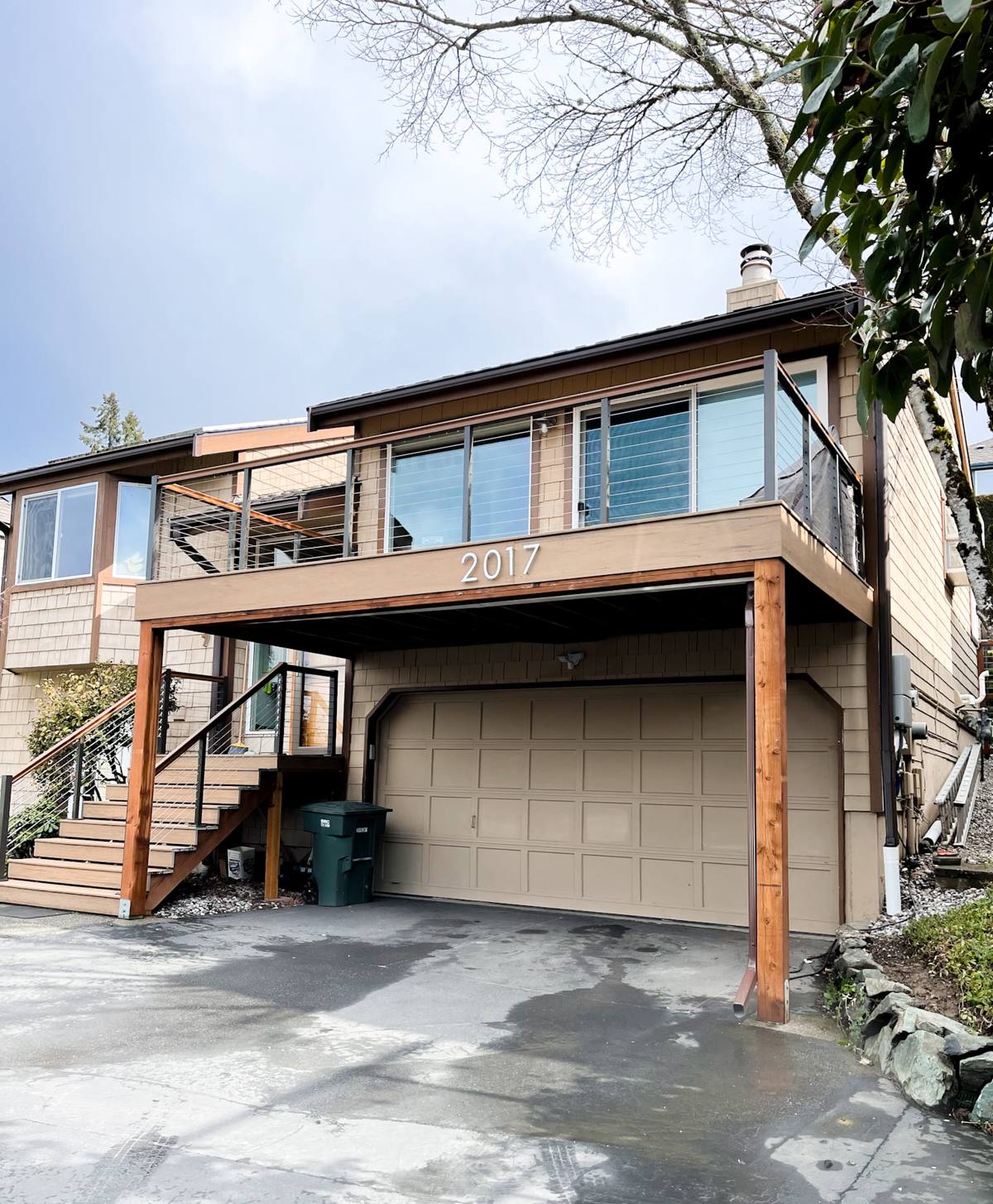
Common Deck Problems We See in the Safety Harbor Area
Fastener and Connector Corrosion
Salt air accelerates corrosion in screws, nails, joist hangers, and structural bolts — even galvanized hardware has a service life, and coastal exposure shortens it. Corroded fasteners lose holding power long before the wood around them looks damaged, which is why a deck can feel "loose" or start to squeak even when the boards themselves look fine.
Ledger Board and Rim Joist Rot
The ledger board — where the deck attaches to the house — is the single most important structural connection on most decks, and it's also the most common failure point. Wind-driven rain gets forced behind poorly flashed ledgers, and moisture sits there with nowhere to go. By the time staining or soft wood shows up on the surface, the framing behind it has often been wet for years.
UV Breakdown of Decking Surfaces
Florida sun is relentless on horizontal surfaces. Wood decking dries out, cups, and splinters; older composite boards can fade, chalk, or become brittle at the surface. UV damage is mostly cosmetic at first, but it opens the door for moisture intrusion once the surface layer breaks down.
Post and Footing Movement
Sandy Pinellas County soils and heavy seasonal rain can lead to minor footing settlement over time, especially on older decks built without today's footing depth standards. A deck that feels slightly "bouncy" or has a rail post that's no longer plumb is often telling you something about what's happening below grade, not just at the surface.
Guardrail and Baluster Failure
Railings take direct wind load during storms and constant hand contact the rest of the year. Loose balusters, wobbly guardrail posts, or rail connections that have pulled away from the frame are a safety issue first and a repair issue second — this is usually the first thing we check on any inspection.
Wood vs. Composite: What Actually Holds Up Here
When we repair or replace decking boards, homeowners often ask whether it's worth switching materials. There's no universally "right" answer — it depends on budget, maintenance appetite, and how exposed the deck is to sun and salt air.
| Material | Coastal Durability | Maintenance | Typical Lifespan (this climate) |
|---|---|---|---|
| Pressure-treated pine | Good if sealed regularly | Re-seal/stain every 1-2 years | 10-15 years with upkeep |
| Composite decking | Very good, resists rot | Occasional cleaning, no sealing | 20-25+ years |
| Cedar/tropical hardwood | Good, naturally rot-resistant | Oiling 1-2x per year | 15-20 years with upkeep |
| Structural framing (PT lumber) | Depends on flashing/fastener quality | Inspect annually, no direct maintenance | 20-30 years if kept dry |
We're honest with clients about trade-offs rather than pushing one product. Pressure-treated wood costs less up front but demands consistent maintenance to survive our UV and rain exposure — skip a couple of resealing cycles and you'll see it. Composite costs more initially but handles salt air and sun with far less ongoing work, which matters if the deck sees direct bay-facing exposure. The framing underneath matters more than the surface material either way — a beautiful composite deck built on corroded hardware or a rotted ledger is still a deck with a structural problem.
What a Proper Deck Repair Actually Involves
A repair that only addresses what's visible from above tends to come back. A correct repair starts underneath.
- Structural inspection first — checking the ledger connection, joist condition, post-to-footing connections, and beam bearing before touching the surface
- Moisture assessment — probing suspect framing members, not just looking at surface staining
- Fastener and hardware evaluation — corroded joist hangers, bolts, and screws get replaced with hardware rated for coastal exposure, not just matched to what's already there
- Flashing correction — if the ledger board isn't properly flashed to shed water away from the house, that gets fixed as part of the repair, not left for next time
- Board-level repair or replacement — individual boards, sections, or full resurfacing depending on how far the damage has spread
- Railing and guardrail security — every post and baluster connection gets tested, not just the ones that look loose
Skipping the structural step is the most common shortcut in deck repair, and it's the one that causes homeowners to pay for the same repair twice. A deck can look freshly refinished on top while the ledger board behind it is still compromised.
Repair vs. Replace: How We Help You Decide
Not every deck problem calls for a full rebuild, and not every deck is worth patching. We walk clients through the same factors every time:
| Factor | Leans Toward Repair | Leans Toward Replacement |
|---|---|---|
| Ledger board condition | Solid, properly flashed | Rotted or improperly attached |
| Extent of damage | Isolated to a few boards/areas | Widespread across the frame |
| Age of structure | Under 10-15 years | Original framing decades old, built to older standards |
| Footing/post condition | Stable, plumb, no settlement | Movement, undersized, or shallow footings |
| Code compliance | Meets current guardrail/attachment code | Built before current Florida Building Code requirements |
A lot of older Safety Harbor decks were built to standards that predate current Florida Building Code guardrail and attachment requirements. In those cases, a repair can sometimes be the more expensive long-term option because you're maintaining a structure that will need to be brought up to code eventually anyway. We'll always give you a straight answer on which side of that line your deck falls on.
Our Deck Repair Process
1. On-Site Inspection
We walk the entire deck — top, underside, and connection points — and probe any area that shows signs of moisture or movement. This is where we determine whether you're looking at a targeted repair or something larger.
2. Written Scope and Estimate
You get a clear breakdown of what's being repaired, what materials and hardware we're using, and why. No vague line items.
3. Permitting, When Required
Structural deck repairs — anything touching framing, footings, or the ledger connection — typically require a permit through the local building department. Cosmetic board replacement usually doesn't. We handle this so you're not guessing at what's required.
4. The Repair Itself
Structural work happens first: ledger, framing, hardware, footings. Surface and railing work happens after the frame underneath is sound.
5. Final Walkthrough
We test the railings, check the deck for level and secure footing, and walk you through what was done and why.
Permits and Florida Building Code Considerations
Deck work in Pinellas County is governed by the Florida Building Code, and Safety Harbor's local building department enforces permitting for structural deck work — this typically includes ledger board attachment, footing and post work, and guardrail height/spacing requirements. Guardrails on elevated decks have specific baluster spacing and height rules precisely because of the wind loads and fall risks that come with Florida's storm exposure. If you've had rail or baluster work done in the past that doesn't quite match current spacing standards, that's worth flagging during an inspection — it's a straightforward fix now versus a bigger issue during a future home sale inspection.
Why Hire a Crew That Already Works in Safety Harbor
Deck repair isn't a generic trade — the right fix depends heavily on local exposure conditions, and a crew that works Pinellas County's bayfront and coastal neighborhoods regularly knows the difference between cosmetic weathering and a structural problem before the first board comes up. We know what wind-driven rain does to a ledger board on a bay-facing lot, we know which hardware actually holds up to salt air instead of just meeting minimum code, and we know how Safety Harbor's permitting process works so a structural repair doesn't stall out on paperwork. That local familiarity is the difference between a repair that lasts and one you're revisiting in two years.
Keeping Your Deck in Good Shape Between Repairs
Regular attention catches small problems before they become structural ones. A short seasonal checklist for homeowners:
- Look underneath the deck twice a year for soft, discolored, or stained framing near the ledger board
- Check railing posts and balusters by hand — anything that flexes or wobbles needs attention
- Clear leaves and debris from between boards so water doesn't sit and trap moisture
- Reseal or re-stain wood decking on the schedule the product calls for — don't stretch it another season
- After any major storm, do a visual check of fasteners, railings, and the ledger connection before heavy use resumes
- Watch for rust streaks around screw heads or hardware — an early sign of fastener corrosion
None of this replaces a proper inspection, but it buys time and helps you catch problems while they're still cheap to fix.
If your deck has soft spots, loose railings, or just hasn't been looked at by a professional in a while, we're happy to take a look. Reach out for a free, no-pressure estimate using the form below — we'll give you a straight assessment of what your deck actually needs.