 Largo Siding
 Siding Installation Built for Dunedin's Coastal Exposure
Dunedin sits close enough to the water that its homes take on a different weather load than inland Florida neighborhoods. Salt-laden air off St. Joseph Sound and the Gulf, near-constant UV exposure, seasonal tropical systems, and the wind-driven rain that comes with them all act on exterior siding continuously, not occasionally. A siding installation done for a Dunedin home has to account for all of that from the first panel, not as an afterthought.
Largo Siding Company installs siding across Pinellas County, and Dunedin's mix of older bungalows, mid-century block homes, and newer construction gives us a good cross-section of what actually fails on this stretch of coast versus what holds up. This page covers what a correct siding installation looks like for a Dunedin home, why we install James Hardie fiber cement exclusively, and how our process is built around the realities of this specific area.
What Dunedin's Climate Actually Does to Siding
Salt Air and Corrosion
Proximity to the Gulf means airborne salt settles on exterior surfaces year-round, not just during storms. Salt accelerates corrosion of fasteners and trim, and it can degrade lower-quality finishes faster than a manufacturer's warranty documentation might suggest for a "coastal" product. Siding material, fastener choice, and finish all need to be selected with that in mind.
UV Load
Florida's sun angle and day length mean siding on a Dunedin home absorbs more cumulative UV exposure per year than siding almost anywhere in the continental U.S. Paint finishes that aren't engineered for this kind of exposure chalk, fade, and lose adhesion well ahead of schedule, especially on south- and west-facing walls.
Wind-Driven Rain
Pinellas County's storm exposure isn't limited to named systems — summer squalls push rain sideways into wall assemblies on a regular basis. Siding that isn't installed with correct flashing, clearances, and fastening will let water behind the cladding long before a hurricane ever makes landfall. Wind-driven rain finds every shortcut in an installation.
Wind Uplift
Even outside a direct hurricane strike, Dunedin homes see sustained high wind events. Siding attachment has to meet wind-load requirements for the area, and that's a function of correct fastening schedule and product rating — not just the material itself.
Why We Install James Hardie Fiber Cement — and Nothing Else
Largo Siding Company installs James Hardie fiber cement siding exclusively. We don't install vinyl, LP SmartSide, Cemplank, Allura, or primed wood siding, and we think Dunedin homeowners deserve an honest explanation of why, rather than a sales pitch.
Vinyl's Limits in This Climate
Vinyl is inexpensive and easy to install, but it's a thin plastic product that softens and can distort in sustained heat, and it becomes brittle with age and UV exposure — a real concern given Dunedin's sun load. In higher wind events, vinyl panels are also more prone to cracking or blowing off than a heavier, mechanically fastened product.
Wood-Based and Engineered Wood Siding
Primed spruce, cedar, and engineered wood products like LP SmartSide perform well in many climates, but they remain wood-based at their core, which means ongoing vulnerability to moisture intrusion, rot, and pest activity — a tougher standard to meet in a humid, salt-air coastal environment where wall assemblies stay damp longer after rain events.
Other Fiber Cement Brands
Products like Cemplank and Allura are also fiber cement and share some of Hardie's core advantages over vinyl and wood. Our decision to standardize on James Hardie comes down to their climate-specific HZ engineering, the depth of their ColorPlus factory finish system, and the strength and transferability of their warranty — details covered below.
What Hardie Gets Right for This Area
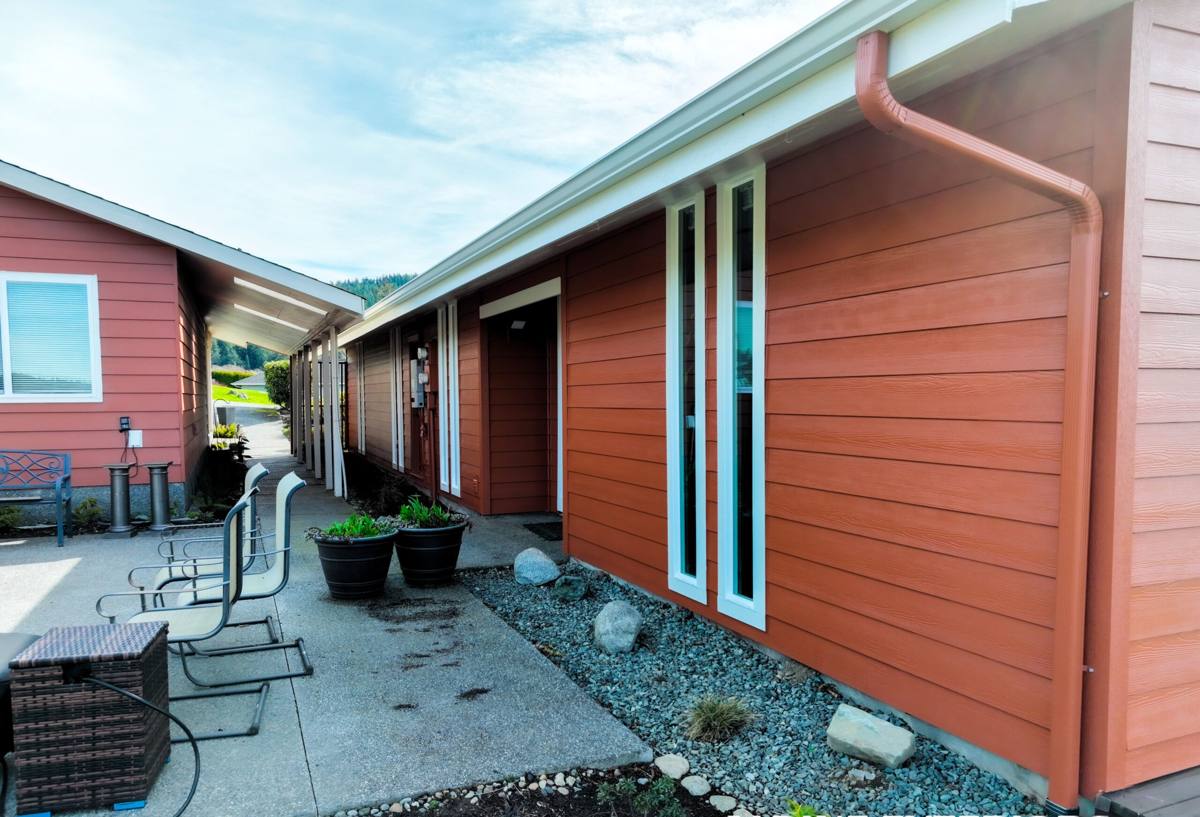
James Hardie fiber cement is non-combustible, dimensionally stable, and manufactured in HZ5 and HZ10 formulations specifically engineered for high-humidity, moisture-prone climates like ours. The ColorPlus finish is baked on at the factory under controlled conditions, which gives it better UV and fade resistance than field-applied paint. It's a heavier, denser product that holds up to wind-driven rain and salt exposure the way this location demands.
What a Correct Siding Installation Involves
The material is only part of the equation. Most siding failures we get called out to inspect in this area trace back to installation mistakes, not product defects. A correct Hardie installation for a Dunedin home includes:
- Removal of existing siding down to the sheathing, so the wall assembly can actually be inspected rather than covered over
- Repair of any rot, damaged sheathing, or moisture intrusion found underneath — a step that gets skipped far too often
- Installation of a code-compliant weather-resistive barrier, correctly lapped and sealed
- Correct flashing at every window, door, roofline, and penetration — the majority of water intrusion happens at these transitions, not through the field of the siding
- Proper clearances from grade, roofing, and decking per Hardie's installation instructions, which affect both moisture management and warranty validity
- Fastening schedule and fastener type matched to local wind-load requirements and Hardie's specifications for the product line used
- Correct joint treatment and caulking at butt joints and trim, using materials compatible with the ColorPlus finish
Skipping any one of these doesn't necessarily show up on day one. It shows up two or three storm seasons later, as bubbling paint, soft trim, or water staining on interior walls.
Our Process for Dunedin Homes
1. On-Site Assessment
We walk the exterior, check current siding condition, look for signs of existing moisture intrusion, and note anything specific to the home's exposure — corner units and homes closer to the water get extra attention to fastening and flashing detail.
2. Product and Line Selection
We help homeowners choose the right Hardie product line and profile — lap siding, panel systems, or a mix with trim — based on the home's architecture and this area's exposure, not just aesthetic preference.
3. Tear-Off and Sheathing Inspection
We don't install over existing siding. Full removal lets us catch and repair hidden problems before they're sealed behind new material.
4. Weather Barrier and Flashing
This is the step that determines whether the installation actually keeps water out for the next few decades. We follow Hardie's flashing and clearance specifications closely, since they're written with climates like ours in mind.
5. Installation to Manufacturer Spec
Fastening, joint spacing, and clearances are installed to James Hardie's published requirements — the same requirements that back the product warranty.
6. Final Walkthrough
We review the completed work with the homeowner, including care and maintenance guidance specific to a coastal Pinellas County property.
Why Local Experience in Dunedin Matters
A siding crew that only occasionally works this stretch of coast doesn't necessarily know which details matter most here — how close to plan for salt exposure on homes nearer the water, how local wind patterns affect fastening decisions, or which trim and flashing details tend to fail first under Gulf Coast conditions. Working Dunedin and the surrounding Largo area regularly means we've seen what holds up and what doesn't, on homes with the same exposure as yours.
Cost Factors for a Dunedin Siding Installation
Every home is different, and we don't publish blanket per-square-foot pricing because it misleads more than it informs. The factors below are what actually move the estimate:
| Factor | Why It Matters |
|---|---|
| Home size and wall complexity | More corners, gables, and trim details mean more labor and material |
| Current siding removal | Multiple layers or damaged sheathing add time and repair cost |
| Hidden moisture or rot repair | Found during tear-off; addressed before new siding goes on |
| Hardie product line and profile | Lap, panel, and shingle profiles carry different material costs |
| ColorPlus finish vs. field paint | Factory finish costs more upfront but outperforms field-applied paint in UV exposure |
| Trim and accessory work | Fascia, soffit, and window trim scope affects total project cost |
| Access and site conditions | Multi-story sections or tight lot access can add labor time |
Signs Your Dunedin Home May Need New Siding Soon
- Soft spots or visible warping when you press on the siding
- Paint that's peeling, bubbling, or chalking heavily on sun-exposed walls
- Visible gaps, cracks, or separation at joints and corners
- Water staining or musty odor on interior walls near exterior siding
- Siding that's more than 20-25 years old and has never been replaced
- Visible rust streaking from fasteners
If any of these sound familiar, it's worth having the siding assessed before the next storm season adds to the damage.
Ready for an Honest Assessment?
If you're weighing a siding installation for a Dunedin home, we're happy to walk the property, answer questions about James Hardie's product lines, and give you a straightforward estimate — no pressure, no obligation. Use the form below to request your free estimate.