 Largo Siding
 Why Siding Repair Works Differently Near Madeira Beach
Homes within a few miles of Madeira Beach take a different kind of beating than houses further inland in Pinellas County. The same salt-laden air that makes evenings on the water so pleasant is slowly attacking every exposed surface on a house — fasteners, trim, caulk joints, and the siding itself. Add in wind-driven rain that gets forced sideways under eaves and around corners during summer storms, plus year-round UV that never really lets up, and you have a climate that ages siding faster than almost anywhere else in the country.
That's why siding repair in this part of Largo isn't just about patching a hole or replacing a cracked panel. It's about understanding why the damage happened in the first place, and making sure the repair doesn't just fail again in a year or two once the next tropical system rolls through.
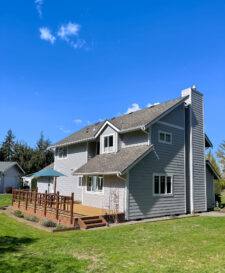
What Coastal Exposure Does to Siding Over Time
If your home is in or near Madeira Beach, chances are you've noticed some combination of the following, even if you haven't connected it back to the siding itself:
- Fading or chalking on the sun-facing side of the house from constant UV exposure
- Corroded or rust-streaked fasteners and trim pieces from salt air
- Soft spots, swelling, or delamination where water has been getting behind the siding
- Cracked or lifted caulk joints around windows, doors, and panel seams
- Panels that have separated slightly at corners after high-wind events
None of these are unusual for a coastal Florida home — they're expected wear given the environment. The problem is that many repairs done without accounting for that environment end up being temporary fixes. A caulk-and-paint patch might look fine for a season, but if moisture is already working its way behind the panel, the underlying damage keeps spreading.
Hurricane Season Adds a Second Layer of Risk
Pinellas County sits in a hurricane-prone stretch of the Gulf Coast, and Madeira Beach's proximity to open water means wind loads and wind-driven rain hit harder here than they do a few miles inland. Siding that's already compromised — loose panels, failed seams, exposed fastener holes — is far more likely to fail catastrophically in a storm than siding that's sound. Repairing damage promptly, rather than waiting, is one of the more practical things a homeowner in this area can do to protect the rest of the house.
What a Correct Siding Repair Actually Involves
A repair that's done right starts before anyone touches the damaged panel. It starts with figuring out why that spot failed.
1. Diagnose the Cause, Not Just the Symptom
Cracked or swollen siding is usually a symptom of something else — a failed flashing detail, a gap that's been letting wind-driven rain in, or a fastener that backed out and let water track behind the panel. Replacing the visible damage without addressing the underlying cause just resets the clock on the same failure.
2. Check What's Behind the Siding
Once panels come off, we look at the water-resistive barrier and sheathing underneath. In a climate this wet and salty, it's not uncommon to find moisture staining or early rot in a small area even when the siding itself looked fine from the street. Catching that early is a lot cheaper than catching it after it's spread.
3. Match the Existing Product Correctly
Patching in a repair that doesn't match the existing panel's profile, reveal, or finish sticks out immediately, especially in good light. Getting a clean match — particularly on ColorPlus factory-finished siding — matters both for appearance and for making sure the new piece performs the same way as the rest of the wall.
4. Reseal and Refasten to Spec
Every seam, joint, and fastener point is an opportunity for water intrusion. Correct fastener spacing, proper caulking at joints, and attention to manufacturer clearances (like keeping siding off the ground and away from roof lines) all matter more here than in a drier, calmer climate.
Repair or Replace? What Actually Determines the Answer
Not every repair should be a repair. Sometimes a small area of damage is a sign that the rest of the siding is close behind, especially on older homes near the water. Here's how we generally think through it:
| Factor | Leans Toward Repair | Leans Toward Full Replacement |
|---|---|---|
| Extent of damage | Isolated to one wall or a handful of panels | Recurring issues across multiple elevations |
| Underlying sheathing | Dry, sound wood behind the damaged area | Moisture staining or soft sheathing in several spots |
| Age of existing siding | Relatively recent installation, product still supported | Original siding is decades old or discontinued |
| Storm exposure history | Damage from a single identifiable event | Ongoing failures after multiple storm seasons |
| Color/profile match | Current product line still available for a clean match | Discontinued color or profile, visible patchwork likely |
We'll always tell you honestly which side of that table your house falls on. A targeted repair is often the right call, and there's no reason to push a full replacement when it isn't needed.
Why We Repair With James Hardie — Even for Small Jobs
Largo Siding Company installs James Hardie fiber cement exclusively, and that includes repair work. There are a few reasons that matters specifically for a house near Madeira Beach:
- Non-combustible, moisture-resistant material — fiber cement doesn't swell, rot, or delaminate the way some wood-based or engineered wood products can when they take on repeated moisture exposure.
- HardieZone HZ5 engineering — Hardie's HZ5 product line is formulated for climates that see heavy moisture and humidity cycling, which describes the Gulf Coast well.
- Factory ColorPlus finish — a baked-on finish that holds color far better under intense, near-constant Florida UV than field-applied paint, which makes matching a repair to existing siding more reliable over time.
- Warranty continuity — using the same manufacturer and product line for repairs keeps you inside the same warranty framework rather than mixing materials in a way that can complicate a future claim.
We don't carry LP SmartSide, vinyl, Cemplank, Allura, or unfinished wood siding, and we won't install them as a patch either — even for a small repair. If your home currently has one of those products, we'll be straight with you about what a Hardie repair or partial re-side will look like next to it, and what your options are.
Our Process for Madeira Beach and Largo Repairs
- On-site inspection — we look at the damaged area and check surrounding panels, trim, and flashing for related issues before quoting anything.
- Honest scope — you get a clear explanation of what needs to be replaced, what can be left alone, and why.
- Moisture check behind the siding — panels come off far enough to confirm the sheathing and barrier underneath are sound.
- Repair with matched James Hardie product — installed to manufacturer fastening and clearance specs, not shortcuts.
- Final seal and cleanup — joints, seams, and penetrations sealed properly so the repair holds up through the next storm season.
Why Local Experience Matters for This Kind of Work
A siding contractor that mostly works inland properties can still do competent work, but they haven't necessarily seen how fast salt air corrodes fasteners near the water, or how wind-driven rain finds its way into gaps that would never be a problem a few miles east. Crews that regularly work in and around Madeira Beach and the rest of coastal Largo know what to look for the moment panels come off, and they know which details actually matter here versus which ones are just standard installation practice everywhere else.
That local pattern-recognition is part of what keeps a repair from becoming a repeat visit.
A Practical Homeowner Checklist
Before storm season and after any major wind event, it's worth doing a quick visual check of your siding:
- Look for panels that appear lifted, bowed, or separated at the corners
- Check caulk lines around windows and doors for cracking or gaps
- Look for rust streaks below fasteners or trim pieces
- Press gently on any soft-looking or discolored areas near the bottom of walls
- Check that siding isn't in direct contact with soil, mulch, or roofing material
- Note any areas where paint or finish looks noticeably more faded than the rest of the house
If you spot any of these, it's worth having it looked at before the next storm rather than after.
If you're seeing damage, discoloration, or storm wear on your siding anywhere near Madeira Beach or elsewhere in Largo, we're happy to take a look and give you an honest, no-pressure assessment of what it needs. Use the form below to request a free estimate.