 Largo Siding
 Madeira Beach sits directly on the Gulf, one of the barrier-island communities that make up the west side of Pinellas County, and that location changes what a home's siding is actually up against. Homes here don't just deal with Florida heat and humidity in the abstract — they take salt-laden air off the water almost daily, wind-driven rain that gets pushed sideways into every lap and seam during summer storms, and direct UV exposure with very little tree canopy to soften it. A siding product that performs fine ten miles inland can fail years earlier on a barrier island, and a lot of the siding problems we see on Madeira Beach homes trace back to a material or an installation that wasn't built for this specific exposure.
We install James Hardie fiber cement exclusively, and this page focuses on what that means specifically for a Madeira Beach home — not siding in general, but what a correct James Hardie installation looks like on a Gulf-front barrier island property in this part of Pinellas County.
What Madeira Beach's Location Actually Does to Siding
Barrier islands sit closer to open water than almost any other residential setting, and that proximity shows up in four ways that matter directly to exterior cladding:
- Constant salt exposure — airborne salt doesn't just affect metal; it accelerates the breakdown of finishes and coatings that aren't formulated to resist it, and it settles into surfaces that face the water most directly
- Higher wind loads — barrier island homes are exposed to stronger sustained winds and gusts than inland properties, both in routine storms and during tropical systems, which puts more stress on fastening and panel attachment
- Wind-driven rain — rain rarely falls straight down here; it's pushed sideways into seams, laps, and trim joints, which means the moisture barrier behind the siding has to actually work, not just be present
- Intense, near-constant UV — with open water and open sky on multiple sides of most lots, there's little natural shade, and finishes take a harder UV beating year-round than they would on a heavily wooded inland lot
None of this is unique to Madeira Beach — it's shared with the other Gulf-front communities in Pinellas County — but it's more pronounced here than it is even a short distance inland toward Largo. That's the baseline every material and installation decision on this page is measured against.
Why We Install Only James Hardie Fiber Cement Here
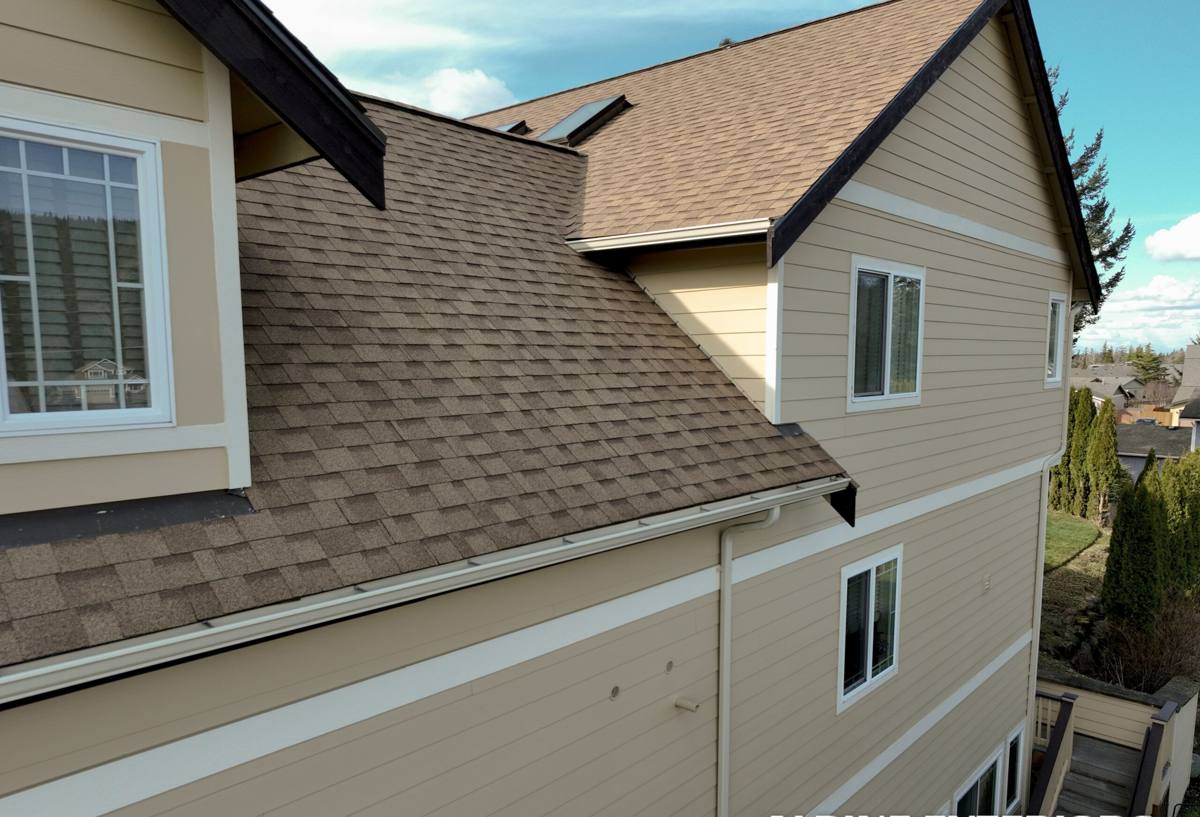
James Hardie fiber cement is a mix of Portland cement, sand, and cellulose fiber, cured into a dense, dimensionally stable board. It doesn't absorb and release moisture the way wood, wood-composite, or many engineered wood products do, so it isn't prone to the swelling, cupping, and rot that humidity and salt-laden moisture cause in products built around a wood-fiber core. It's also non-combustible, which matters on any home but carries extra weight on properties where wildfire isn't the concern so much as embers from a neighboring structure fire in a densely built beach community.
HZ5 Climate Engineering
James Hardie manufactures regionally specific formulations rather than one nationwide product. Homes in our part of Florida receive the HZ5 line, engineered for high-humidity, high-moisture climates — a different mix than what's shipped to dry inland regions. For a barrier island property, that regional engineering isn't a marketing detail; it's the difference between a product designed for this moisture load and one that merely tolerates it.
ColorPlus Factory Finish
Color is baked on in a controlled factory process, cured through multiple coats, rather than sprayed or brushed on site. On a home that takes direct UV and salt exposure most days of the year, that factory-cured finish holds color and resists chalking and fading meaningfully longer than field-applied paint, which has to be reapplied on a much shorter cycle in this kind of exposure.
What a Correct Installation Involves on a Barrier Island Home
Fiber cement siding performs to its rated standard only when it's installed to specification — the material does the work, but the installation determines whether that work actually happens. On a Madeira Beach property specifically, a handful of details matter more than they would inland.
Moisture Management Behind the Panels
A properly lapped and sealed weather-resistant barrier goes up before a single piece of siding is fastened. Every penetration — hose bibs, light fixtures, vents — gets flashed and sealed individually rather than caulked over after the fact. On a home absorbing wind-driven rain regularly, this layer is what keeps incidental moisture from ever reaching the sheathing, regardless of what the visible siding is doing.
Fastening for Wind Exposure
Fastener type, spacing, and placement all follow James Hardie's published specifications, which are more conservative in higher wind-exposure categories. Barrier island homes typically fall into a higher wind zone than inland properties in the same county, and fastening that would pass inspection on an inland job can be under-specified for a Gulf-front lot. Corrosion-resistant fasteners matter here specifically because salt air accelerates corrosion on anything under-rated for the exposure.
Clearances and Joint Treatment
Fiber cement needs proper clearance from rooflines, decks, and grade, and every butt joint needs to be treated correctly rather than simply butted and caulked. On a barrier island home, undersized clearances trap moisture against the bottom edge of the siding longer than they would in a drier inland setting, which is exactly where premature failure tends to start.
Our Process for a Madeira Beach Project
The steps themselves aren't unusual — what changes on a barrier island property is how much attention each one gets given the exposure.
- On-site assessment — we walk the exterior, check the existing substrate and sheathing condition, and note wind exposure, water proximity, and any prior moisture damage before recommending a scope
- Product and color selection — HZ5 product line, profile (lap, shake, panel, or a mix), and ColorPlus color selected together, since color and profile affect how the finished job reads on the specific home
- Tear-off and substrate check — old cladding comes off and the sheathing underneath gets inspected for hidden water damage before anything new goes up; a barrier island home with an older or improperly detailed exterior often has some sheathing repair to address at this stage
- Weather barrier and flashing — the moisture management layer goes in first, correctly lapped and sealed at every penetration
- Installation to Hardie spec — fastening, clearances, and joint treatment follow manufacturer specifications for our wind exposure category, not a generic install
- Trim, caulking, and touch-up — final trim work and any factory-finish touch-up completed to match
- Final walkthrough — we walk the finished job with the homeowner before calling it complete
Comparing Siding Options for a Barrier Island Home
| Material | Moisture behavior in salt air | UV/finish durability | Wind fastening performance |
|---|---|---|---|
| James Hardie fiber cement (HZ5) | Dimensionally stable, doesn't swell or rot from humidity | ColorPlus factory finish resists fading/chalking | Engineered fastening specs for high wind-exposure zones |
| Vinyl siding | Doesn't rot, but can warp or become brittle under sustained heat and UV | Color is in the material itself and fades over time; no refinishing option | Lower wind-load ratings; can dislodge in high gusts if not correctly fastened |
| LP SmartSide / engineered wood | Wood-strand core is more moisture-sensitive; edge sealing is critical in humid, salty air | Field or factory finish still requires maintenance in intense UV | Performs well when installed to spec, but more installation-sensitive |
| Primed spruce / cedar | Natural wood; most vulnerable to moisture, humidity, and salt-driven decay | Requires the most frequent repainting and sealing in this climate | Adequate when fastened correctly, but the material itself is the weak point |
This is why we standardized on one product instead of offering all of them: on a barrier island lot, the material itself is doing a lot of the work, and we'd rather stand behind one system we trust completely than install several and hope each one holds up.
Cost Factors for a Madeira Beach Hardie Project
Every property is different, so we don't publish flat per-square-foot pricing, but the factors that actually move the number on a barrier island job are consistent:
| Factor | Why it affects cost |
|---|---|
| Existing substrate condition | Hidden water damage from a prior siding system means sheathing repair before new siding goes up |
| Home size and wall complexity | Dormers, multiple gables, and cut-up elevations take more labor and trim detail than simple rectangular walls |
| Profile and trim selection | Lap siding alone costs less than a mix of lap, shake accents, and custom trim packages |
| Access and site conditions | Tight beach lots, seawalls, and limited staging space can add labor time compared to a standard inland lot |
| Tear-off scope | Full removal of old siding and any necessary sheathing repair adds cost versus a straightforward re-side |
We walk every property before quoting, because the honest answer to "what will this cost" depends on what's actually happening at the wall.
Maintenance: What Barrier Island Homeowners Should Actually Expect
One of the real advantages of a correctly installed Hardie system in this environment is how little routine maintenance it demands compared to the alternatives — but "low maintenance" isn't "no maintenance," especially this close to the water.
- Rinse the exterior periodically to clear salt residue, more often on elevations that face the water directly
- Keep an eye on caulking at trim joints and penetrations, and have any cracked or missing caulk addressed before the next rainy season
- Watch for any staining or discoloration at the base of walls, which can signal a grading or drainage issue rather than a siding problem
- Have the exterior looked at after any major storm, the same way you'd check a roof
None of this compares to the repainting, caulking, and edge-sealing cycle that wood-based or vinyl products typically need in this climate — it's a fraction of the effort, but it's not zero.
Why a Crew That Already Works This Coastline Matters
Madeira Beach isn't a generic install location — it's a specific wind exposure category, a specific moisture load, and in some cases specific permitting and flood-zone considerations tied to its barrier island location. A crew that mainly works inland Pinellas County jobs can install Hardie siding competently and still under-specify fastening or flashing for what a Gulf-front property actually experiences, simply because they don't see that exposure regularly. We work this coastline as part of our regular service area out of Largo, which means the wind-zone fastening specs, the flashing details around salt-air corrosion, and the substrate issues that show up on older beach homes aren't something we're solving for the first time on your project.
Questions to Ask Before Hiring for a Barrier Island Siding Job
- Are you a certified James Hardie installer, and can you show manufacturer fastening specs for our wind-exposure category, not just a general contractor license?
- How do you handle sheathing inspection and repair if you find hidden water damage during tear-off?
- What fastener type and spacing do you use for a home this close to the water?
- How is the weather-resistant barrier detailed at penetrations and horizontal joints?
- Do you have experience with other homes specifically in Madeira Beach or nearby barrier island communities?
If you're weighing a siding replacement for a Madeira Beach home, we're glad to walk the property, talk through what your specific exposure and substrate condition call for, and put together a free, no-pressure estimate.