 Largo Siding
 Siding Installation Built for St. Petersburg's Climate
St. Petersburg sits on a peninsula surrounded by water, which means every home here takes a different kind of beating than a house fifty miles inland. Between Tampa Bay on one side and the Gulf on the other, siding installed in this part of Pinellas County has to hold up against salt-laden air, sustained UV exposure nearly year-round, wind-driven rain that finds every gap in a poor installation, and the real possibility of hurricane-force wind loads. A siding job that looks fine on installation day but wasn't built for these conditions tends to show its weaknesses within a few years, not a few decades.
That's the whole reason siding installation deserves more attention than most homeowners give it. The product matters, but so does the water management system behind it, the fastening pattern, the flashing details, and the crew's familiarity with how coastal Pinellas homes actually behave in a storm. This page covers what a correct siding installation looks like for a St. Petersburg home, and why we approach it the way we do.
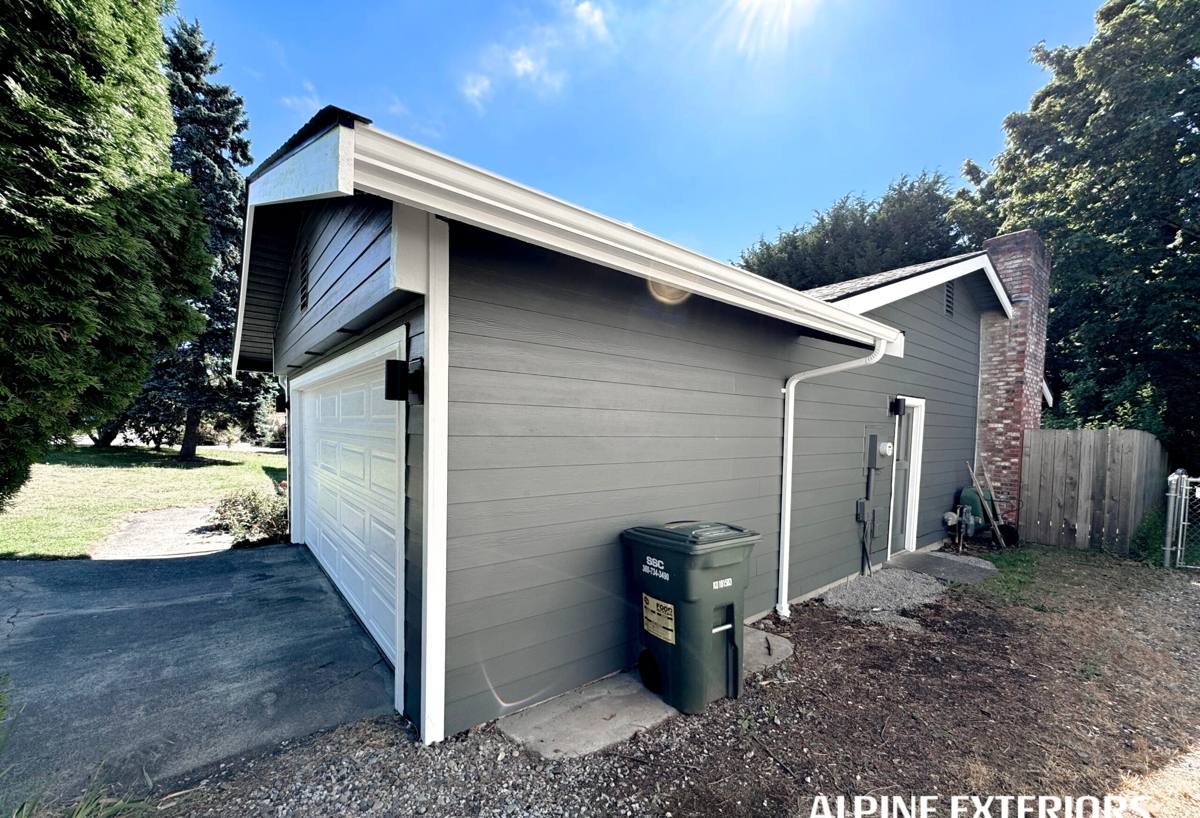
What Coastal Pinellas County Does to Siding Over Time
Wind and Storm Pressure
St. Petersburg homes are built to withstand serious wind loads, and siding is part of that structural envelope whether homeowners think of it that way or not. Fastener spacing, panel overlap, and the way siding is secured at corners and openings all affect how well it stays put when a storm pushes and pulls at the exterior wall. Siding that's face-nailed too loosely, spaced incorrectly, or missing blocking at transitions is one of the first things to fail in high wind, and once panels lift, water intrusion follows immediately behind.
Salt Air and Humidity
Proximity to the bay and Gulf means airborne salt settles on exterior surfaces here more than it does even a short distance inland. Salt accelerates corrosion of fasteners, hardware, and any metal flashing components, and it works into small cracks or unsealed joints faster than plain rain does. Materials and fasteners that aren't rated for coastal exposure age noticeably faster in St. Petersburg than they would in a drier, inland climate.
UV and Heat
Florida's UV index runs high for most of the year, and that constant sun exposure breaks down paint films, causes fading, and dries out materials that rely on caulking or sealants to stay watertight. Siding finishes that aren't formulated to resist UV degradation chalk, fade unevenly, and require repainting far sooner than homeowners expect — often within a handful of years rather than a decade or more.
Wind-Driven Rain
Florida storms rarely deliver rain straight down. Wind pushes it sideways and upward under eaves, around window and door openings, and into any seam that wasn't properly lapped or flashed. A siding installation that would perform adequately in a calmer climate can let water behind the wall assembly here, where the same rain event hits every seam from multiple angles instead of one.
Why the Installation Matters as Much as the Material
Homeowners researching siding tend to focus entirely on the brand or material, which is understandable, but in a climate like this one, installation quality determines outcomes just as much as product choice. Two homes with identical siding can perform completely differently ten years later depending on how the weather-resistive barrier was lapped, whether flashing was installed at every horizontal transition, and whether fasteners were driven correctly instead of over- or under-driven. We've seen good products fail early because of rushed installation, and we've also seen installations hold up well because the crew respected the manufacturer's instructions instead of treating them as optional.
This is part of why we don't spread ourselves across every siding product on the market. We install one system, we install it the same correct way every time, and we know exactly how it needs to be detailed for a St. Petersburg exterior.
Why We Install Only James Hardie Fiber Cement
We standardized on James Hardie fiber cement siding rather than vinyl, LP SmartSide, or other fiber cement alternatives because it holds up to this specific climate with the least amount of long-term maintenance. It's non-combustible, which matters to insurers and homeowners alike. It's manufactured in climate-engineered product lines specifically formulated for humid, high-moisture regions like the Gulf Coast, rather than a single generic formulation sold everywhere. Its ColorPlus factory finish is baked on under controlled conditions and backed by a real finish warranty, which matters enormously in a market where UV exposure is relentless and repainting a whole house isn't cheap. And it carries a strong transferable product warranty when installed to the manufacturer's specification — which is exactly why correct installation isn't optional for us.
We're not going to pretend every other product on the market is worthless — plenty of siding materials perform reasonably well in the right conditions. But for a coastal Pinellas County home dealing with salt air, sustained UV, and hurricane wind exposure, Hardie's combination of moisture tolerance, factory-cured finish, and non-combustible composition is what we're willing to put our name behind.
What a Correct Siding Installation Involves
Tear-Off and Substrate Inspection
Before a single new panel goes up, the old siding comes off and the sheathing underneath gets inspected. Coastal homes occasionally have hidden moisture damage from years of small leaks that never showed up as an obvious problem indoors. Installing new siding over compromised sheathing just buries the issue — it has to be addressed first.
Weather-Resistive Barrier
A properly lapped weather-resistive barrier goes over the sheathing before any siding is installed. This layer is the actual last line of defense if wind-driven rain does get past the siding surface, and it has to be installed shingle-style — each course overlapping the one below it — so water is always directed outward and down, never trapped behind the wall.
Flashing at Every Transition
Windows, doors, roof-to-wall intersections, and any penetration through the siding need proper flashing integrated with the weather barrier. This is one of the most commonly rushed steps in a low-quality installation, and it's also one of the most consequential — most siding-related water intrusion traces back to a flashing detail that was skipped or done out of sequence.
Fastening and Clearances
James Hardie specifies exact fastener types, spacing, and minimum clearances from grade, roofing, and other surfaces. These aren't arbitrary numbers — they account for wind uplift resistance and moisture management. Following them is what keeps siding secured through a tropical storm and keeps water from wicking up from below.
Joints, Caulking, and Finish
Butt joints, corners, and trim connections need to be sealed with the right sealant and finished according to spec, especially anywhere the factory finish was cut or exposed. Left unsealed, these are exactly the small gaps that let salt-laden humidity and wind-driven rain work their way in over time.
Factors That Shape a St. Petersburg Siding Installation
No two homes need exactly the same approach. The table below covers the main variables that typically affect scope, timeline, and cost on a St. Petersburg installation.
| Factor | Why It Matters Here |
|---|---|
| Substrate condition | Coastal humidity can hide moisture damage behind old siding; repair work adds time before install begins |
| Home height and stories | Multi-story coastal homes need more scaffolding/staging and see higher wind exposure at upper walls |
| Existing siding type | Vinyl and wood tear-off differs from fiber cement removal in labor and disposal |
| Trim and architectural detail | Corner boards, soffit returns, and window trim complexity affect flashing and labor time |
| Siding profile chosen | Lap siding, shingle-style panels, and vertical panel systems each install differently |
| Wind zone requirements | Pinellas County wind load requirements affect fastening schedule and may require inspection sign-off |
Our Process, Start to Finish
- Free on-site inspection and estimate, including a look at current siding, trim, and any visible moisture issues
- Written scope covering tear-off, substrate repair (if needed), weather barrier, flashing, and finish details
- Material order and site preparation, including protecting landscaping and adjacent surfaces
- Tear-off and sheathing inspection, with any necessary repairs addressed before moving forward
- Weather-resistive barrier and flashing installation at every transition and penetration
- James Hardie panel or lap installation to manufacturer fastening and clearance specifications
- Trim, caulking, and finish work, followed by a final walkthrough with the homeowner
Why Local Experience in St. Petersburg Matters
A crew that regularly works in St. Petersburg and greater Pinellas County already understands the practical realities that come with the territory — permitting expectations, the wind load standards local building departments enforce, and how much more attention coastal exposure demands compared to an inland job. That experience shows up in details a homeowner might not notice until years later: the flashing sequence at a bay window, the fastener spacing on a second-story wall facing open water, the decision to address a soft spot in the sheathing instead of just siding over it.
It also means fewer surprises during the process. A crew that hasn't dealt with Florida's permitting and inspection process for exterior work can slow a project down considerably. Local experience keeps the job moving and keeps it done right the first time — which matters even more with siding than with most home improvements, since a bad install often doesn't show its problems until the next major storm season.
What to Ask Before Hiring for a Siding Installation
Whether you end up working with us or someone else, these are the questions worth asking any contractor bidding a siding installation in this area:
- Will you inspect and repair the sheathing before installing new siding, not just cover what's there?
- What weather-resistive barrier and flashing method will you use, and how is it detailed at windows and doors?
- What fastener type and spacing will you follow, and is it to the manufacturer's written specification?
- Is the installation being done to the manufacturer's instructions closely enough to keep the product warranty valid?
- Do you pull the required local permits and schedule inspections, or is that left to the homeowner?
- Can you explain, in plain terms, how this installation is different for a coastal Pinellas County home versus an inland one?
A contractor who can answer these clearly and specifically, without vague reassurances, is usually one who actually does the work correctly rather than just quickly.
Get a Straight Answer for Your Home
If your St. Petersburg home needs new siding — whether the current siding is failing, storm-damaged, or just at the end of its useful life — we're happy to take a look and give you a straightforward, no-pressure estimate. We'll tell you honestly what your home needs and what a correct installation involves, no exaggerated claims and no upsell games. Use the form below to request a free estimate.