 Largo Siding
 Composite Decking in Safety Harbor: What Local Homes Actually Need
Safety Harbor sits right on Tampa Bay, and that waterfront setting is exactly why a deck here has a harder job than a deck fifty miles inland. Between the bay breeze carrying salt onto every exposed surface, sun that beats down nearly year-round, and the wind-driven rain that comes with every summer storm system, an outdoor living space in this part of Pinellas County takes a beating most manufacturers never designed for in their glossy brochures. Composite decking has become the practical answer for homeowners who want a deck that still looks and performs well five, ten, fifteen years out — but only when it's specified and installed correctly for this climate. That second part is where a lot of decks in this area go wrong.
This page is about composite decking specifically for Safety Harbor and the surrounding Largo area — not a generic overview of the product. We'll walk through what the climate actually does to a deck, what a correct installation looks like, how our process works, and why local experience matters more than most homeowners realize until something goes wrong.
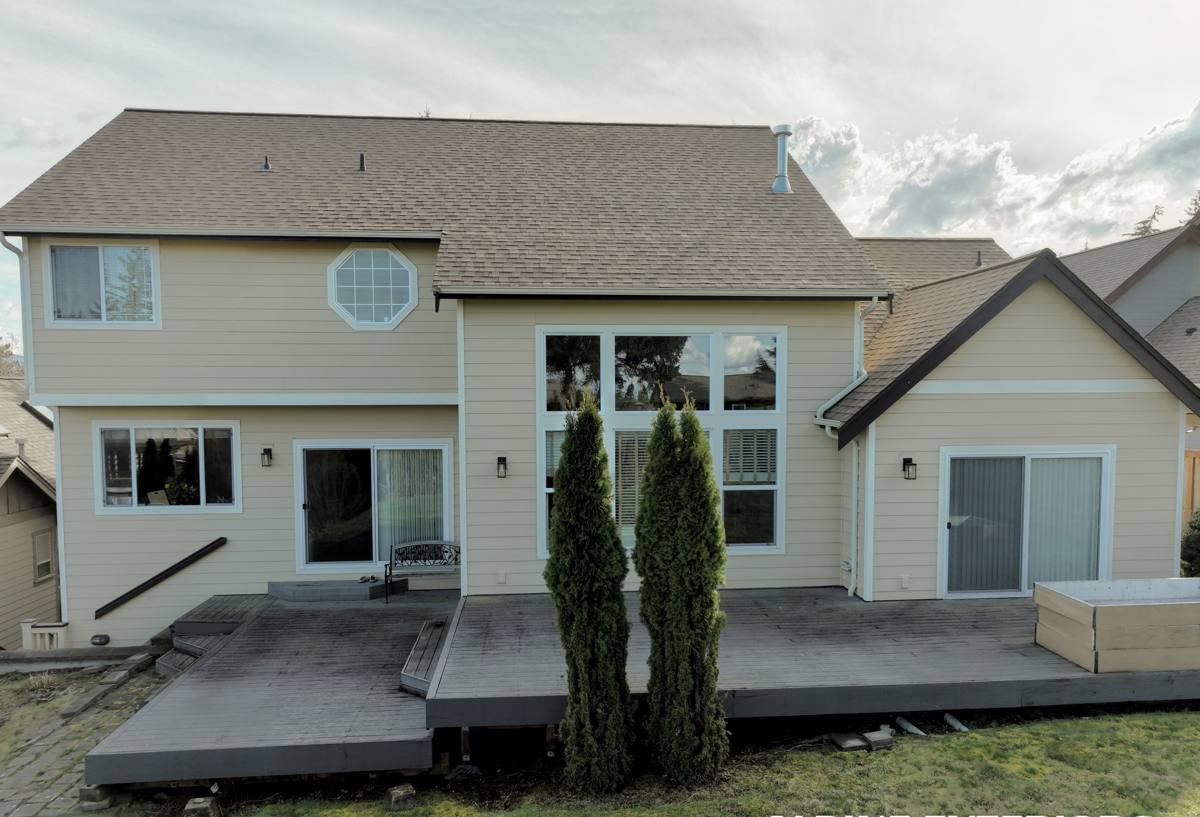
What Pinellas County Weather Does to a Deck Over Time
UV and Heat
Florida sun is relentless, and a deck has no shade of its own. Constant UV exposure is what causes cheaper composite boards to fade, chalk, or go brittle at the surface over the years. It's also what causes traditional wood decking to gray, splinter, and dry out between the rainy stretches. Composite boards with a proper cap layer are formulated to resist this, but not all composite is created equal — the base material and the quality of the cap both matter, and we've seen budget boards fade unevenly within just a few seasons.
Wind-Driven Rain and Standing Moisture
Afternoon storms here don't just fall straight down — wind pushes rain sideways and up under railings, against ledger boards, and into any gap that isn't properly flashed or sealed. A deck that drains poorly holds moisture against the substructure, which is where rot, corrosion, and mold actually start, even with a "waterproof" composite surface on top. The framing underneath is almost always the weak point, not the decking itself.
Salt Air
Being close to Tampa Bay means airborne salt settles on every exterior surface, including fasteners, brackets, and any exposed metal hardware. Standard fasteners corrode faster here than they would inland, and corroded fasteners are one of the most common reasons a deck develops squeaks, movement, or loose boards years before it should.
Hurricane-Force Wind Loads
Pinellas County sits in a high-wind coastal zone, and a deck attached to your home is a structural element, not just a surface finish. Railings, ledger connections, and post footings all have to be built to hold up under real wind loads, not just look good on a calm day.
Composite vs. Wood vs. PVC: An Honest Comparison
Homeowners in Safety Harbor usually ask us to compare these three options directly. Here's how they actually stack up for this specific climate:
| Material | Upfront Cost | Maintenance | Salt Air / Moisture Behavior | Typical Lifespan Here |
|---|---|---|---|---|
| Pressure-treated wood | Lower | Annual sealing/staining required | Prone to warping, splintering, and fastener corrosion | Shorter without consistent upkeep |
| Capped composite | Moderate to higher | Occasional washing, no sealing/staining | Resists moisture absorption well when properly installed | Long, with manufacturer warranty backing |
| Solid PVC | Highest | Lowest maintenance | Fully moisture-resistant surface | Long, but can feel less "wood-like" underfoot |
We install composite as our standard recommendation for most Safety Harbor homes because it strikes the best balance of upfront cost, low maintenance, and coastal durability — without the constant upkeep wood demands or the premium price tag of full PVC. We don't push wood decking as a coastal solution; it's not that it can't be done, it's that the maintenance burden near saltwater doesn't make sense for most homeowners once you account for the years of sealing and staining ahead of them.
What a Correct Composite Deck Installation Actually Involves
The composite boards get most of the attention, but the quality of a deck lives in the parts you don't see once it's finished.
Substructure and Framing
Joists and beams need to be rated and spaced correctly for composite board spans, which behave differently than solid wood under load and heat expansion. We use hardware and framing rated for ground contact and coastal exposure, not standard interior-grade lumber.
Ledger Board Attachment
Where the deck ties into the house is the single most important structural connection on the entire project. It has to be properly flashed to keep wind-driven rain from tracking behind it into your home's wall assembly, and lag-bolted to actual structural framing — not just sheathing.
Fasteners and Hardware
We use corrosion-resistant, coastal-rated fasteners and connectors throughout. This is a small line item on an estimate that makes a large difference in how a deck holds up ten years from now, especially this close to Tampa Bay.
Drainage and Ventilation
Proper board spacing and airflow under the deck let it dry out between storms instead of trapping moisture. Skipping this step is one of the most common shortcuts we see on decks that were built cheaply, and it's usually invisible until the substructure is already compromised.
Railings and Structural Connections
Railing posts need to be through-bolted to framing, not just screwed to the surface decking, so they can actually resist the lateral loads that come with high wind events.
Cost Factors: What Actually Moves the Price
Every composite deck project is different, and the factors below are what actually drive the cost up or down — not the composite brand alone.
| Factor | Why It Matters |
|---|---|
| Total square footage | Larger decks need more board and framing material, straightforward but the biggest single driver |
| Height off grade and stairs | Elevated decks need more substructure, railings, and stair framing |
| Substructure condition | Replacing or repairing an existing frame adds cost versus a clean new build |
| Railing style | Composite or aluminum railing systems cost more than basic wood or cable options |
| Board pattern and picture-framing | Diagonal layouts or contrasting border boards add labor and material waste |
| Site access | Waterfront or tight-lot properties can add labor time for material staging and equipment access |
We walk through each of these with you during the estimate so there are no surprises once work starts.
Our Process, Start to Finish
- On-site assessment — we look at your existing structure (if any), grade, drainage path, and how the deck ties into the house.
- Design and material selection — we walk through composite board options, railing systems, and layout based on how you actually use the space.
- Permitting — we handle the permit and inspection process required by the local building department for structural deck work.
- Demo and framing — old decking and any compromised substructure comes out first; new framing goes in rated for coastal exposure.
- Decking and railing installation — boards, fascia, and railings are installed with hidden or coastal-rated fasteners as specified.
- Final walkthrough — we check board spacing, railing rigidity, and drainage with you before calling the job done.
Maintenance: What Composite Actually Needs Here
One of the real selling points of composite is how little it asks of you compared to wood, but "low maintenance" doesn't mean "no maintenance," especially with salt air in the mix.
- Rinse or wash the deck periodically to clear salt residue and pollen buildup, especially after dry spells followed by rain
- Sweep debris out from between boards so it doesn't trap moisture against the substructure
- Check railing posts and stair connections once a year for any looseness
- Keep gutters and downspouts near the deck clear so runoff doesn't pool against the structure
- Inspect under the deck occasionally for any signs of moisture staining on framing
Permits and Building Codes in Pinellas County
Attached decks are structural additions, which means permitting and inspection through the local building department, with framing and connections built to the wind load requirements that apply in this coastal zone. Skipping permits on a deck build is a common shortcut with low-cost contractors, and it can come back to bite you at resale or insurance renewal time. We handle this as a standard part of the process, not an upsell.
Why Hiring a Crew That Already Works Safety Harbor Matters
A contractor who works this specific stretch of Pinellas County already knows how the local building department reviews deck permits, what fastener and framing specs actually hold up against bay-side salt air, and how wind load requirements apply to structures this close to the water. That's different from general decking experience picked up somewhere inland. It also means we're not learning on your project — the drainage details, hardware choices, and ledger flashing methods we use here are the same ones we've refined on other decks facing the same weather your home does.
If you're weighing composite decking for a home in Safety Harbor or elsewhere around Largo, we're happy to walk your property, talk through what your space actually needs, and give you a straightforward, no-pressure estimate. There's no obligation — just an honest look at what a correctly built deck would take for your home. The request form below gets that conversation started.