 Largo Siding
 Life on a Barrier Island: What It Does to a Roof
Belleair Beach sits on a narrow strip of land between the Gulf of Mexico and the Intracoastal Waterway, and that location changes the math on roofing. A roof here isn't just shedding rain like it would a few miles inland in Largo — it's absorbing near-constant salt-laden air, taking wind loads that build unobstructed across open water, and baking under some of the most intense UV exposure in the continental United States for most of the year. Any one of those factors will age a roof. Together, they shorten the useful life of materials that aren't specifically suited to coastal conditions, and they punish workmanship shortcuts that would go unnoticed in a milder climate.
Salt Air and Corrosion
Airborne salt settles on every exposed surface and accelerates corrosion of fasteners, flashing, vents, and any exposed metal trim. Roofing hardware that isn't rated for coastal exposure can start rusting and staining within a few years, well before the roofing material itself is due for replacement.
Wind-Driven Rain
Pinellas County sees tropical systems and strong seasonal storms, and on a barrier island the wind arrives with less to slow it down. Wind-driven rain doesn't just test whether a roof covering stays attached — it tests whether water finds its way in sideways, through laps, fasteners, and penetrations that a calmer climate would never stress.
UV Load
Year-round sun breaks down asphalt oils, dries out sealants, and fades and embrittles roofing materials faster than in northern climates. A shingle rated for a 25-30 year life in Ohio will rarely see that lifespan on the Gulf Coast without accounting for UV exposure in the product choice.
Repair or Replace? Reading the Signs
Not every roof problem calls for a full replacement, but on a coastal property it's worth being honest about when repair stops making sense. A roof nearing the end of its service life that keeps needing patched leaks is usually costing more in piecemeal repairs, interior damage, and stress than a planned replacement would.
- Granule loss heavy enough that you can see bare or shiny patches on shingles
- Curling, cupping, or cracked shingles, especially on south- and west-facing slopes
- Multiple past repairs in different areas of the same roof
- Soft spots, sagging, or visible deck movement when walked
- Rust streaks or corrosion around vents, flashing, or fasteners
- Leaks that reappear after being patched, or new stains on interior ceilings
- A roof already past or close to its rated lifespan, especially after a recent storm
If you're seeing two or more of these, it's worth having someone look at the whole roof system rather than chasing individual symptoms.
What a Correct Roof Replacement Actually Involves
A roof replacement done right is not just stripping off old shingles and nailing down new ones. In a climate like this, the parts you don't see matter as much as the finished surface.
Tear-Off and Deck Inspection
A full tear-off exposes the roof deck, which is the only real chance to find rot, delamination, or fastener issues hidden under the old roofing. Any soft or compromised decking should be replaced before new material goes down — covering a bad deck with a new roof just hides the problem and shortens the new roof's life.
Underlayment and Flashing
Underlayment is the roof's backup water barrier, and it matters more on a coastal property that regularly takes wind-driven rain. Flashing around chimneys, walls, skylights, and roof-to-wall transitions is where most leaks actually originate, not in the field of the roof itself — it deserves as much attention as the shingles or panels.
Ventilation
Proper attic ventilation controls heat buildup and moisture, both of which affect how long roofing materials and the deck underneath them last. A replacement is the right time to correct ventilation that was never adequate to begin with.
Fastening and Wind Rating
Pinellas County falls within Florida's wind-borne debris region, and the Florida Building Code sets fastening patterns and product wind ratings based on location and exposure. A barrier island property like those in Belleair Beach typically calls for the higher end of allowable wind-resistance specs, not the minimum a code book allows elsewhere in the county.
Choosing a Roofing Material for This Exposure
There's no single "best" roofing material — the right choice depends on the home, the budget, and how much long-term maintenance the owner wants to take on. Here's how the common options generally compare for a barrier island property.
| Material | Coastal Performance | Maintenance | General Lifespan |
|---|---|---|---|
| Architectural asphalt shingle | Good when rated for high wind and installed with coastal-appropriate fastening; most common choice | Low to moderate | 15-25 years in this climate |
| Standing seam metal | Strong wind performance, sheds wind-driven rain well; needs coastal-grade fasteners and coatings to manage salt exposure | Low | 30-50 years |
| Concrete or clay tile | Very good wind and UV resistance when properly fastened; adds roof weight, which affects structural requirements | Moderate | 30-50 years |
Whatever material a homeowner chooses, we treat the manufacturer's coastal or high-wind installation specifications as the floor, not a suggestion. That's a professional standard we hold ourselves to, not a comment on any particular product line.
Our Replacement Process, Start to Finish
- Inspection and estimate — we look at the whole roof system, not just the surface, and explain what we find in plain terms.
- Material selection — we walk through options suited to a coastal exposure and to the home's budget.
- Permitting — we pull the required permit through the local building department before work begins.
- Tear-off and deck check — old roofing comes off, the deck is inspected, and any needed repairs are made and documented.
- Underlayment, flashing, and ventilation — the water-management layers go in correctly before the finished roofing does.
- Installation — roofing material is installed to the fastening pattern and wind rating required for the site.
- Cleanup and final inspection — the property is cleared of debris and nails, and the work is signed off through the required inspection.
Permits, Wind Ratings, and Insurance in Pinellas County
Roof replacements in Pinellas County require a building permit and inspection — that's not optional, and it's not something a homeowner should waive to save time. The permit process confirms the installed system meets the wind-borne debris region requirements that apply to Belleair Beach and the surrounding barrier island communities. It also matters for insurance: many carriers ask for proof of permitted work and, increasingly, wind mitigation documentation when underwriting or renewing coastal property policies. A properly permitted, correctly documented replacement gives a homeowner something concrete to hand their insurer, rather than a verbal assurance that the work was done right.
Why Local Experience in Belleair Beach Matters
A barrier island job site is different from a mainland Largo job site in small but real ways. Lots tend to be tight, staging space for materials and equipment is often limited, and access can be affected by bridge traffic or seasonal conditions. A crew that already works this area knows how to plan logistics around those constraints instead of losing a day figuring it out on site. Local experience also means knowing which fastening and material specs actually hold up here, not just which ones satisfy the minimum code requirement on paper. Working regularly along this stretch of Pinellas County means we've seen how roofs here age in practice — which details fail first, and which ones are worth over-building relative to a standard inland installation.
Cost Factors to Expect
Every roof replacement is priced around the specifics of the home, but a few factors consistently move the number more than others on a coastal property.
| Factor | Why It Affects Price |
|---|---|
| Roof size and pitch | More square footage and steeper pitches mean more material and labor time |
| Number of layers being removed | Tearing off multiple existing layers costs more than a single layer |
| Deck condition | Rotted or damaged decking found during tear-off requires repair or replacement before new roofing goes on |
| Material choice | Asphalt, metal, and tile carry different material and labor costs |
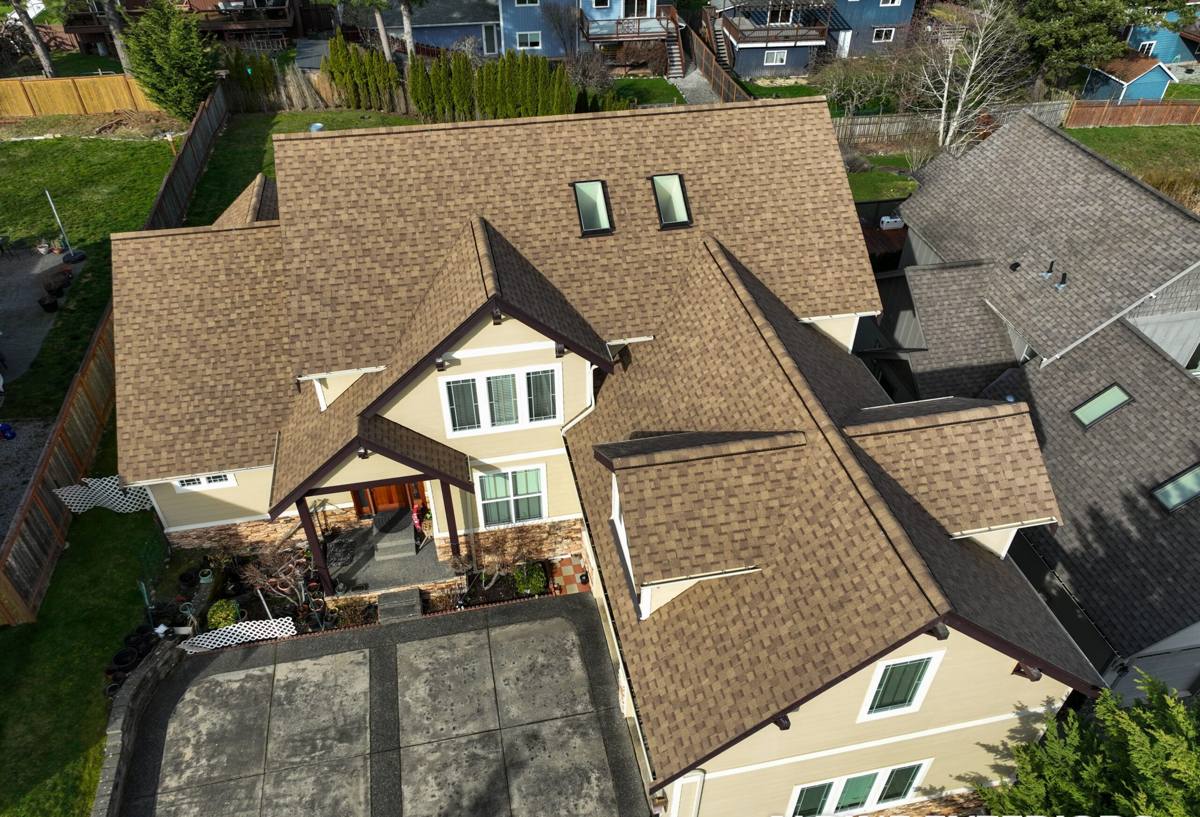
| Roof complexity | Valleys, dormers, skylights, and multiple penetrations all add labor and flashing work |
| Wind-rating requirements | Coastal fastening patterns and higher-rated products can add cost over a minimum-code inland install |
We give a firm, itemized number after inspecting the actual roof rather than quoting off square footage alone — it's the only way the estimate holds up once the tear-off starts.
Caring for Your New Roof
A correctly installed roof still benefits from basic upkeep, especially in a salt-air environment.
- Have the roof visually inspected after any major storm and at least once a year
- Keep gutters and downspouts clear so water isn't backing up under the roof edge
- Rinse off heavy salt or debris buildup periodically rather than letting it sit
- Address any small leak or missing piece promptly instead of waiting
- Keep overhanging branches trimmed back to reduce debris and abrasion
- Keep permit and inspection records on file for insurance purposes
If you're weighing a repair against a full replacement, or you just want an honest read on where your roof stands, we're glad to take a look. The estimate is free, there's no pressure to commit, and you'll get a straight answer either way — use the form below to get started.