 Largo Siding
 Palm Harbor's Climate Is Hard on Windows
Windows on the west side of Pinellas County don't get an easy life. Between hurricane season, relentless sun, and air that carries salt off the Gulf, a window that would last decades in a drier, calmer climate can start failing in a fraction of that time here. If you're planning a custom window project in Palm Harbor, it helps to understand exactly what you're up against before you pick a product or a contractor.
Wind Load and Storm Pressure
Coastal Pinellas County sees real wind-borne debris risk during tropical systems and hurricanes. Windows here take direct pressure from sustained wind and the sudden pressure changes that come with gusts, plus the risk of impact from flying debris. A window that isn't rated and installed for these conditions is a weak point in the whole envelope of the house — not just a glass problem, but a structural one.
UV and Heat Cycling
Florida sun is intense and constant, year-round. UV exposure breaks down vinyl, degrades seals, and fades interior finishes faster than in most of the country. Frames also go through daily heat cycling — expanding in the afternoon sun and contracting overnight — which stresses seals, hardware, and the joints where frame meets opening.
Salt Air and Corrosion
Being close to the Gulf means airborne salt settles on everything, including window frames, hardware, and fasteners. Salt accelerates corrosion on lower-grade metals and hardware, and it can also degrade certain sealants and finishes over time if they weren't chosen with coastal exposure in mind.
Wind-Driven Rain
It's not just about keeping rain out when it falls straight down. During storms, rain in this area comes in sideways, driven hard by wind, and it finds any gap in flashing, sealant, or frame fit. Most water intrusion problems we see around windows aren't glass failures — they're installation or flashing failures that let wind-driven rain behind the frame.
What "Custom" Means When Your Windows Aren't Standard
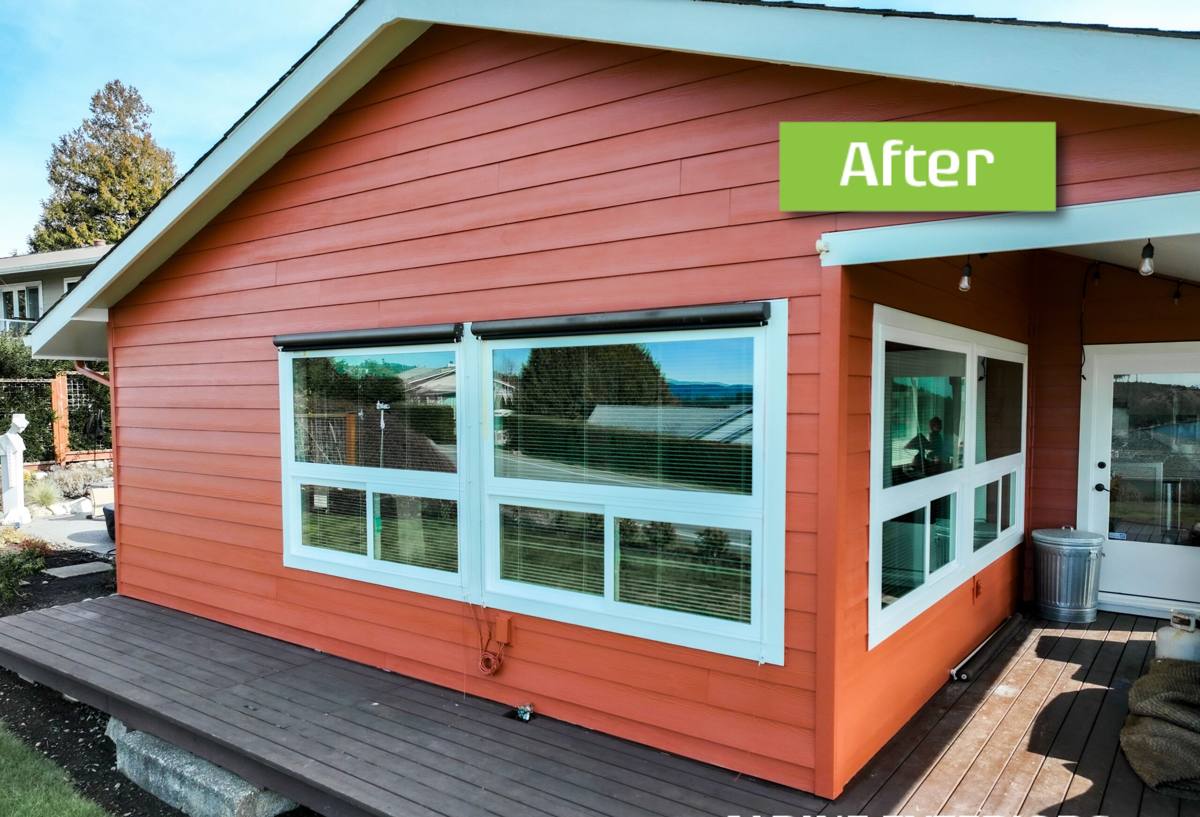
A lot of homes in and around Palm Harbor were built decades ago, and openings don't always match what comes off the shelf today. Custom windows come into play when:
- The home has masonry or block construction with rough openings that don't match modern standard sizes
- You're replacing an unusual shape — arched, angled, or a large picture window paired with operable units
- A lanai, Florida room, or enclosed porch addition has openings that were never built to a manufacturer's stock dimensions
- You want to change the window's operation style (for example, swapping old sliders for casements) which changes the opening requirements
- Matching an existing architectural look on an older home where standard replacement windows would look out of place
Custom doesn't have to mean expensive or complicated — it just means the opening, the structure, or the look calls for something built or modified to fit, rather than a stock size dropped into a standard hole.
Choosing the Right Frame and Glass for This Area
There's no single "best" window material for every house — it depends on your budget, your home's exposure, and how much upkeep you want to do. Here's how the common options stack up for a coastal Pinellas County home:
| Frame Material | Salt Air Resistance | Heat/UV Performance | Maintenance |
|---|---|---|---|
| Vinyl | Good — won't corrode | Good with quality UV-stabilized formulations | Low |
| Aluminum | Fair — needs proper coating/finish to resist corrosion | Good, but conducts heat unless thermally broken | Moderate |
| Fiberglass/Composite | Very good | Very good, dimensionally stable in heat | Low |
| Wood/Wood-Clad | Poor without diligent upkeep | Good insulator, but sensitive to moisture | High |
For most Palm Harbor homes, vinyl and fiberglass frames hold up the best against salt air and sun with the least ongoing maintenance. Aluminum can still be a good choice, especially for larger openings where its strength matters, but it needs to be a coastal-rated finish, not a builder-grade product. Wood-clad windows can look great, but in this climate they're a bigger long-term commitment.
Impact Ratings, Permits, and What Pinellas County Expects
Florida's building code takes wind-borne debris seriously in coastal areas, and Pinellas County enforces its own permitting process for window replacement and new installations. Depending on your home's location and the scope of work, you may need impact-rated glass, or non-impact glass paired with code-compliant protection like approved shutters, plus a permit and inspection.
Every window product installed here should carry a Florida Product Approval or Miami-Dade Notice of Acceptance number appropriate to the wind zone your home sits in. This isn't paperwork for its own sake — it's the documentation that ties a specific product to the testing that proves it can handle the pressures and impacts it will actually see. A contractor who can't tell you the approval number for the product they're installing on your home isn't giving you the full picture.
What a Correct Installation Actually Involves
The window unit itself is only part of the job. Most failures we're called to fix started with the installation, not the product. A correct job includes:
- Proper opening prep — removing old material down to sound framing, checking for hidden rot or corrosion before the new unit ever goes in
- Flashing integrated correctly with the wall's water management system, not just caulk smeared around the edges
- Sealants and backer rod rated for exterior, UV, and coastal exposure — not general-purpose caulk that will crack and shrink within a year or two
- Correct fastener type and spacing for the substrate, since block, wood frame, and stucco-over-block all call for different approaches
- Shimming and squaring the unit so it operates correctly and doesn't stress the frame over time
- Interior and exterior trim/finish work that restores a clean, sealed appearance
Skipping any one of these steps might not show up as a problem right away. It shows up two years later as a leak, a soft spot in the wall, or a window that won't latch properly anymore.
How We Handle a Palm Harbor Window Project
On-Site Assessment
We start by looking at the actual openings — not just measuring, but checking the condition of the framing, existing flashing, and any signs of past water intrusion. This tells us whether we're doing a straightforward replacement or something that needs more prep work.
Product Selection
We walk through frame material, glass package, and impact vs. non-impact options based on your home's exposure, your budget, and what you're trying to accomplish — whether that's storm protection, energy performance, noise reduction, or just replacing windows that are past their useful life.
Permitting
We handle the permit application and coordinate inspections with the county so you don't have to chase paperwork. This step matters more here than in a lot of markets, since improperly permitted window work can create real problems when you go to sell the house.
Install Day
Old units come out, openings get prepped and inspected, and new windows go in following manufacturer instructions and code requirements for flashing and fastening. We keep the work area contained and clean up debris as we go.
Final Walkthrough and Inspection
We test every window's operation, check seals and finish work with you, and make sure everything is ready for the county's final inspection where one is required.
Problems We Commonly Find in Older Palm Harbor Homes
When we get called out to look at older windows in this area, a handful of issues come up again and again:
- Builder-grade aluminum single-pane windows original to the home, now pitted or corroded from decades of salt air
- Fogged or "sweating" double-pane units where the seal has failed and moisture has gotten between the panes
- Cracked stucco or sealant failure around the frame perimeter, letting water track into the wall cavity
- Windows that were replaced at some point without a permit or without proper flashing, now showing water staining on interior walls
- Hardware that's seized or hard to operate due to corrosion, even when the glass and frame otherwise look fine
None of these are unusual for a coastal Florida home of a certain age — they're the predictable result of decades of sun, salt, and storms. The point of a proper custom window job is to address the actual cause, not just install new glass over the same underlying issue.
Keeping New Windows Performing Long-Term
New windows are only as good as the care they get afterward. A little routine attention goes a long way in this climate:
- Rinse frames and glass periodically with fresh water to remove salt film buildup, especially after storms or high-wind days
- Check that weep holes at the base of the frame are clear so water can drain properly instead of pooling
- Inspect exterior sealant and caulk once a year, and touch up anywhere it's cracked, shrunk, or pulled away
- Lubricate hardware — locks, hinges, tracks — with a manufacturer-recommended product to fight corrosion
- Watch for any soft spots, staining, or bubbling paint near the frame, which can signal a developing leak before it becomes a bigger repair
Why Local Experience in Palm Harbor Matters
A crew that works this specific area regularly knows things that don't show up in a product brochure — how Pinellas County's permitting office likes applications submitted, which neighborhoods have HOA or deed restrictions on window appearance, and how differently a home two blocks from the water needs to be treated compared to one further inland. That local knowledge shows up in fewer surprises, fewer callbacks, and a job that's actually built for where it sits, not just built to a generic spec sheet.
If you're weighing options for a custom window project in Palm Harbor or elsewhere around Largo, we're happy to take a look at your home and give you a straightforward, no-pressure estimate — just fill out the form below.