 Largo Siding
 Composite Decking for Kenneth City Homes
Kenneth City sits in the middle of Pinellas County, wedged between Largo and St. Petersburg, close enough to the Gulf that salt air, humidity, and intense sun are part of daily life whether you're a mile from the water or five. A deck here isn't a weekend accessory — it's an outdoor room that has to survive a Florida summer, hold up through hurricane season, and still look decent in January. Composite decking has become the default choice for homeowners in this area for good reason, but "composite decking" covers a wide range of products and installation quality, and not every crew that installs it understands what this specific climate does to a deck over ten or fifteen years.
We're based in Largo and already work in and around Kenneth City regularly, which matters more than it sounds. A deck built by a crew that mostly works dry, low-humidity climates tends to make different assumptions — about ventilation, fastener spacing, drainage — than one built by a crew that deals with wind-driven rain and near-constant UV exposure every day.
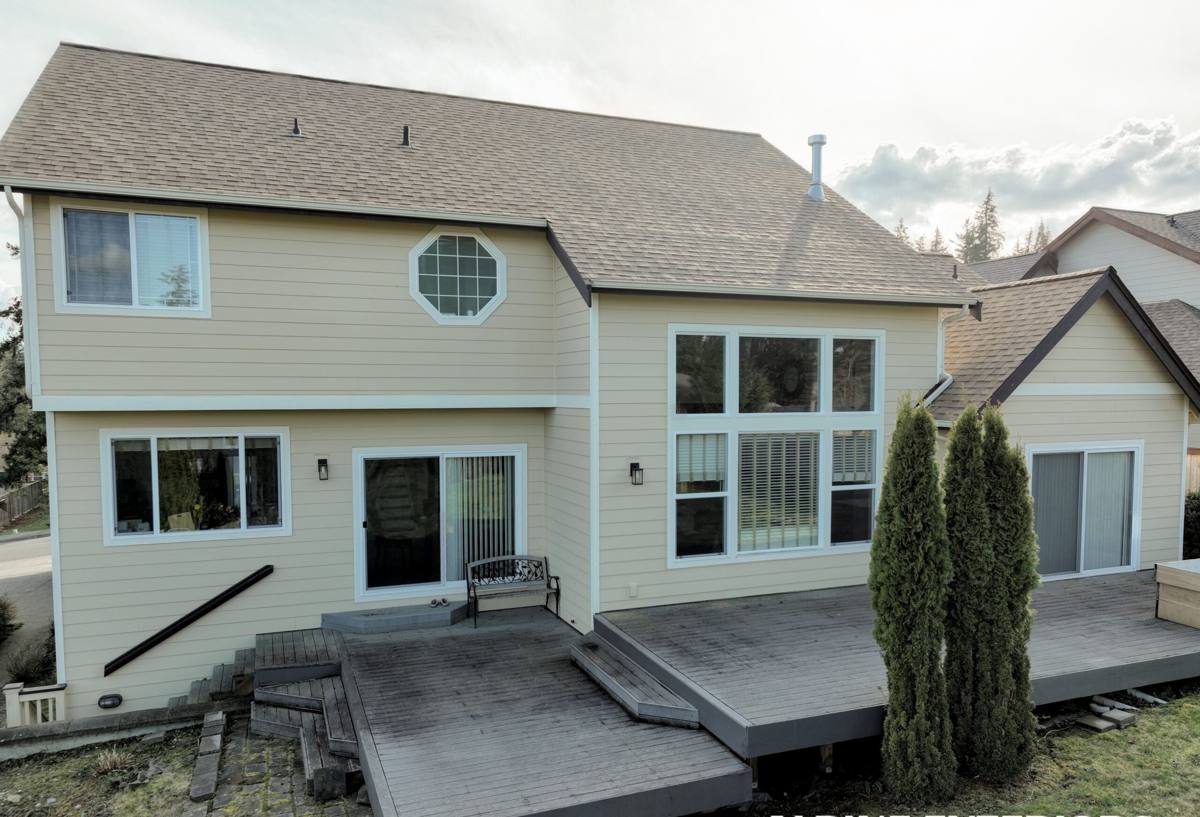
What Pinellas County Weather Does to a Deck
Before talking about materials or installation, it's worth being specific about what a deck in Kenneth City is actually up against, because it shapes almost every decision in the build.
Sun and UV
Florida gets some of the most intense, most consistent UV exposure in the country. On decking, that means color fading, surface chalking, and — on lower-quality boards — softening or embrittlement of the plastic components over time. A board that isn't formulated with strong UV inhibitors will look noticeably different after two or three summers than it did on install day.
Heat
Composite decking gets hot underfoot in direct sun, more than wood does, because the plastic content absorbs and holds heat. This isn't a defect — it's physics — but it's something we talk through with homeowners up front, especially for decks with a southern or western exposure and little shade.
Wind-driven rain and humidity
Pinellas County doesn't get gentle rain most of the year — it gets short, heavy, often wind-driven storms, on top of high ambient humidity for months at a stretch. Any gap, seam, or fastener point that isn't detailed correctly becomes a place where moisture sits against the substructure. Composite boards themselves resist moisture well, but the framing underneath them is usually still wood, and that's where poor installation shows up years later as soft spots, rot, or fastener failure.
Salt air
Kenneth City isn't beachfront, but it's close enough to the Gulf and Tampa Bay that airborne salt is a real factor, particularly on metal fasteners, brackets, and hidden hardware. Using fasteners and structural connectors rated for coastal exposure isn't optional here — it's the difference between hardware that lasts and hardware that starts corroding within a few seasons.
Storm wind
Pinellas County sees tropical storm and hurricane conditions most years in some form. A deck's railing system, ledger attachment, and post connections all need to be built to hold up under sustained wind loads, not just look sturdy on a calm day.
Why Composite Instead of Wood, Here Specifically
Wood decking can absolutely work in Florida, and we're not going to tell a homeowner it's a bad product — it's a different set of trade-offs. Wood requires regular sealing or staining to keep moisture out, and in this climate that maintenance window is shorter than it is in drier regions because UV and humidity both accelerate breakdown of the finish. Skip a season of maintenance on a wood deck here and you'll see it. Composite shifts that maintenance burden from "recurring and finish-dependent" to "occasional cleaning," which is a big part of why it's become the more common choice for homeowners who want a deck they can actually use instead of maintain.
| Factor | Wood Decking | Composite Decking |
|---|---|---|
| Maintenance | Sealing/staining every 1-2 years in this climate | Periodic washing, no sealing required |
| UV fading | Grays and weathers without upkeep | Color-stable boards resist fading, quality-dependent |
| Moisture behavior | Can cup, warp, or rot without upkeep | Board itself won't rot; substructure still needs proper detailing |
| Upfront cost | Lower material cost | Higher material cost |
| Long-term cost | Lower upfront, higher lifetime maintenance | Higher upfront, lower lifetime maintenance |
| Heat underfoot | Generally cooler | Can run hotter in direct sun, color-dependent |
The honest answer is that composite costs more on day one and less over the life of the deck, as long as it's installed correctly. That last part is the catch, and it's where a lot of decks — regardless of material — actually go wrong.
What a Correct Composite Deck Installation Actually Involves
The board on top is the part everyone sees, but it's the smallest factor in how long a deck lasts. Almost every deck problem we get called out to look at traces back to the framing, fasteners, or flashing, not the decking material itself.
The substructure
Joists and beams need to be sized correctly for the span and load, spaced to match the composite manufacturer's requirements (composite often needs tighter joist spacing than wood decking, especially on diagonal layouts), and, where wood framing is used, protected from ground and moisture contact.
Ledger attachment
Where the deck ties into the house is the single most important structural connection and the most common source of failure industry-wide. It needs correct flashing to keep water from tracking behind the ledger and into the house framing, and lag or through-bolt connections sized for the load — not just nailed on.
Fasteners and hardware
Given the salt air here, we use fasteners and structural hardware rated for coastal/corrosive environments, not standard interior-grade hardware that will start rusting within a few years.
Hidden fastening systems
Most composite boards today use a hidden clip system rather than face screws. Done correctly, this gives a clean surface and allows for the board expansion and contraction composite decking naturally goes through with temperature swings. Done poorly — wrong clip spacing, boards installed too tight — it leads to buckling.
Drainage and airflow underneath
Ground contact, poor grading, or no ventilation under a low deck traps humidity against the framing. We grade and, where needed, add ventilation so the substructure can actually dry out between storms instead of staying damp.
Our Process, Start to Finish
- Site visit and assessment — we look at sun exposure, drainage, existing structure (for replacements), and how the deck ties into the house.
- Design and material selection — layout, railing style, board color and profile, matched to budget and how the space will actually be used.
- Written estimate — clear scope, materials, and pricing before any work starts, no vague allowances.
- Permitting — we handle the permit process for the jurisdiction the property falls under.
- Demo (if replacing an old deck) — including an honest look at the ledger and framing before deciding what can be reused.
- Framing and structural work — built to span and load requirements, with corrosion-resistant hardware throughout.
- Decking, railing, and finish details — installed to the manufacturer's spec so warranty coverage stays intact.
- Final walkthrough — we go over the finished deck and basic care with the homeowner before calling the job done.
Choosing Boards: What Actually Drives Cost
Composite decking pricing varies a lot by brand, board profile, and finish, and homeowners are often surprised by the range within "composite" alone.
| Cost Factor | What It Affects |
|---|---|
| Board tier (entry vs. premium capped) | Fade resistance, scratch resistance, warranty length |
| Capped vs. uncapped composite | Fully capped boards resist moisture and staining better in humid climates |
| Color | Darker colors run hotter and may show fading differently than lighter tones |
| Railing system | Composite, aluminum, or cable railing all price differently and hold up differently to salt air |
| Deck height and structure complexity | Multi-level decks or those requiring engineered footings cost more in framing labor |
| Substructure condition | Replacing existing framing vs. building new adds cost but is often necessary |
We walk through these trade-offs with every homeowner rather than just quoting the cheapest board — a deck is a long-term investment, and the right spec depends on budget, sun exposure, and how the space will be used.
Permits and Local Code
Deck projects in Pinellas County generally require a permit, and inspections check structural elements like footing depth, ledger attachment, and railing height and spacing — all things that matter more here than in milder climates because of wind load requirements. We handle the permit process as part of the job rather than leaving it to the homeowner to navigate, and we build to the load and connection standards that inspections check for, not just to what looks finished.
Maintaining a Composite Deck in This Climate
One of the real advantages of composite is how little upkeep it needs compared to wood, but "low maintenance" isn't "no maintenance," especially with salt air and pollen in the mix.
- Rinse or wash the deck surface a few times a year to clear salt residue, pollen, and organic buildup
- Clean spills (grease, sunscreen, food) promptly to avoid surface staining on lighter boards
- Check railing and post hardware periodically for corrosion, especially closer to the water
- Keep gutters and drainage clear so water isn't pooling near ledger connections
- Trim back plants and debris that trap moisture against the deck surface or framing
- After named storms, do a quick visual check of railings, stairs, and fastener points
Why a Local Kenneth City Crew Matters
Composite decking is sold as a fairly uniform product, but how it performs depends entirely on whether the crew installing it understands the environment it's going into. We're not learning Pinellas County's climate on your project — we already build for salt-air hardware corrosion, storm wind loads, humidity-driven substructure issues, and UV exposure because that's what every deck we build here has to deal with. That local familiarity shows up in the details: joist spacing that accounts for our humidity, fastener selection that accounts for salt air, and ledger flashing that accounts for wind-driven rain, not just a generic installation manual followed the same way it would be in a dry inland climate.
If you're weighing a new deck or a replacement in Kenneth City, we're happy to take a look and give you a straightforward, no-pressure estimate — what we'd recommend, what it would cost, and why. Fill out the form below to get started.