 Largo Siding
 Decking Built for a Barrier Island, Not Just a Showroom
Indian Shores sits on one of Pinellas County's barrier islands, with the Gulf on one side and the Intracoastal on the other. That location is what makes the town beautiful, and it's also what makes it one of the hardest places in the region to keep an outdoor deck looking and performing the way it should. Homes here take on salt air, intense year-round UV, wind-driven rain, and hurricane-force gusts in combinations that inland Largo properties simply don't see as often or as directly. A deck built to a generic spec sheet, or installed by a crew that mostly works subdivisions further from the water, tends to show problems early — fading, fastener corrosion, boards that cup or work loose at the edges. Composite decking done correctly for this environment is a different job than composite decking done anywhere else in Pinellas County, and it should be treated that way from the first conversation.
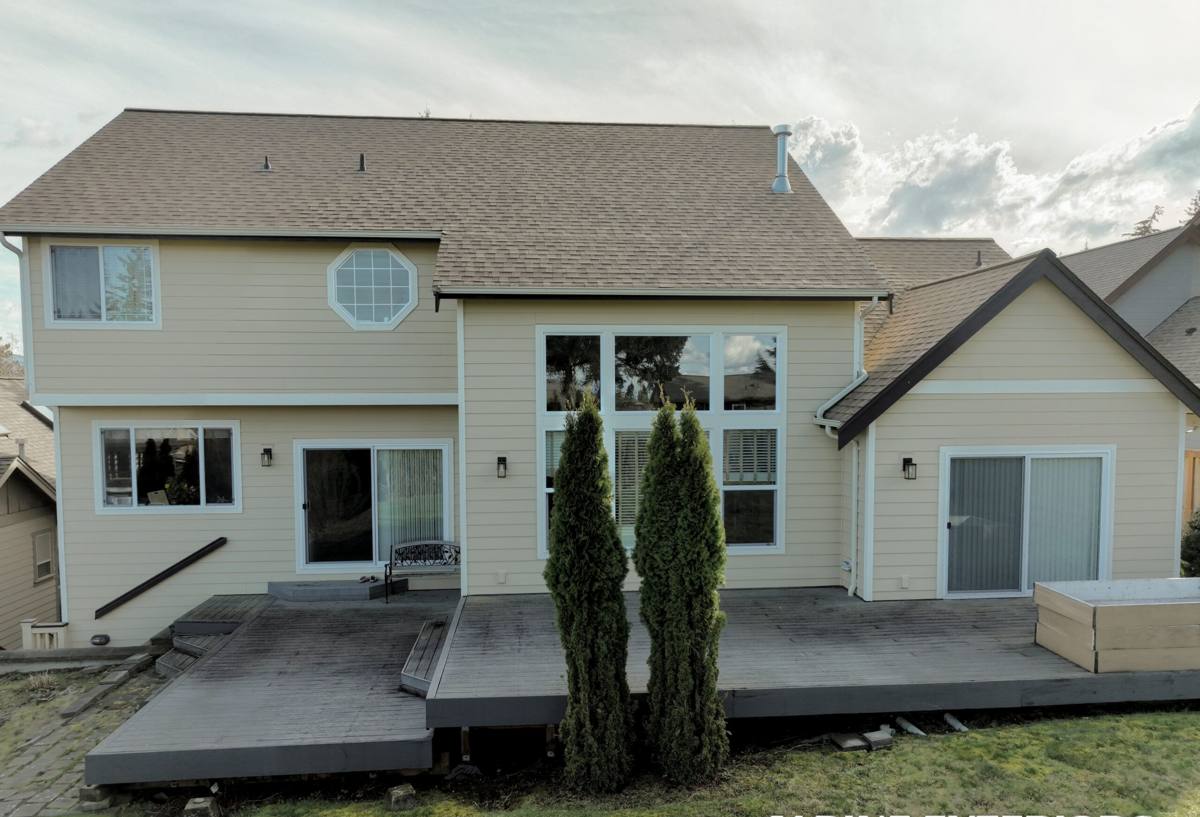
What Barrier-Island Exposure Actually Does to a Deck
Salt Air and Corrosion
Airborne salt doesn't just settle on a deck's surface — it works into every metal component: fasteners, joist hangers, railing brackets, post bases. On a standard interior fastener or an untreated bracket, that means rust staining, weakened connections, and streaking on the deck boards themselves within a few seasons. This is the single biggest difference between building a deck in Indian Shores versus building one a few miles inland.
Year-Round UV
Florida sun is intense in every season, not just summer. UV breaks down color pigments and surface resins over time, which is why cheap or uncapped decking products fade unevenly, chalk on the surface, or lose their color depth well before their structural life is up.
Wind-Driven Rain and Moisture Intrusion
Storms here rarely bring rain straight down. Wind-driven rain gets pushed sideways and upward, finding its way behind ledger boards, under poorly flashed connections, and into any gap that a standard installation might get away with elsewhere. On an elevated or waterfront home, that moisture has to have somewhere to go.
Hurricane-Force Wind Loads
Guardrails, post connections, and the fastening pattern of the decking itself all have to hold up under wind loads that inland decks are rarely tested by. A railing that's screwed in loosely or a ledger that's under-fastened is a much bigger liability on an exposed barrier island lot.
Why Composite Decking Is a Strong Fit — When It's the Right Composite
Composite decking's core advantage in this climate is that it doesn't rot, split, or absorb water the way wood does, and a quality capped composite resists fading and staining far better than wood ever will. That said, "composite" isn't one product — it's a category that ranges from basic uncapped boards to fully capped, engineered products, and the difference matters more in a salt-air environment than almost anywhere else. Uncapped composite can still absorb moisture at cut edges and is more prone to surface mold in humid, shaded areas near the water. A properly capped composite board seals the wood-plastic core on all sides, which holds up far better against salt exposure, humidity, and constant sun. We steer homeowners toward capped products for Indian Shores installations as a matter of professional standard, not because every uncapped product is a bad product — it's a maintenance and longevity trade-off we've seen play out on barrier island decks over time.
What a Correct Composite Deck Installation Involves Here
The decking material is only part of the job. On a coastal install, the details underneath and around the boards are what actually determine whether the deck holds up.
- Corrosion-resistant fasteners and hardware — stainless steel or coated fasteners rated for coastal/marine exposure, not standard interior-grade hardware
- Joist tape or flashing on the substructure to keep wind-driven rain from soaking framing lumber from above
- Proper board spacing and gapping so the deck can drain and breathe instead of trapping moisture and salt residue
- Ledger flashing where the deck attaches to the house, sealed to shed water away from the structure rather than into it
- Hidden fastener systems installed to the manufacturer's exact spacing, which matters more under high wind uplift than most people realize
- Guardrail and post connections built to hold their rated load, not just anchored well enough to pass a quick look
Skipping any one of these doesn't usually cause a visible problem in year one. It shows up two or three years later as corrosion streaks, a loose railing, or water intrusion at the house — after the workmanship warranty conversation has already happened.
Comparing Decking Materials for a Salt-Air, High-Wind Environment
Every material has trade-offs. Here's how the common options stack up specifically for the conditions Indian Shores homes deal with.
| Material | Upfront Cost | Coastal Durability | Maintenance | Hardware Needs |
|---|---|---|---|---|
| Pressure-treated wood | Lowest | Weakest — prone to warping, splintering, and rot acceleration from salt humidity | Annual sealing/staining, ongoing board replacement | Standard, but corrodes fastest in salt air |
| Uncapped composite | Moderate | Good, but more prone to moisture absorption at cut edges and surface mold in shaded, humid spots | Periodic cleaning; less than wood | Coastal-rated hardware still required |
| Capped composite / PVC | Highest | Best — fully sealed against moisture, salt, and UV on all sides | Occasional washing only | Coastal-rated hardware still required |
Wood is rarely the honest choice for a barrier island deck — the ongoing sealing and replacement costs add up fast in this climate, even though the material itself is cheaper up front. Between uncapped and capped composite, the decision usually comes down to budget versus how much long-term maintenance a homeowner wants to take on.
Our Installation Process
- Site and structure assessment — we evaluate the existing substructure (if any), the home's ledger connection, flood zone and elevation factors common to barrier island lots, and drainage around the deck footprint.
- Product selection — we walk through capped versus uncapped options, color and heat considerations, and railing systems rated for coastal wind exposure.
- Permitting — we handle the permit process with Pinellas County or the applicable local building authority before any work starts.
- Framing and substructure work — corrosion-resistant hardware, joist protection, and proper spacing built in from the ground up.
- Decking and railing installation — boards fastened to spec, railings anchored to their rated load, all flashing and sealing points addressed.
- Final walkthrough — we go over the finished deck with the homeowner, including what to expect from the material over time in this environment.
Permitting and Code Considerations for Indian Shores
Deck work on a barrier island isn't a handshake job. Most new decks and significant deck replacements in Pinellas County require a permit, and coastal wind-load provisions in the Florida Building Code apply directly to guardrail and connection design on an exposed property like this. Homes on elevated foundations or near flood zone boundaries can also have specific attachment and elevation requirements for anything built onto the structure. None of this is meant to make the process intimidating — it's meant to explain why a deck built to code here looks a little different underneath than one built a few miles inland, and why cutting corners on permitting or inspection is a real risk on a coastal property.
Maintaining a Composite Deck in Salt Air
Composite decking is low-maintenance compared to wood, but "low-maintenance" doesn't mean "no maintenance" this close to the Gulf. A little routine care goes a long way toward protecting the investment.
- Rinse the deck surface periodically to clear salt residue, especially after storms with onshore wind
- Sweep away sand, leaves, and debris from board gaps so airflow and drainage aren't blocked
- Check railing posts and hardware connections once or twice a year for corrosion or loosening
- Clean spills and organic debris promptly to prevent surface staining in humid, shaded areas
- Inspect ledger flashing and the house connection point after major storms
Why It Matters to Hire a Crew That Already Works Indian Shores
A contractor who mostly builds decks inland can still do competent work, but coastal barrier island construction has its own set of habits that only come from doing it repeatedly: knowing which hardware actually holds up to salt exposure instead of just meeting a minimum spec, understanding how Pinellas County handles permitting for elevated and flood-zone-adjacent properties, and building railing and fastening connections to the wind loads this specific stretch of coastline sees. A crew that already works in and around Indian Shores has made those decisions before and has seen how different products and details actually perform here over time — not just on paper.
If you're planning a new composite deck or replacing one that hasn't held up to the salt air and sun, we're happy to take a look and walk you through honest options for your property. Fill out the form below for a free, no-pressure estimate.