 Largo Siding
 Dunedin Roofs Work Harder Than Most
Dunedin sits close to the Gulf, which means the roofs here take on a combination of stresses that inland homes rarely see all at once: sustained onshore wind, salt-laden air that accelerates corrosion on fasteners and flashing, intense year-round UV that bakes shingles and sealants, and the wind-driven rain that comes with tropical systems and even routine summer storms. Any one of these will wear down a roof over time. Together, they shorten the useful life of a roof system and turn small, easily-missed problems into real leaks faster than homeowners expect.
Storm damage repair on a Dunedin roof isn't just patching a hole. It's understanding how this specific coastal environment attacks a roof system, then repairing it in a way that holds up to the next storm, not just the last one.
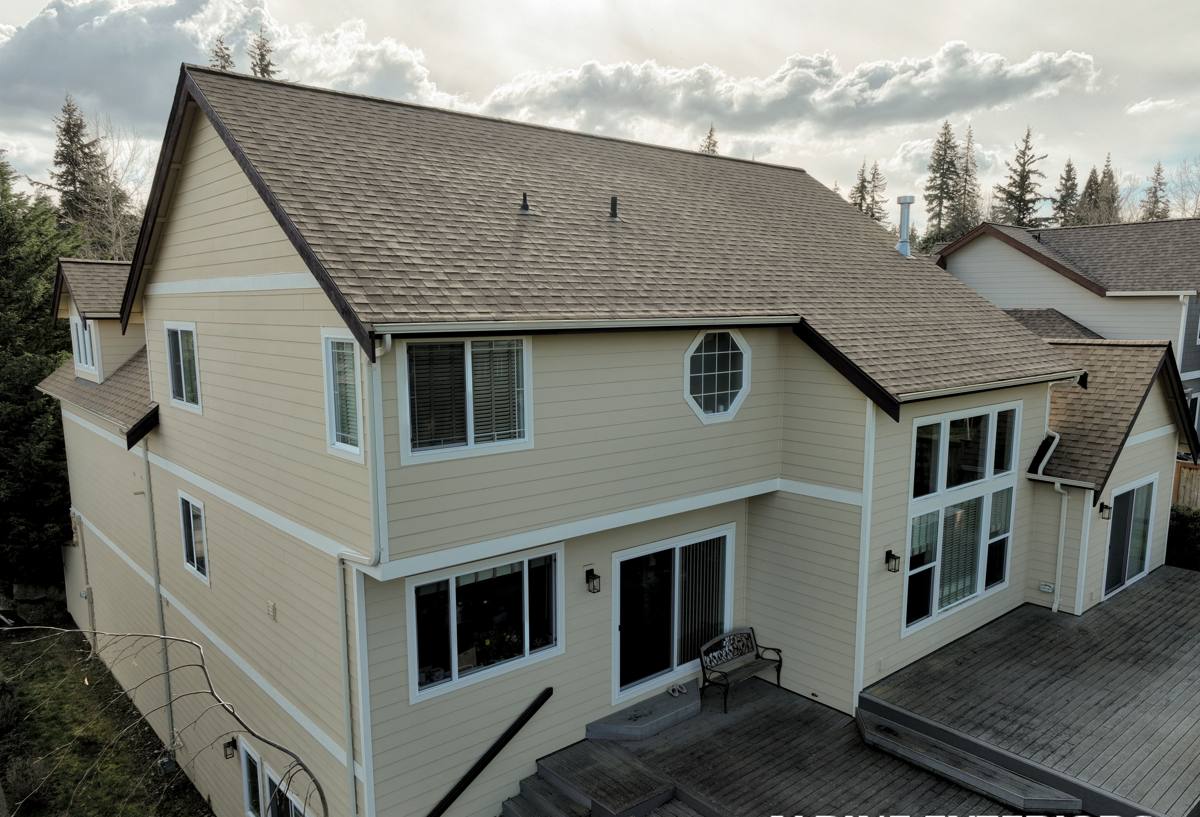
What Actually Counts as Storm Damage
Not every roof problem after a storm is obvious. Some damage is dramatic — missing shingles, a tarp-worthy hole, a soffit torn loose. Other damage is quiet and shows up weeks later as a ceiling stain or a musty smell in an attic. Both categories matter, and both are worth a real inspection after any significant wind or rain event.
Wind Damage
Sustained winds and gusts lift shingle edges, break the sealant bond, and can crease or fully tear off shingles and their tabs. Once a shingle's seal is broken, it may look fine from the ground but no longer shed water correctly. Ridge caps and hip caps, which take the most direct wind load, are common failure points that go unnoticed until a leak develops.
Wind-Driven Rain and Hidden Leaks
Rain that comes in sideways behaves differently than rain falling straight down. It can work its way under shingle tabs, around flashing at chimneys and walls, and through vents that weren't designed to handle horizontal water pressure. This is one of the most common causes of leaks that Dunedin homeowners discover well after the storm has passed, because the water travels along the underlayment or decking before it finds a path into the living space.
Impact and Debris Damage
Falling branches, wind-thrown debris, and occasional hail can bruise or puncture shingles, crack tile, or dent metal roofing and flashing. Impact damage is sometimes cosmetic and sometimes structural — the difference matters for both the repair scope and any insurance claim.
Doing the Repair Right, Not Just Fast
After a storm, there's pressure to get any repair done quickly, and that's understandable — an open roof is a real risk to the rest of the house. But a rushed repair on a coastal roof tends to fail again at the next storm, because it doesn't account for the underlying causes of the damage. A correct repair starts with a full assessment, not just a patch over the visible problem.
Assessment Before Repair
We check the full roof plane, not just the damaged section — wind and wind-driven rain rarely affect just one spot. That includes checking surrounding shingles for broken seals, inspecting flashing at penetrations and walls, and looking at the decking underneath if there's any sign of water intrusion. A repair limited to the visibly damaged area can leave adjacent weak points that fail in the next storm.
Matching Materials and Manufacturer Specs
Shingle repairs need to match the existing roofing in both material and installation method to maintain the manufacturer's warranty and the roof's wind rating. Mismatched or improperly fastened shingles can void warranty coverage and create a weak point that performs worse than the original roof did.
Our Storm Damage Repair Process
- Inspection. We walk the roof (or use appropriate access methods when conditions don't allow it) and document damage with photos for your records and any insurance claim.
- Written scope. You get a clear explanation of what's damaged, what needs repair versus what's cosmetic, and an honest recommendation — repair or, if the damage is extensive enough, replacement.
- Temporary protection if needed. If there's active water intrusion, we address that first, before scheduling the full repair.
- Repair. Damaged shingles, flashing, underlayment, or decking are replaced to match existing materials and manufacturer installation standards.
- Final check. We verify the repair area and surrounding roof sections are properly sealed and fastened before calling the job complete.
Repair or Replace? How We Decide
Not every storm-damaged roof needs to be replaced, and not every roof can be safely repaired section by section. The decision usually comes down to a few practical factors.
| Factor | Favors Repair | Favors Replacement |
|---|---|---|
| Extent of damage | Isolated to one area or slope | Spread across multiple roof planes |
| Roof age | Roof is well within its expected service life | Roof is already near the end of its expected lifespan |
| Decking condition | Decking is sound and dry | Decking shows rot or repeated water staining |
| Shingle availability | Matching shingles are still available | Original shingle line is discontinued, causing visible mismatch |
| Repair history | First significant repair on this roof | Roof has needed multiple storm repairs in recent years |
We'll walk you through where your roof falls on these factors rather than defaulting to the most expensive option. If a targeted repair is the honest answer, that's what we'll recommend.
Materials That Hold Up on This Coast
For coastal Pinellas County homes, the materials used in a repair matter as much as the workmanship. A few specifics worth knowing:
- Underlayment: Synthetic underlayment generally resists wind-driven rain and UV exposure better than older felt products during the time it's exposed before shingles go down, and it holds up better long-term under Florida humidity.
- Self-adhering membrane at vulnerable areas: Valleys, eaves, and areas around penetrations benefit from self-sealing underlayment that closes around fastener penetrations, reducing the chance of wind-driven rain finding a path in.
- Fasteners and flashing: Corrosion-resistant fasteners and flashing matter more here than in inland areas because of the salt content in the air. We don't cut corners on hardware just because it's a less visible part of the job.
- Wind-rated shingles: Where a section needs full replacement, we use shingles with wind ratings appropriate for this area, installed per the manufacturer's high-wind nailing pattern — not just the standard pattern.
Insurance Claims and Storm Repairs
Many storm repairs in this area involve an insurance claim. We're happy to provide the documentation, photos, and written scope that adjusters typically ask for, and to point out damage that isn't obvious from the ground. What we won't do is inflate a scope of work to chase a bigger payout or promise a claim outcome we don't control — that decision sits with your insurer. Our job is to give you an accurate, honest assessment you can bring to that conversation.
Why Local, Storm-Season Experience Matters
After a hurricane or major wind event, it's common to see out-of-town crews going door to door in Pinellas County offering fast repairs. Some are legitimate. Many disappear before a warranty claim ever comes up, leaving homeowners with no one to call if the repair fails. A crew that already works in Dunedin and the surrounding Largo area year-round has a reason to stand behind the work — we're not leaving town when the storm cleanup contracts dry up. We also know how Dunedin roofs specifically age under salt air and sustained Gulf breeze exposure, which shapes how we assess damage and what we flag as a risk even when it isn't the immediate reason for the call.
Storm Readiness Checklist for Dunedin Homeowners
A few habits go a long way toward catching storm damage early, before a small problem becomes a bigger repair:
- Do a visual check from the ground after any significant wind event — look for missing, lifted, or displaced shingles
- Check attic spaces after heavy rain for new stains, damp insulation, or musty odors
- Have flashing around chimneys, vents, and roof-wall intersections inspected periodically, since these are common wind-driven rain entry points
- Trim back tree limbs that overhang the roofline before storm season
- Keep a record of your roof's age and any prior repairs, which speeds up both future repairs and insurance conversations
- Don't ignore a small leak — coastal humidity accelerates hidden rot once water finds a way into decking or framing
If a recent storm has left your Dunedin roof with missing shingles, a leak, or damage you're not sure how serious it is, we're glad to take a look and give you a straight answer. Reach out for a free, no-pressure estimate using the form below.