 Largo Siding
 Why Decks in Dunedin Wear Out Faster Than the Manual Says
Most decking products are rated and marketed based on general national averages, not on what a deck actually faces sitting a few miles from the Gulf in Pinellas County. Dunedin decks deal with intense, near year-round UV exposure that breaks down wood fibers and fades or chalks lower-grade composite. They deal with wind-driven rain that gets pushed sideways under railings and through board gaps by summer storms. And they deal with salt-laden air that accelerates corrosion on fasteners, brackets, and any hardware that isn't rated for coastal use. Add in the structural demands of hurricane-force wind gusts, and a deck built to a generic national spec often starts showing problems years before it should.
None of that means a deck can't last in this climate — it means it has to be built for this climate specifically, with the right fasteners, the right ledger connection, the right footings, and decking material chosen with eyes open about how it actually performs here, not just how it looks on a showroom sample.
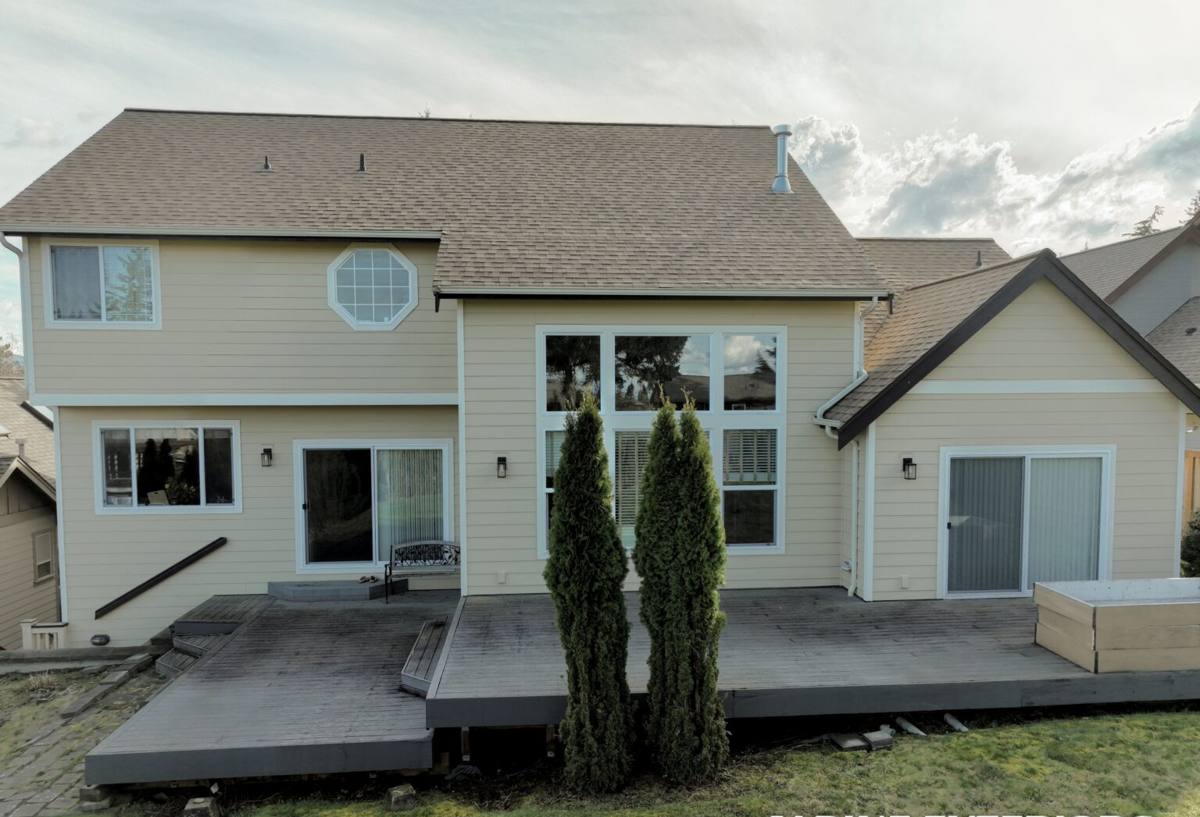
Signs a Dunedin Deck Needs Replacement, Not Another Repair
Homeowners often ask us to "just fix a few boards," and sometimes that's genuinely all that's needed. But repair only makes sense when the problem is cosmetic and isolated. Replacement is the honest answer when the issue is structural or has spread through the frame.
Structural Red Flags
- Soft, spongy, or bouncy spots in the decking or framing underfoot
- Visible rot or splitting at the ledger board where the deck meets the house
- Rusted, corroded, or missing structural fasteners and connectors
- Wobbly railings or posts that move independently of the frame
- Footings that have shifted, cracked, or are no longer making solid contact with the post
Cosmetic Issues That Don't Require Full Replacement
Surface graying on untreated wood, minor board cupping, or a handful of weathered boards on an otherwise sound frame are usually repair or refinish situations, not replacement situations. A straightforward inspection is the only reliable way to tell the difference — guessing based on how a deck looks from the yard leads to either wasted money on unnecessary replacement or a false sense of security on a deck that's actually failing underneath.
What a Correct Deck Replacement Involves in This Climate
Ledger Board and Flashing
The ledger board — where the deck attaches to the house — is the single most common failure point on any deck, and it's especially punishing in a climate with frequent wind-driven rain. Water that gets behind an improperly flashed ledger has nowhere to go and will rot the band board and even the house framing behind it before it's visible from outside. A correct replacement uses proper flashing that sheds water away from the house, not just a ledger bolted flush against siding.
Fasteners and Hardware
Standard galvanized fasteners corrode faster in salt air than most homeowners expect, especially anywhere within a few miles of the coast. We use stainless steel or coated fasteners and structural connectors rated for coastal exposure at every load-bearing point — ledger bolts, joist hangers, post bases — because a deck is only as strong as its weakest connection, and a rusted-out hanger is invisible until it fails.
Footings and Framing
Footing depth and post spacing need to account for both the soil conditions typical of this area and the wind loads a deck structure has to resist during a tropical storm or hurricane. Undersized or shallow footings are a common shortcut on older decks, and they're one of the reasons a "small" deck replacement sometimes needs to become a full structural rebuild once we're underneath the old boards.
Choosing a Decking Material for Dunedin's Climate
There's no single "best" decking material — there's a best material for how you'll use the deck, your maintenance appetite, and your budget. Here's how the common options actually hold up under Pinellas County sun, humidity, and salt air, based on the honest trade-offs of each:
| Material | UV & Heat Performance | Maintenance | Coastal Durability |
|---|---|---|---|
| Pressure-treated wood | Fades and grays without regular refinishing | Annual sealing/staining recommended | Good if fasteners and hardware are coastal-rated |
| Capped composite (e.g., Trex, TimberTech) | Strong fade resistance; can run hot underfoot in direct sun | Occasional washing; no staining or sealing | Very good; resists rot and insects |
| Uncapped composite | More prone to fading and moisture absorption over time | More maintenance than capped composite | Fair; older formulations can degrade faster in humidity |
| PVC decking | Excellent fade and moisture resistance | Low maintenance | Very good; fully resists rot |
We don't push one product on every job. Real cedar or pressure-treated wood still makes sense for homeowners who like the natural look and don't mind the upkeep. Capped composite and PVC cost more upfront but trade ongoing maintenance for consistent long-term performance — a fair trade for a lot of Dunedin homeowners who want to actually use their deck instead of maintaining it every spring.
Permits, Codes, and Wind Load Requirements
Deck replacement in Pinellas County typically requires a permit, and inspections check exactly the things that matter most in this climate: ledger attachment, footing depth, joist hangers, guardrail height, and stair construction. Florida Building Code wind load requirements apply to deck framing just as they do to roofing and siding, which is part of why cutting corners on framing is such a costly mistake here — an under-built deck isn't just a maintenance headache, it's a safety and code liability during storm season. We handle the permitting and inspection coordination as part of the job so you're not chasing paperwork.
Our Deck Replacement Process
- On-site assessment — we inspect the existing deck's framing, ledger, footings, and decking to determine what's actually failing versus what's cosmetic.
- Honest scope and estimate — you get a clear breakdown of what needs full replacement, what materials we recommend and why, and a written price.
- Permitting — we pull the required permit and schedule inspections through the appropriate local jurisdiction.
- Demolition and disposal — the old deck comes out, including any hidden rot in the framing that wasn't visible until we opened it up.
- Structural rebuild — new footings, framing, and ledger flashing, built to current wind load and coastal fastener standards.
- Decking, railing, and finish work — installed to manufacturer spec so material warranties stay valid.
- Final inspection and walkthrough — we confirm everything passes and walk the finished deck with you.
What Drives the Cost of a Deck Replacement
Two decks that look similar in size can land at very different price points depending on what's actually involved. The main cost drivers we see on Dunedin jobs:
| Factor | Why It Matters |
|---|---|
| Deck size and height | Larger decks and multi-level or elevated decks require more framing, footings, and railing |
| Decking material | Pressure-treated wood costs less upfront than capped composite or PVC |
| Framing condition | Rotted or undersized framing found during demo adds structural rebuild costs |
| Footing work | Replacing or adding footings to meet current code costs more than reusing sound existing ones |
| Railing style | Cable, glass, or composite railing systems cost more than standard wood or aluminum |
| Stairs and access | Additional stair runs or landings add material and labor |
As a rough range, straightforward wood deck replacements often start in the lower thousands, while larger composite or PVC decks with elevated framing or upgraded railing can run considerably higher. Every job gets a specific written estimate after we've actually seen the deck — we don't quote sight unseen.
Checklist: What to Ask Before Hiring a Deck Replacement Crew
- Are you licensed and insured to perform structural deck work in Florida?
- Will you pull the required permit and coordinate inspections?
- What fasteners and hardware do you use, and are they rated for coastal exposure?
- Will you inspect the ledger board and footings before quoting, not just the visible decking?
- Can I see the written scope of work and material specifications before we start?
- Do you carry workers' compensation coverage for your crew?
- What's your timeline, and how do you handle unexpected framing issues found during demo?
Why a Crew That Already Works Dunedin Matters
A deck built to a generic spec sheet from a manufacturer based somewhere with a mild inland climate is not the same as a deck built by a crew that deals with Gulf Coast humidity, salt air, and hurricane season every single year. We know which fastener grades actually hold up here, which footing depths pass inspection with local jurisdictions, and which decking materials are worth the extra cost versus which ones just look good in a showroom. That local, repeated experience is what keeps a deck replacement from becoming a repeat job in five years.
If your Dunedin deck is showing its age — soft spots, rusted hardware, a ledger board you're not sure about, or just decking that's had enough of the Florida sun — we're happy to take a look and give you a straight answer about what it actually needs. Request a free, no-pressure estimate using the form below and we'll walk the deck with you in person.