 Largo Siding
 Decks in Safety Harbor Take a Different Kind of Beating
Safety Harbor sits close enough to Tampa Bay that its homes deal with a specific combination of stress most inland decks never see. You've got intense, near year-round UV that breaks down wood fibers and fades or chalks composite surfaces over time. You've got wind-driven rain that finds its way into every seam, screw hole, and ledger connection if the deck wasn't built or flashed correctly. And you've got salt-laden air drifting in off the water, which speeds up corrosion on fasteners, brackets, and any hardware that isn't rated for a coastal environment. Add in the wind loads a deck has to survive during a Gulf hurricane season, and it's clear why a deck built for a dry inland climate doesn't hold up the same way here.
A deck replacement in this part of Pinellas County isn't just about swapping old boards for new ones. It's about rebuilding the structure so it can actually handle the environment it lives in — correct fastener metallurgy, proper drainage and flashing at the house connection, and a build sequence that doesn't trap moisture where it will rot the frame from the inside out.
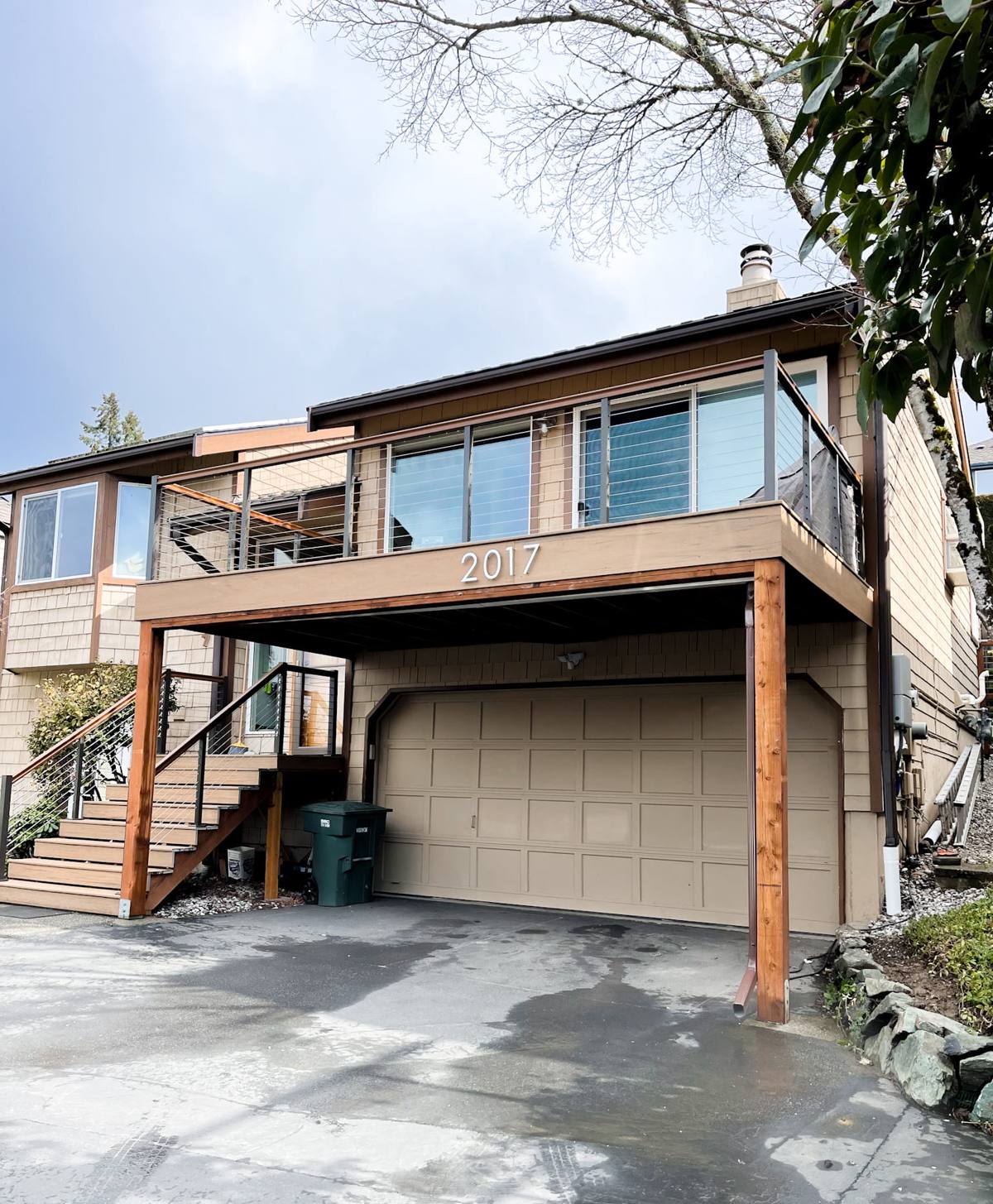
Signs Your Deck Needs Replacement, Not Just Repair
Not every tired-looking deck needs to be torn out. Sometimes a few boards, a repaint, or new hardware buys several more years. But there's a point where patching a deck is throwing money at a structure that's already compromised underneath. Here's what usually tips a deck from "repair" into "replace":
- Soft, spongy, or bouncy spots in the decking or framing when you walk across it
- Visible rot, splitting, or insect damage at the ledger board (where the deck attaches to the house)
- Rusted, corroded, or missing fasteners and joist hangers — common in salt-air environments
- Railings or posts that wobble or flex under normal pressure
- Boards that are cupping, crowning, or separating at the edges
- A deck that was never properly flashed at the house, leading to staining or moisture on the siding above or below the ledger
- Multiple past repairs that keep failing in the same spots
If you're seeing more than one or two of these, especially anything involving the ledger board or main support posts, replacement is almost always the more honest recommendation — repairing surface boards on a compromised frame just delays the real problem.
Choosing the Right Decking Material for This Climate
There's no single "best" decking material for every homeowner — it depends on budget, how much upkeep you're willing to do, and how long you want the deck to last before its next major service. In a coastal Pinellas County climate, the trade-offs are more pronounced than they'd be somewhere drier and cooler.
| Material | Upfront Cost | Coastal Durability | Maintenance |
|---|---|---|---|
| Pressure-treated wood | Lowest | Fair — needs sealing to resist rot and UV | Annual cleaning, periodic re-sealing or staining |
| Traditional composite | Mid-range | Good — resists rot, but can fade/chalk in strong UV | Occasional cleaning, no sealing required |
| Capped composite / PVC | Higher | Very good — capped shell resists UV fade and moisture | Low — periodic washing only |
| Tropical hardwood (e.g., ipe) | Highest | Excellent structurally, but demands diligent oiling | High — regular oiling to prevent graying/checking |
Wood decking is a reasonable, budget-conscious choice, but it's the material most sensitive to this region's UV and humidity — it needs a disciplined sealing schedule or it will gray, crack, and eventually rot years ahead of schedule. Composite and capped composite products cost more up front but shift the maintenance burden way down, which matters if you'd rather spend weekends doing something other than re-staining a deck every year or two. We'll walk through what fits your home and budget honestly, including where a cheaper option now might mean more maintenance cost over the deck's life.
What a Correct Deck Replacement Actually Involves
The Structure Comes First
The decking boards are the part everyone sees, but the framing underneath is what actually determines whether the deck survives a bad storm season. That means correctly sized joists and beams, proper spacing for the span and load, and support posts set on footings deep enough to meet local code — not just resting on a paver or a shallow pour.
The Ledger Board and Flashing
Most deck failures that end up costing homeowners real money start at the ledger board — the piece that bolts the deck to the house. If it isn't properly flashed, wind-driven rain works its way behind it and rots both the ledger and the house framing behind it, often silently for years. Correct flashing detail here is non-negotiable in a climate that sees regular wind-driven rain off the Bay.
Fasteners and Hardware
Salt air corrodes standard hardware faster than most homeowners expect. Structural connections — joist hangers, post bases, ledger bolts — need to be rated for coastal or salt-treated lumber exposure, not just galvanized hardware pulled off a general shelf. This is one of the most common corners cut on lower-bid deck jobs, and it's invisible until the hardware fails.
Drainage and Airflow
Decking needs consistent gapping and, ideally, a way for water to shed away from the structure rather than pool against framing. On lower decks close to grade, ventilation underneath matters too — trapped moisture is what turns a good frame into a rotten one within a few humid Florida summers.
Permits and Wind Load: What Pinellas County Requires
Deck replacement in this area generally requires a building permit, and inspections along the way — framing, and a final once decking and railings are complete. Permits aren't a formality here; they exist because Pinellas County's wind load requirements are genuinely higher than what you'd see inland, and inspectors are checking for the same structural details that determine whether a deck survives a tropical storm or hurricane season intact. Skipping the permit process might save a little time up front, but it leaves you without a documented, inspected structure — which can complicate insurance claims or a future home sale.
Railing height, baluster spacing, and stair geometry are also code-specific and get checked at inspection. A contractor who pulls permits and works with local inspectors regularly moves through this process far more smoothly than one encountering Pinellas County requirements for the first time.
How Our Deck Replacement Process Works
- On-site assessment. We inspect the existing deck, ledger connection, and support structure to confirm whether replacement (versus repair) is the right call, and talk through material options for your budget.
- Design and permitting. We finalize layout, railing style, and material, then handle the permit application and scheduling of required inspections.
- Removal. The old deck comes out, including checking the ledger area and any framing behind it for hidden moisture damage before we build over it.
- Framing. New joists, beams, posts, and footings go in to current code, sized for the deck's actual span and load — with coastal-rated fasteners and hardware throughout.
- Ledger flashing. Proper flashing is installed at the house connection before any decking goes down, since this step is invisible once the deck is finished.
- Decking and railings. Boards and railings are installed per manufacturer spacing and fastening specs, with attention to consistent gapping for drainage and movement.
- Final inspection and walkthrough. Once the deck passes final inspection, we walk it with you, cover care and maintenance for the material you chose, and answer any questions before calling the job done.
Maintaining Your New Deck in a Salt-Air Climate
Even a well-built deck needs some ongoing attention in this environment. A periodic rinse to clear salt residue, pollen, and organic debris out of the board gaps goes a long way, regardless of material. Wood decks need their sealer or stain checked at least once a year — sun exposure here breaks it down faster than in most parts of the country. Composite and capped composite decks are lower-maintenance but still benefit from an occasional wash to prevent mildew buildup in shaded or low-airflow areas. Hardware and railing connections are worth a visual check once or twice a year, since that's where corrosion shows up first if it's going to.
Why a Crew That Already Works Safety Harbor Matters
A deck built to survive this climate depends on details that are easy to get wrong if you don't build here regularly — the right hardware for salt exposure, ledger flashing that actually sheds wind-driven rain, footing depths and framing sized for real Gulf coast wind loads, and a permit process that goes smoothly because the inspectors and requirements aren't a surprise. A crew that works the Safety Harbor and greater Largo area consistently has already worked through these specifics on other local homes, which means fewer surprises, fewer change orders, and a deck that's actually built for the conditions it has to survive rather than a generic spec sheet.
Local also means accountability. If a question comes up after the job is done, you're not chasing down a contractor who worked one project in the area and left. We're here, working other homes nearby, with a reputation in this community to stand behind.
Ready to Talk About Your Deck?
If your deck in Safety Harbor is showing its age or you're planning ahead before storm season, we're happy to take a look and give you an honest read on repair versus replacement. Fill out the form below for a free, no-pressure estimate — no obligation, just a straight answer on what your deck needs.