 Largo Siding
 St. Petersburg's Waterfront Climate Is Hard on a Deck
St. Petersburg sits close to open water on nearly every side, and that location shapes what a deck has to survive here. Homes near the bay and the Gulf deal with salt air that finds its way into every fastener and connector, wind-driven rain that gets pushed sideways under railings and through board gaps, and intense, nearly year-round UV that fades and breaks down materials faster than in most of the country. Add in the real possibility of hurricane-force winds during storm season, and it's clear a deck built for a mild inland climate is not the same thing as a deck built to hold up in Pinellas County. A lot of the decks we get called out to repair were built to a generic standard, not to what this coastline actually demands.
Composite decking has become the go-to choice for a lot of homeowners in this area precisely because it handles moisture and sun better than wood, but "composite" is not a single product with one level of quality. The board itself is only part of the equation — how it's fastened, framed, and ventilated underneath matters just as much for a deck that's going to sit a few miles from saltwater.
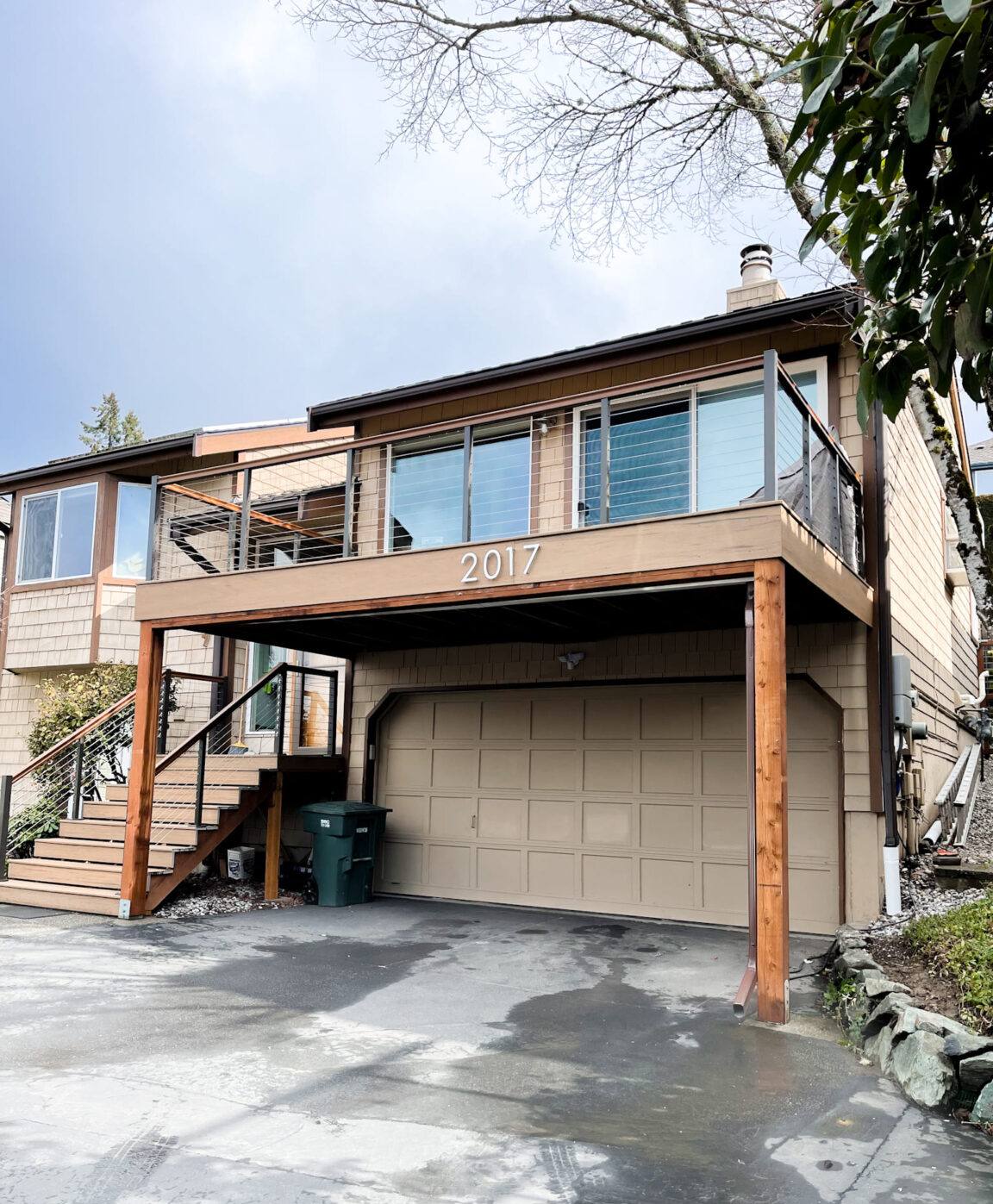
What a Correctly Installed Composite Deck Needs Below the Surface
Substructure and Fasteners
The composite boards on top get most of the attention, but the framing underneath is what actually determines how long a deck lasts near the coast. Standard steel hardware corrodes quickly when it's exposed to salt-laden air, so joists, ledger connections, post bases, and every fastener need to be rated for coastal or marine-grade exposure — not just treated lumber-grade hardware. We also pay close attention to how the deck is anchored to the house and how the framing is braced, since wind uplift on a deck surface and attached railing is a real load during a tropical storm or hurricane, not a theoretical one.
Drainage and Ventilation
Composite boards don't rot the way wood does, but water still has to go somewhere. A deck built too tight to the ground, or without a slight pitch and clear path for water to run off, will trap humidity underneath the boards and around the framing. In a climate with heavy, wind-driven rain and high year-round humidity, that trapped moisture is what eventually causes hardware to corrode and framing to fail even when the decking on top still looks fine. Proper spacing between boards, adequate ventilation underneath, and correct drainage away from the house are not optional extras — they're part of what separates a deck that lasts from one that causes problems in five years.
Choosing the Right Composite Board for This Climate
Not all composite boards perform the same way under intense sun and salt exposure. The biggest distinction is between capped and uncapped composite, and it's worth understanding before you pick a product.
| Decking Type | UV and Fade Resistance | Moisture Behavior | Maintenance Burden |
|---|---|---|---|
| Pressure-treated wood | Fades and grays quickly under Florida sun | Absorbs water; prone to warping, splintering, rot over time | Regular sealing/staining needed to slow damage |
| Uncapped composite | More stable than wood but the surface can still fade and stain | Resists rot but the exposed surface can absorb moisture and mildew | Occasional cleaning; more prone to staining near saltwater |
| Capped composite | Best fade and UV resistance of the three | Protective shell sheds water and resists mildew and staining | Lowest — mostly routine washing |
We install capped composite on the large majority of St. Petersburg projects because the protective outer layer is what stands up best to constant sun and salt exposure over the long run. Uncapped composite and quality pressure-treated wood both have their place and their price advantages, and we'll walk through the honest trade-offs for your specific project rather than pushing one product for every job.
Board color is worth thinking through too. Darker boards absorb more heat and can get uncomfortably hot underfoot on a bright Florida afternoon, while lighter and mid-tone colors stay cooler and tend to show less visible fading over time. We also favor hidden fastener systems where the product allows it, since fewer exposed screw heads means fewer small points where corrosion and staining can start.
Local Factors That Affect a St. Petersburg Deck Project
A handful of things come up often enough on decking projects in and around St. Petersburg that they're worth planning for from the start:
- Elevation and flood considerations: Many homes near the coast in Pinellas County sit at elevations that affect how a deck's substructure should be built and anchored. We look at grade and drainage on-site rather than assuming a standard build will work.
- Sun orientation: A deck facing west or south will take far more direct UV exposure over the day, which affects both board color choice and how much fading you'll notice over time.
- Proximity to open water: The closer a home sits to the bay or Gulf, the more aggressive the salt exposure on hardware and railings, which pushes us toward marine-grade fasteners even more strongly.
- HOA and deed restrictions: Some St. Petersburg neighborhoods have design guidelines covering deck materials, colors, or railing styles. We check this before finalizing a design so there are no surprises during approval.
- Permitting: Deck construction in Pinellas County requires a permit and inspection through the local building department, including attachment and structural details. We handle this as part of the job rather than leaving it to the homeowner.
Our Installation Process
- On-site assessment: We look at the existing structure (if there is one), grade and drainage, sun exposure, and how the new deck will attach to the house.
- Design and material selection: We go over board options, railing styles, and layout, and give you a straightforward, itemized estimate — no vague allowances.
- Permitting: We pull the required permit and schedule inspections through Pinellas County or the applicable local jurisdiction.
- Demolition (if replacing a deck): Old decking, and any framing that doesn't meet current standards, is removed and hauled away.
- Framing and hardware: We build or reinforce the substructure with coastal-rated fasteners and connectors, with attention to ventilation and drainage underneath.
- Decking and railing installation: Composite boards and railing components are installed to manufacturer specifications, which matters for warranty coverage.
- Final walkthrough and inspection: We review the finished deck with you and coordinate final inspection sign-off.
Maintenance in a Gulf Coast Climate
One of the real advantages of composite decking is how little it asks of you compared to wood, but "low-maintenance" doesn't mean "no maintenance" — especially this close to the water. Salt spray and airborne grime settle on the surface and in the gaps between boards, and left alone long enough it can dull the finish or contribute to mildew growth in shaded areas. A rinse with a garden hose every so often, and an occasional wash with mild soap and a soft-bristle brush for areas that don't get much direct sun, keeps a composite deck looking like it did on day one for years longer.
A couple of habits are worth avoiding: harsh pressure washing on the highest settings can damage the surface texture of some composite boards, and abrasive cleaners or metal scrapers can scuff the cap layer that's doing the work of resisting stains and fading. We'll walk you through the specific care recommendations for whatever board you choose, since capped and uncapped products have slightly different guidance.
Signs Your Current Deck Needs Attention
If you already have a deck and aren't sure whether it needs repair or replacement, these are the things worth checking:
- Soft, spongy, or bouncy spots when you walk across the deck
- Visible rust staining around fasteners, post bases, or railing brackets
- Boards that have cupped, warped, or separated at the seams
- Railings or posts that feel loose or wobble under pressure
- Gaps or daylight visible where the deck meets the house at the ledger connection
- Persistent damp or musty smell coming from underneath the deck
- Fading, chalking, or splintering across large sections of the surface
Any one of these on its own might be minor. Several together, especially anything involving the ledger connection or the framing underneath, usually means it's time for a proper inspection rather than a patch job.
Why Hire a Crew That Already Works in St. Petersburg
Decking work looks similar on paper everywhere in Florida, but the details that matter — which fastener grade holds up a block from the bay, how much pitch a deck needs given local drainage patterns, which local building department requirements apply, what HOA guidelines are common in this area — come from actually doing the work here repeatedly, not from a general contractor's playbook. A crew that regularly builds and repairs decks around St. Petersburg has already made the adjustments that coastal exposure demands, instead of learning them on your project.
We also think you're better served by a contractor who explains trade-offs honestly rather than upselling every job to the most expensive option. Sometimes a quality uncapped composite board or a well-built wood deck is the right call for your budget and how you'll use the space. We'll tell you that plainly, in writing, and build the project to match — not to pad the invoice.
If you're planning a new composite deck or want an honest assessment of one that's showing its age, we're happy to take a look. Reach out for a free, no-pressure estimate using the form below.