 Largo Siding
 Roofs on a Barrier Island Take a Different Kind of Beating
Indian Shores sits on a narrow strip of land with open water on both sides — the Gulf of Mexico to the west, Boca Ciega Bay and the Intracoastal to the east. That position means every roof here is exposed to wind from more directions, more often, than a roof a few miles inland in Largo. When a tropical system, a strong summer squall line, or just a run of seasonal storms rolls through Pinellas County, barrier island homes tend to take the worst of it first.
It isn't only the named storms that do the damage. Steady salt air corrodes fasteners and flashing over time, intense year-round UV bakes shingle mat and breaks down sealants faster than in shadier inland neighborhoods, and wind-driven rain finds its way into gaps that would stay dry in a straight-down downpour. By the time a homeowner notices a stain on the ceiling, the roof has usually been letting water in for a while. This page covers what storm damage repair actually looks like for an Indian Shores roof, and what we do differently because of where it sits.
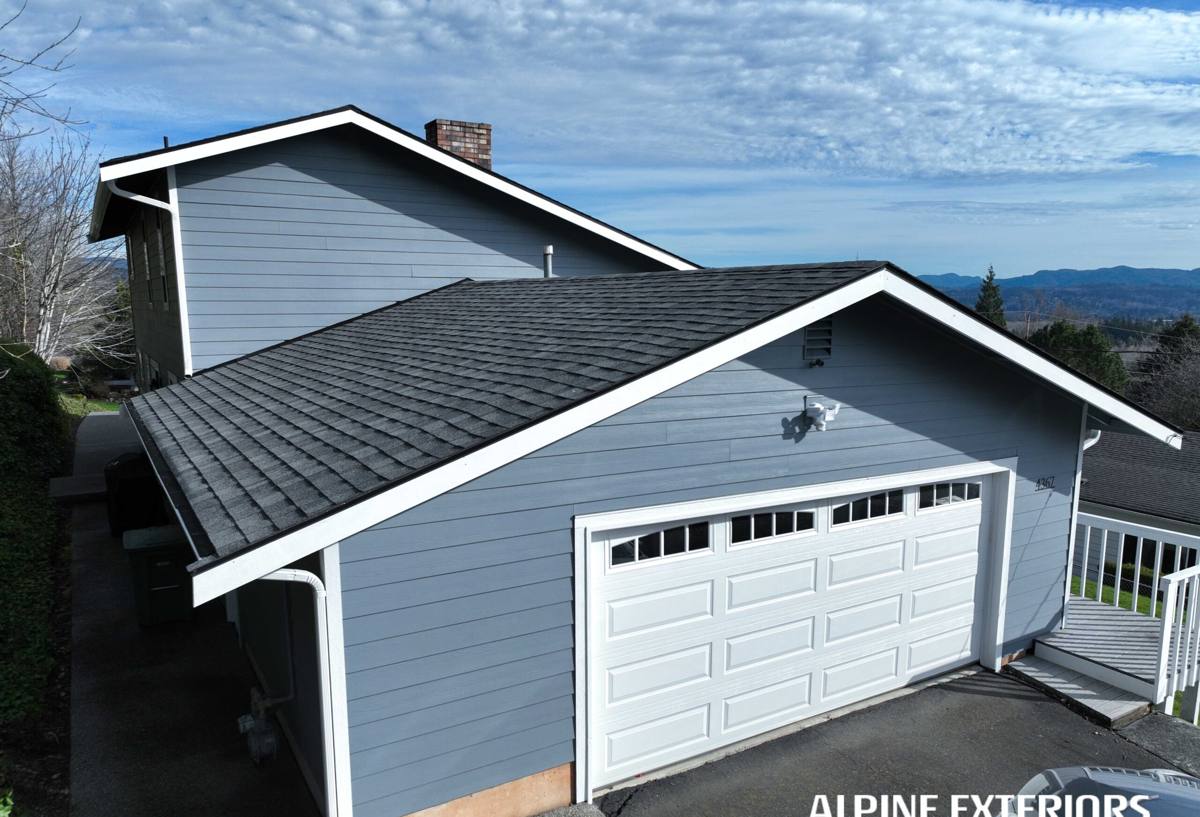
Common Storm Damage We See on Indian Shores Roofs
Wind Damage
Sustained coastal winds lift shingle tabs and stress the seal strip between courses, even when nothing blows off outright. Once that seal breaks, the shingle can flap in the next wind event and eventually tear loose or let water track underneath. Ridge caps and hip lines, which take wind from more angles than the field of the roof, are usually the first place we look.
Wind-Driven Rain Intrusion
A roof that has shed rain for years can still leak in a storm where wind pushes rain sideways and uphill under the shingle edge, around vent boots, and along step flashing at walls and chimneys. This kind of leak often shows up somewhere other than directly above where the water is entering, which is why tracing it back to the source matters more than patching the ceiling stain.
Granule Loss and Mat Fatigue
Hail and wind-blown debris knock protective granules off the shingle surface. Without that layer, the asphalt underneath is exposed directly to Florida's UV load and degrades faster. A roof with scattered granule loss might not be leaking today, but it's aged years in a single storm and is more likely to fail in the next one.
Flashing and Fastener Corrosion
Salt-laden air accelerates rust on exposed nail heads, drip edge, and flashing seams. A fastener that's lost its grip or a flashing seam that's corroded through is a quiet failure point — it won't announce itself until a storm pushes water right at it.
Repair or Replace? What Actually Decides It
Not every storm-damaged roof needs full replacement, and not every roof that "looks fine" from the driveway is actually sound. We base the repair-versus-replace call on a handful of concrete factors rather than a blanket rule.
| Factor | Points Toward Repair | Points Toward Full Replacement |
|---|---|---|
| Roof age | Well within its expected service life | Already near the end of its expected life |
| Extent of damage | Isolated to one slope or section | Spread across multiple slopes or the whole roof |
| Decking condition | Dry, solid sheathing under the damaged area | Soft, delaminated, or water-stained decking |
| Underlayment condition | Intact and still sealing properly elsewhere | Brittle, torn, or failing in multiple spots |
| Matching materials | Discontinued or faded shingles can still be blended acceptably | Existing shingle line is unavailable or mismatch would be visible |
| Insurance scope | Adjuster scope supports a targeted repair | Adjuster scope or code triggers a full replacement |
We walk the roof, check the attic side for water tracking and decking condition, and document what we find before recommending either path. If a repair is the honest answer, that's what we propose — a full replacement isn't automatically the right call just because a storm hit.
Our Storm Damage Repair Process
1. Inspection and Documentation
We inspect the full roof, not just the area the homeowner points to, since wind damage rarely stays in one tidy spot. We photograph findings from the ground and the roof surface, which becomes the backbone of any insurance claim.
2. Emergency Mitigation
If the roof is actively leaking or has exposed decking, we prioritize tarping or temporary sealing to stop water intrusion before it turns into interior damage, mold, or a bigger structural repair. This step also matters for insurance — most policies expect the homeowner to take reasonable steps to prevent further loss.
3. Scope and Estimate
We put together a written scope covering exactly what's damaged, what needs to be repaired or replaced, and the materials involved. If you're filing a claim, this scope is written in a format that lines up with how adjusters evaluate roof damage.
4. The Repair Itself
Depending on scope, this might mean replacing a section of shingles down to the decking, resealing and refastening ridge and hip lines, replacing corroded flashing, or re-decking areas where sheathing has taken on water. We match shingle profile and color as closely as the product line allows and rebuild flashing details to actually shed wind-driven rain, not just look sealed.
5. Final Walkthrough
Before we consider the job done, we walk the roof again and go over the work with the homeowner so there are no surprises — what was repaired, what materials were used, and what to watch for going forward.
Materials We Use for Coastal Wind Exposure
What goes back on an Indian Shores roof matters more than what goes on a roof a few miles inland. We specify:
- Shingles rated for the higher wind speeds Florida Building Code requires along Pinellas County's coastal barrier islands, not the minimum-spec product for an inland zone
- Corrosion-resistant fasteners and flashing suited to sustained salt air exposure, rather than standard-grade hardware that rusts prematurely this close to the water
- Self-adhering underlayment at eaves, valleys, and penetrations for a second line of defense against wind-driven rain, on top of standard felt or synthetic underlayment
- Properly lapped and sealed step flashing and counter-flashing at walls, chimneys, and skylights, since these details fail more often than the shingle field itself
None of this is exotic — it's simply specifying the products and installation details that are appropriate for a barrier-island roof instead of treating every job the same regardless of location.
Working With Your Insurance Claim
Storm damage repair on the coast is often tied to an insurance claim, and the claims process rewards clear documentation. We provide photos, measurements, and a written scope that an adjuster can review against your policy. We're happy to be on-site during an adjuster inspection to point out damage that isn't obvious from the ground, such as lifted ridge caps or flashing separation. What we won't do is inflate a scope or claim damage that isn't there — an honest scope holds up better through the claims process than a padded one, and it's the right way to do the job regardless.
Why a Crew That Already Works Indian Shores Matters
Barrier island jobs come with logistics that inland jobs don't. Streets are narrow, staging space is limited, and some properties are condos or homes under an association with their own approval process for exterior work. A crew that's already worked in Indian Shores knows to plan for that before the trucks show up, not after.
There's also the response-time factor. After a storm moves through Pinellas County, demand for tarping and repair spikes fast, and barrier island properties can end up at the back of the line for contractors based well inland. Being a Largo-based crew that already services this stretch of coast means we're not learning the area for the first time when a homeowner calls with an active leak.
Finally, permitting: roofing repairs and replacements in Pinellas County generally require a permit, and requirements can vary by jurisdiction. A local crew that pulls permits regularly in this area knows the process and won't leave a homeowner with unpermitted work that becomes a problem at resale.
After the Storm: A Quick Walk-Around Checklist
- Check gutters and the base of downspouts for a heavy buildup of granules, a sign shingles have taken a hit
- Look from the ground for shingles that appear lifted, curled, or missing, especially along ridges and hips
- Check the attic (if accessible) for new water stains, damp insulation, or daylight showing through the decking
- Note any ceiling stains inside, even small ones, and when they first appeared
- Check flashing around chimneys, skylights, and where the roof meets a wall for visible gaps or rust
- Photograph anything you find before it changes, in case you need it for an insurance claim later
If you check off more than one of these, it's worth having a roof looked at even if there's no active leak yet — small storm damage left alone tends to become a bigger repair after the next round of weather.
If your Indian Shores roof took a hit in a recent storm, or you're just not sure whether what you're seeing is worth worrying about, we're glad to come take a look. The estimate is free, there's no pressure to move forward, and you'll get a straight answer about what's actually going on up there. Use the form below to get started.