 Largo Siding
 Treasure Island's Climate Is Hard on Siding
Treasure Island sits on a barrier island in Pinellas County, just off the mainland from Largo, with the Gulf of Mexico on one side and the Intracoastal Waterway on the other. That location is what makes the island beautiful, and it's also exactly what makes exterior materials fail faster there than almost anywhere else in the region. Homes on and near the island absorb salt-laden air almost constantly, take direct, intense UV exposure for most of the year, and sit in the path of wind-driven rain during Gulf storms and hurricane season. None of that is unique to Treasure Island alone, but the concentration of it — salt air, sun, and storm wind all acting on the same wall assembly year-round — is more severe on the barrier island than it is a few miles inland in Largo proper.
Siding is the first line of defense against all of that. When it's compromised — cracked, delaminating, gapped at a seam, or soft from trapped moisture — the problem rarely stays cosmetic for long. Water finds its way behind the cladding, and once it's in the wall assembly, repair costs go up fast. This page is about doing siding repair correctly for homes in and around Treasure Island: what the damage typically looks like, what a proper fix actually involves, and why it matters to work with a crew that already understands this specific stretch of coastline.
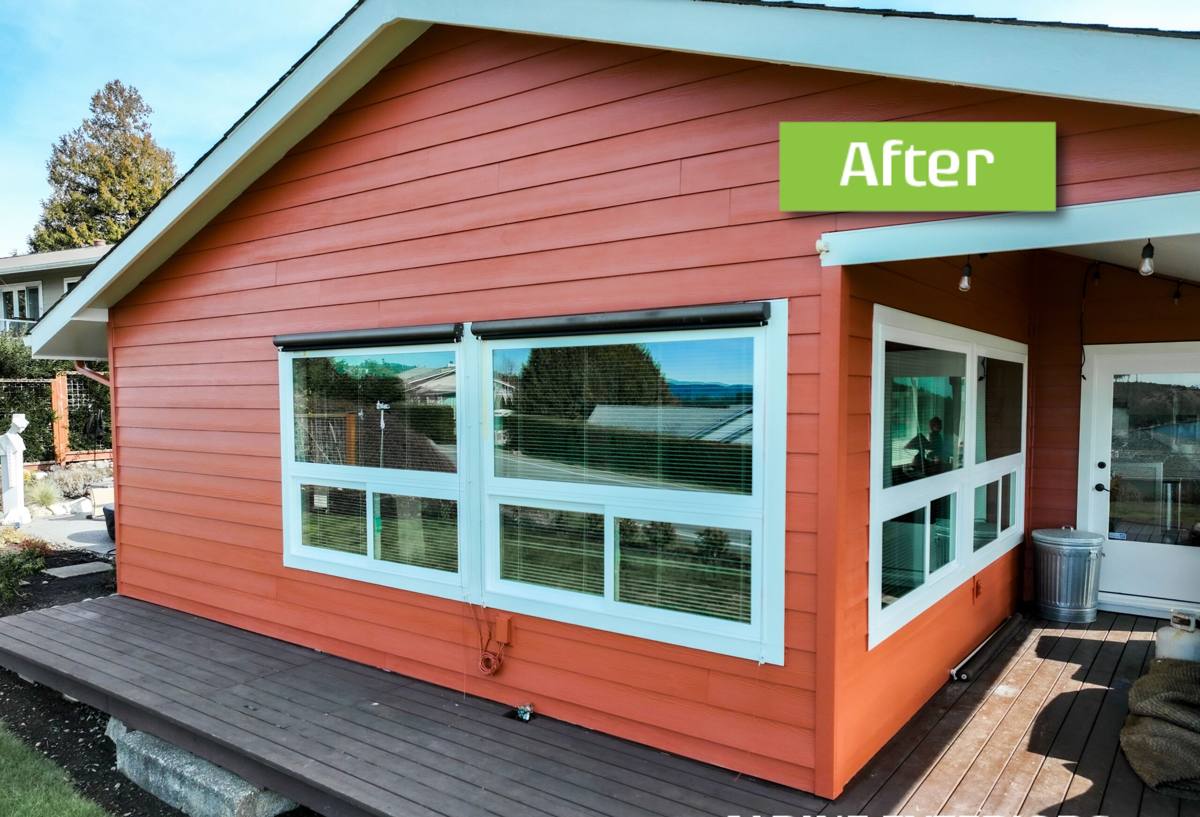
What Coastal Exposure Actually Does to Siding
Salt Air
Airborne salt from the Gulf settles on every exterior surface, including siding, trim, and fasteners. On materials that aren't engineered for it, salt accelerates corrosion of nails and screws, breaks down paint and caulk adhesion faster than inland exposure would, and can contribute to swelling or softening in materials that absorb moisture. Corroded fasteners are one of the most common root causes we find behind loose or bowing siding sections on barrier island homes.
Year-Round UV
Florida sun is intense for most of the calendar year, not just in summer. UV breaks down pigments and surface coatings over time, which is why paint-grade siding on older homes often shows chalking, fading, or uneven color from one wall to the next — south- and west-facing walls almost always show it worse. Factory-applied finishes hold up dramatically better than field-applied paint under this kind of sustained UV load.
Wind-Driven Rain and Storm Wind
Pinellas County sees direct wind-driven rain during Gulf storms, and Treasure Island's exposed position means that rain often hits siding at an angle instead of falling straight down. That drives water up under laps, into seams, and behind trim in ways vertical rain doesn't. Hurricane-force wind gusts add a second problem on top of that: they can loosen fasteners, crack brittle siding, or peel back panels at the edges, opening a path for water intrusion that wasn't there before the storm.
Signs Your Treasure Island Home Needs Siding Repair
Some damage is obvious from the ground. Some isn't — and the damage you can't see is usually the kind doing the most harm. A short walk around the exterior once or twice a year, especially after storm season, is worth the time.
- Cracked, split, or chipped siding panels or planks, especially near corners and window edges
- Soft or spongy spots when pressed gently — a sign of trapped moisture behind the surface
- Visible gaps or separation at seams, laps, or where siding meets trim
- Bubbling, peeling, or chalking paint, or noticeable color fading on sun-facing walls
- Streaking or dark staining below seams, which often points to water tracking behind the cladding
- Rust stains bleeding from fastener heads
- Siding that feels loose, rattles in wind, or has visibly bowed away from the wall
- A musty smell or visible mold/mildew growth near baseboards or interior walls that back up to exterior siding
What a Correct Repair Involves
Siding repair done right is not just cutting out a bad section and nailing in a patch. On a coastal home, a repair that ignores what's happening behind the surface tends to fail again within a year or two. A proper repair addresses the cause, not just the visible symptom.
Diagnosis Before Anything Gets Cut
The first step is figuring out why a section failed. Was it a flashing or caulking failure that let water in? Corroded fasteners that let a panel work loose? Impact damage from storm debris? Repairing the visible crack without addressing the underlying cause just buys time before the same spot fails again.
Checking What's Behind the Siding
Once a damaged section is opened up, we check the water-resistive barrier, flashing, and sheathing underneath for moisture damage or rot. If the substrate is compromised, patching over it is not a real repair — it's a temporary cover. Any damaged sheathing or barrier material gets addressed as part of the job, not left for the next contractor to find.
Matching Material, Profile, and Reveal
A patched section that doesn't match the existing plank width, exposure reveal, or texture stands out immediately, especially on a wall that gets direct afternoon sun. We match the existing siding profile and factory color as closely as the product line allows so a repair blends in rather than looking like a repair.
Fasteners and Flashing Done to Spec
Every repair is fastened and flashed to manufacturer installation requirements — correct fastener type, spacing, and penetration depth, with flashing and sealant details that shed water the way the original assembly was designed to. This is where a lot of quick patch jobs cut corners, and it's exactly where coastal wind and rain will find the weakness.
Repair or Replace? How We Help You Decide
Not every damaged section needs a full re-side, and not every "small" repair is actually small once you look behind it. We walk homeowners through the honest tradeoffs rather than defaulting to whichever answer is more profitable for us.
| Factor | Repair Usually Makes Sense | Replacement Usually Makes Sense |
|---|---|---|
| Extent of damage | Isolated to one or two sections or walls | Damage is spread across multiple elevations |
| Substrate condition | Sheathing and barrier underneath are sound | Rot or moisture damage extends into the wall assembly |
| Age of existing siding | Siding is relatively young and otherwise in good shape | Siding is near or past its expected service life |
| Color/material match | Current product line and color are still available | Product is discontinued or badly weathered compared to a new match |
| Root cause | A one-time event (storm debris impact, a single failed seam) | A systemic issue (chronic moisture, failed original installation) |
Our Process for Treasure Island Repairs
- Inspection. We assess the damaged area and check adjacent sections, corners, and penetrations for related issues that may not be visible yet.
- Diagnosis and honest recommendation. We explain what caused the damage and give you a straight answer on whether repair or replacement is the right call — including if the answer is "this section is fine, you don't need us yet."
- Material sourcing and color match. We source the correct James Hardie profile and factory finish to match your existing siding as closely as possible.
- The repair itself. Damaged material is removed, the substrate is checked and addressed if needed, and new siding is installed to manufacturer specification for fastening, flashing, and sealant.
- Final walkthrough. We go over the completed repair with you before we consider the job done.
Why We Only Use James Hardie Fiber Cement for Repairs
We install exclusively James Hardie fiber cement siding — we don't install vinyl, LP SmartSide, or other fiber cement brands, and that standard applies to repair work too. When we patch a wall, we're not mixing an inferior stopgap material into a system that deserves better. James Hardie's fiber cement is non-combustible, engineered to resist moisture-related swelling and cracking far better than wood-based or vinyl products, and its HZ5 product line is formulated specifically for humid, storm-prone climates like ours in Pinellas County.
The ColorPlus factory finish is also a practical advantage for repairs specifically: because it's baked on at the factory rather than field-applied, a matched replacement plank holds its color consistency far longer than a hand-painted patch would, which matters a great deal on a sun-battered wall facing the Gulf. And because Hardie backs its products with a strong transferable warranty when installed to spec, a repair done correctly today stays protected, not just patched.
Why a Crew That Already Works Treasure Island Matters
Barrier island jobs come with logistics that inland Largo jobs don't. Parking and staging are tighter. Salt exposure on tools and fasteners is more aggressive. And a crew that has already worked houses in this specific microclimate recognizes damage patterns faster — they know which walls typically take the worst of it, what corroded fastener failure looks like before it's obvious, and how local permitting and inspection processes in Pinellas County actually run in practice, not just on paper.
That familiarity translates into fewer surprises mid-job and a more accurate first estimate. A contractor seeing barrier-island salt and wind damage for the first time is troubleshooting on the fly; a crew that's done it repeatedly is diagnosing from experience.
Maintenance That Extends Your Repair's Life
A correct repair should last, but a little upkeep protects that investment. Rinse salt residue off exterior walls periodically, especially after storms, since standing salt film accelerates the same corrosion and coating breakdown that caused the original damage. Keep gutters and downspouts clear so water is directed away from wall sections rather than sheeting down them. Walk the exterior after any major wind event and look for the same warning signs covered above — new cracks, loosened panels, or fresh staining — so small issues get caught before they become structural.
Get a Straight Answer on Your Siding
If you're seeing cracked, loose, stained, or fading siding on a Treasure Island-area home, it's worth having someone look at it before the next storm season rather than after. We'll give you an honest read on what's causing it, whether it's a repair or something bigger, and what it would take to fix it right with James Hardie fiber cement. Reach out for a free, no-pressure estimate using the form below.