 Largo Siding
 Why Safety Harbor Roofs Take a Different Kind of Beating
Safety Harbor sits right on Old Tampa Bay, and that waterfront position is part of what makes it such a desirable place to live — and part of what makes its roofs work harder than roofs a few miles inland. Being close to open water means more direct exposure to wind during tropical systems and seasonal thunderstorms, more salt-laden air moving across roofing materials and metal components, and near-constant UV exposure between storms. None of that is unique to any one street or neighborhood in Safety Harbor — it's the reality for anyone in this part of Pinellas County, and it's why we treat storm damage repair here differently than we would in a drier, more sheltered inland market.
A roof in Safety Harbor isn't just shedding rain in a normal storm. It's dealing with wind-driven rain that gets pushed sideways under shingle tabs and around flashing, intense summer sun that bakes asphalt and dries out sealants, and salt air that slowly corrodes exposed fasteners and metal edges even when nothing looks obviously wrong. Add a named storm or even a strong summer squall line with straight-line winds, and small existing weaknesses — a lifted shingle edge, a soft spot in the decking, an aging pipe boot — turn into active leaks fast.
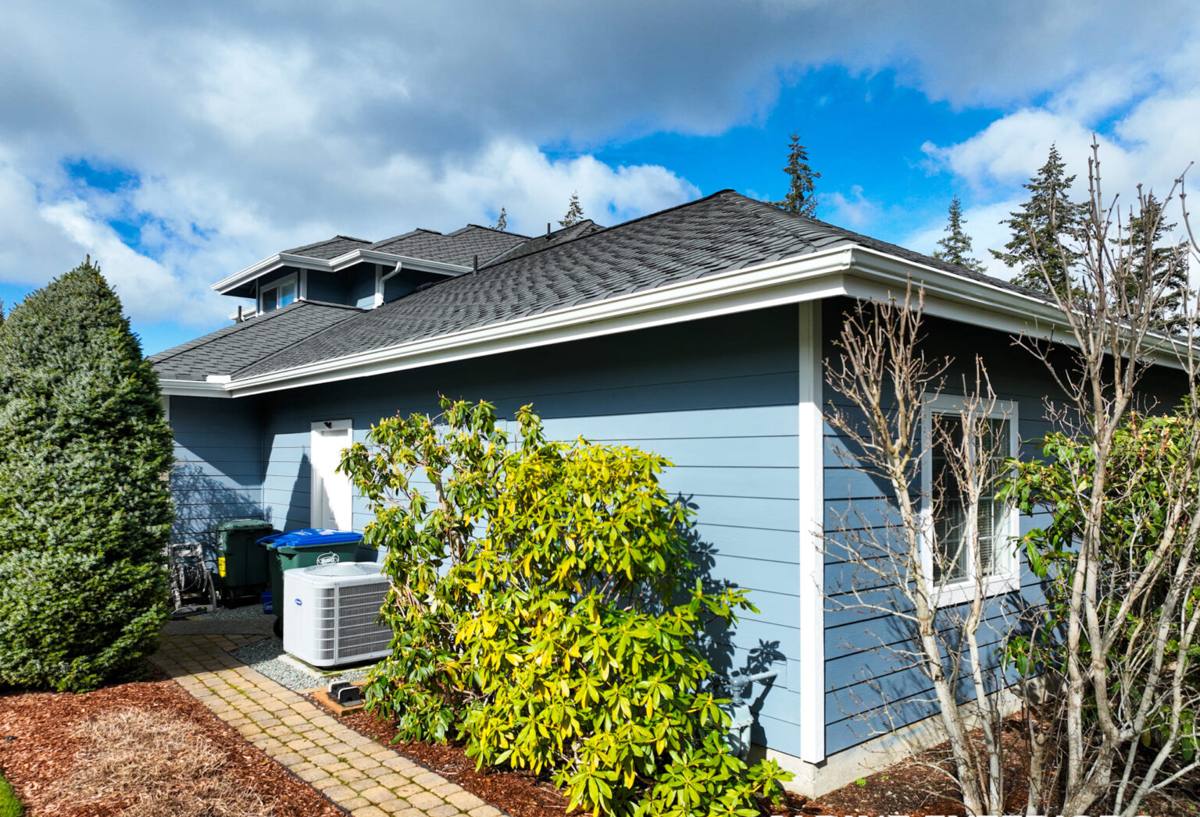
What Storm Damage Actually Looks Like on a Safety Harbor Roof
Storm damage isn't always the dramatic, obvious kind. Some of it is easy to spot from the ground; a lot of it isn't, which is exactly why homeowners get surprised by interior water stains weeks after a storm has already passed.
Visible damage
- Shingles that are cracked, curled, creased, or missing entirely after high wind
- Bare spots where granules have been stripped away, leaving the asphalt mat exposed to UV
- Bent, lifted, or missing flashing around chimneys, walls, and roof-to-wall transitions
- Damaged or clogged gutters that no longer move water off the roofline correctly
- Dented or displaced vent caps, ridge caps, and pipe boots
Hidden damage
- Wind-driven rain forced up under shingle tabs, wetting the underlayment without any visible shingle loss
- Nail pops and loosened fasteners that create small entry points for water over time
- Soft or delaminating roof decking beneath an intact-looking shingle field
- Sealant around penetrations that has dried and cracked from UV exposure and only fails under wind pressure
This is the part that trips people up most often: a roof can look fine from the driveway after a storm and still be actively leaking into the attic. That's why a proper storm damage inspection has to go beyond a quick look from the ground.
Our Storm Damage Assessment Process
Exterior inspection
We walk the roof itself, not just the yard. That means checking every slope, valley, and penetration for lifted or missing shingles, damaged flashing, granule loss, and soft decking underfoot — the kind of detail that's genuinely hard to catch from a ladder or binoculars.
Interior and attic check
Wind and rain damage frequently shows up first as a stain on attic sheathing or insulation before it ever reaches a ceiling. We check the attic for active moisture, staining, and daylight coming through where it shouldn't, because this tells us whether damage is cosmetic or has already reached the structure.
Documentation
Whether or not you end up filing an insurance claim, we document what we find with clear photos and a plain-English written summary — what's damaged, what caused it, and what it will take to fix correctly. If a claim is part of the picture, that documentation is what an adjuster needs to see; if it isn't, it's still useful as a record of your roof's condition.
Repair vs. Replacement — How We Decide
Not every storm-damaged roof needs to come off. Plenty of storm damage is legitimately repairable, and we'll say so plainly rather than push for more work than a roof needs. The decision comes down to a handful of honest factors.
| Factor | Leans toward repair | Leans toward replacement |
|---|---|---|
| Extent of damage | Isolated to one slope or a small area | Widespread across multiple slopes |
| Roof age | Roof is mid-life with remaining service years | Roof is near or past its expected lifespan |
| Decking condition | Decking is sound and dry underneath | Decking is soft, delaminated, or repeatedly wet |
| Shingle match | Matching shingles are still available | Discontinued product with no reasonable match |
| Damage history | First storm event, roof otherwise healthy | Repeated storm damage on an aging roof |
We'll walk you through where your roof falls on that table before recommending anything, and we're just as comfortable telling a homeowner "this is a repair" as we are recommending replacement when that's genuinely what the roof needs.
What a Correct Storm Repair Actually Involves
A storm repair done right isn't just swapping out the shingles that are obviously missing. It means addressing the reason water got in, not just the symptom.
- Decking inspection first. Any soft or delaminated decking gets replaced before new shingles go down — covering damaged decking with new shingles just hides the problem.
- Underlayment matters. Where shingles are removed, the underlayment underneath gets inspected and replaced as needed, since this is the layer that actually keeps water out if a shingle ever fails again.
- Flashing gets rebuilt, not just resealed. Chimney flashing, wall flashing, and valley flashing that has been bent or displaced by wind should be replaced or properly reformed, not just caulked over.
- Fasteners are checked for wind resistance. Given how much straight-line wind and gust exposure this area sees, nailing pattern and fastener condition matter as much as the shingle itself.
- Shingle matching is handled honestly. If an exact match isn't available for a small repair, we tell you that up front and discuss options rather than leaving a mismatched patch that stands out or, worse, doesn't tie in correctly.
Working With Insurance After a Storm
Wind and hail damage claims are common enough in Pinellas County that most insurers have a process for them, but that process runs smoother with a contractor who documents damage clearly and doesn't overstate what's there. We provide honest, detailed reports of what we actually find — no invented damage, no inflated scope — because that's what holds up with an adjuster and what protects you if there's ever a follow-up question about the work. We're not a public adjuster and we won't promise a claim outcome, but we'll give you an accurate picture of the roof to bring into that conversation.
After the Storm: A Practical Checklist
What you do in the days right after a storm can affect how well the rest of the repair goes.
- Do a visual check from the ground for missing shingles, displaced gutters, or debris on the roof — skip climbing up yourself.
- Check ceilings and attic spaces for new stains, dampness, or a musty smell.
- Photograph anything visible from the ground or from inside, dated if possible.
- Cover any active interior leak with a bucket or tarp material to limit further water damage.
- Call for a professional inspection promptly — a small wind-driven leak gets worse, not better, if it sits.
- Hold off on signing anything with a storm-chasing crew that showed up unannounced door-to-door; verify who you're working with first.
Why a Local, Largo-Based Crew Matters for Safety Harbor Homes
Storm damage repair is one of those jobs where local knowledge genuinely changes the outcome. A crew that regularly works Safety Harbor and the surrounding Pinellas County area already understands how wind-driven rain behaves on waterfront-adjacent roofs, how quickly salt air ages exposed metal and fasteners, and what a roof here typically looks like at five, ten, and twenty years old. That's different from a crew that flies in after a major storm, does a round of quick repairs, and is gone before problems resurface.
Being local also means we're reachable afterward. If a repair doesn't hold up the way it should, or if a new issue shows up after the next round of weather, you're calling the same crew that did the original work — not chasing down a phone number that no longer connects.
Ready for an Honest Look at Your Roof
If your Safety Harbor home has taken on wind or storm damage — or you just want a professional set of eyes on your roof before the next system rolls through — we're glad to come take a look. The estimate is free, there's no pressure attached to it, and you'll get a straight answer about what your roof actually needs. Use the form below to get started.