 Largo Siding
 Why Board & Batten Suits Safety Harbor
Board and batten has become one of the most requested siding profiles in Safety Harbor, and it's easy to see why. The vertical lines read as clean and modern on newer builds, but the same profile also complements the area's older bungalows and coastal cottages when it's used as an accent on gables, dormers, or a front entry. It's a versatile look — but vertical siding on a Pinellas County home has to do more than look good. It has to shed water in a straight line down the wall, resist the flexing and pressure changes that come with hurricane-force wind, and hold its finish under sun exposure that's more intense and more constant than almost anywhere else in the country.
This page is about doing board and batten correctly for this specific climate, in this specific community — not a general overview of the style.
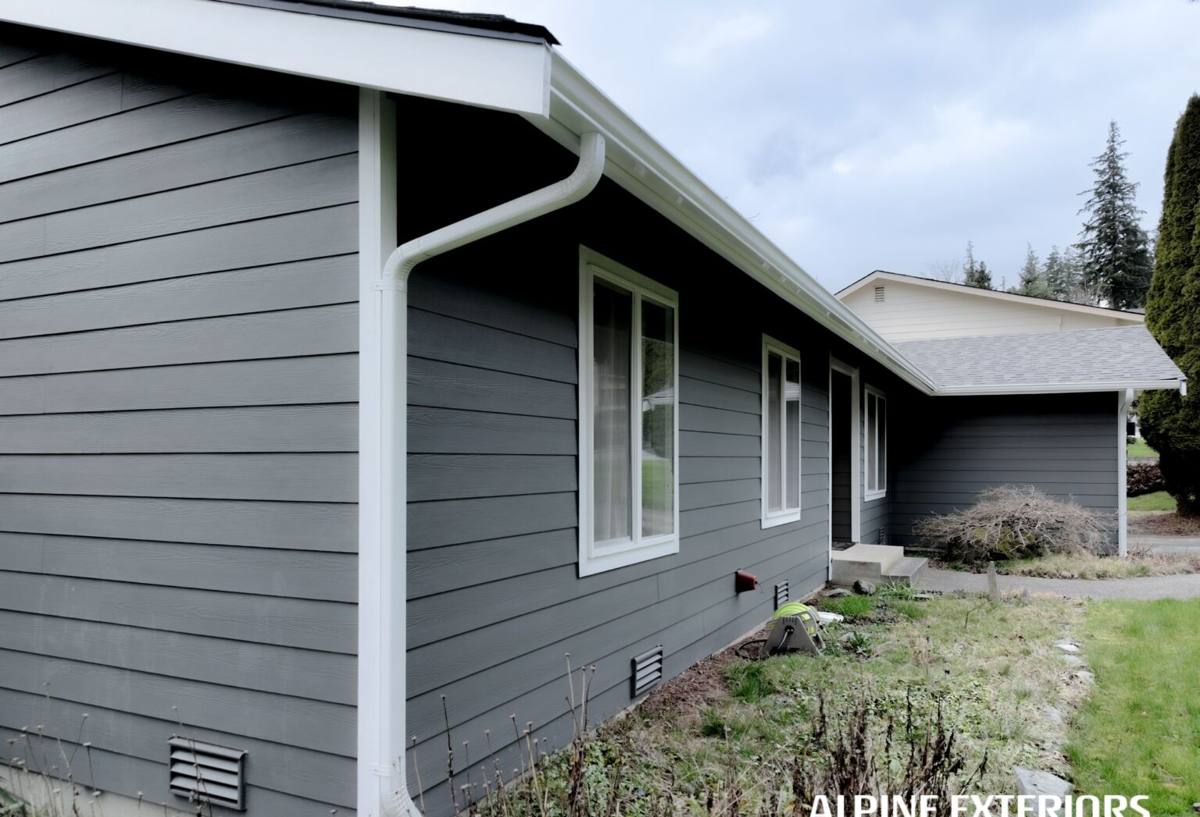
What Safety Harbor's Climate Demands From This Siding
Safety Harbor sits along Old Tampa Bay, which means homes here deal with a combination of stresses that inland siding jobs never see:
Hurricane-Force Wind
Vertical panel siding has more seams and more edge exposure per square foot than horizontal lap siding, which makes fastening pattern and edge treatment more important, not less. A board and batten wall that's under-fastened or missing proper edge blocking is one of the first things to fail in a storm, because wind gets under a loose panel edge and starts prying.
Intense, Year-Round UV
Florida sun breaks down paint film and substrate finishes faster than in northern climates. Vertical boards catch direct sun on their full face for most of the day, which accelerates fading and chalking on any product with a weak factory finish.
Wind-Driven Rain
Rain in a coastal thunderstorm doesn't fall straight down — it hits the wall sideways. Vertical seams and batten joints are natural water paths if they aren't detailed correctly, which is why the assembly behind the boards matters as much as the boards themselves.
Salt Air
Being close to the bay means a steady low-level exposure to salt in the air, even without direct waterfront proximity. Salt accelerates corrosion of fasteners and metal flashing and can degrade some substrates and coatings over time.
Any siding decision for a Safety Harbor home should be made with all four of these factors in mind at once — not just wind rating, or just water, or just appearance.
The James Hardie Board & Batten System We Install
We install James Hardie fiber cement exclusively, and for board and batten that means HardiePanel vertical siding paired with HardieTrim battens over the panel joints, finished in a factory-applied ColorPlus coating. This is a deliberate choice, not a default:
- Non-combustible core — fiber cement doesn't feed a fire the way wood-based or engineered-wood products can, which matters on a material that's fastened tight to the framing.
- Engineered for the Gulf Coast climate — Hardie's HZ5 product line is formulated for high-humidity, high-moisture regions like Florida, with resistance to swelling, cracking, and moisture intrusion that unprotected wood substrates don't have.
- Factory-cured ColorPlus finish — the color is baked on in a controlled factory process, not brushed on a job site, which gives far more consistent UV resistance than field-applied paint.
- Strong transferable warranty — backed by the manufacturer, not just our labor guarantee, and it stays with the house if it's sold.
We don't install vinyl, LP SmartSide, primed wood, or cedar board and batten. Each of those has legitimate uses elsewhere, but none of them hold up the same way under this combination of sun, storm, and salt, and we'd rather turn down work than install something we don't believe will perform on a Safety Harbor roofline for the next 30 years.
What a Correct Installation Actually Involves
Board and batten looks simple from the street — vertical panels, battens over the seams — but the assembly behind the surface is what determines whether it lasts. A correct job includes:
A Drainage Plane, Not a Face-Nailed Panel
Panels should go over a weather-resistant barrier and, ideally, a furring strip system that creates a gap between the siding and the sheathing. That gap lets any moisture that gets past the outer surface drain and dry out instead of sitting against the wall assembly — critical in a climate where humidity rarely lets anything dry out on its own.
Manufacturer Fastening Schedules, Sized to Wind Exposure
James Hardie publishes specific fastener type, spacing, and edge-distance requirements, and those requirements shift based on the wind exposure category of the site. A Safety Harbor home near open water needs a tighter fastening pattern than one further inland — this isn't optional detailing, it's what keeps panels attached in a named storm.
Batten Placement and Joint Treatment
Battens need to land over real structural blocking, not just cosmetically over the seam, and joints need to be treated so wind-driven rain can't track behind them. Butt joints and panel-to-trim transitions are where most vertical siding failures start.
Flashing at Every Penetration
Windows, doors, hose bibs, light fixtures, and roof-to-wall transitions all need proper flashing integrated with the panel system — caulk alone is a maintenance item, not a moisture barrier.
Corrosion-Resistant Fasteners
Given the salt air off Old Tampa Bay, fastener quality isn't a place to cut corners. Standard fasteners can start corroding within a few years this close to the water; we use fasteners rated for the exposure.
Our Process for a Safety Harbor Board & Batten Job
- On-site inspection — we assess the existing wall assembly, look for hidden moisture or rot, and check the home's wind exposure category before quoting anything.
- Tear-off and substrate check — old siding comes off, and we inspect sheathing underneath for damage that has to be corrected before new siding goes on.
- Weather-resistant barrier and furring — the drainage plane goes in first, sized and fastened per code and manufacturer spec.
- Panel installation — HardiePanel goes up using the fastening schedule appropriate to the site's wind exposure.
- Batten and trim work — HardieTrim battens are installed over structural blocking at every seam, with joints detailed to shed water.
- Flashing and sealant details — every penetration and transition gets proper flashing, then sealant, in that order.
- Final walkthrough — we go over the finished job with the homeowner before we consider it done.
What Affects the Cost of a Board & Batten Project
Every home is different, but the same handful of factors drive most of the cost variation we see on Safety Harbor board and batten jobs:
| Factor | Why It Matters |
|---|---|
| Wall square footage and complexity | Dormers, gables, and cut-ins increase both material waste and labor time versus a flat wall. |
| Existing wall condition | Rotted or water-damaged sheathing found during tear-off has to be replaced before new siding goes on. |
| Wind exposure category | Homes closer to open water or with fewer wind breaks often require tighter fastening patterns, which affects labor. |
| Batten spacing and pattern | Tighter batten spacing looks more traditional but uses more trim material and labor than a wider modern spacing. |
| Color and finish selection | Standard ColorPlus tones are typically more cost-effective than custom or premium finish options. |
| Trim and accent scope | Full board and batten on all elevations costs more than using it as an accent on gables or a single facade. |
Signs Your Current Board & Batten Siding Needs Attention
If your home already has board and batten siding — Hardie or otherwise — a few warning signs are worth checking for before storm season:
- Battens that have separated or pulled away from the panel underneath
- Soft or spongy spots when pressed near the base of the wall or under windows
- Visible gaps at panel joints or around trim where daylight or water could get behind the siding
- Chalky, faded color that rubs off on your hand — a sign the factory or field finish is breaking down
- Rust streaking near fastener heads or trim, especially on the side of the house that faces the bay
- Any bowing, buckling, or panels that feel loose when pushed by hand
None of these mean the whole wall needs replacement automatically, but they're worth a professional look before the next storm season rather than after.
Why a Crew That Already Works Safety Harbor Matters
Board and batten installed to the letter of a manufacturer's spec sheet still has to clear local permitting and inspection, and that process has real local texture. A crew that regularly works in Safety Harbor and Pinellas County already knows the local permitting steps, the wind exposure realities of specific neighborhoods relative to the bay, and the inspection expectations that come with fiber cement installation in a coastal wind zone. That's the difference between a crew reading a spec sheet for the first time and a crew that's already fastened panels on homes a few streets away and knows exactly what this stretch of coastline requires.
It also means faster response if something needs a follow-up look after a storm — you're not waiting on a crew that has to drive in from another county.
If you're considering board and batten siding for a home in Safety Harbor, we're happy to take a look and walk you through what it would actually involve for your specific house — no pressure, no obligation. Use the form below to request a free estimate.