 Largo Siding
 Pinellas Park's Climate Is Hard on Siding — Here's What That Means for Your Home
Pinellas Park sits in the middle of Pinellas County, close enough to Tampa Bay and the Gulf that salt-laden air reaches homes here even without a beachfront address. Add in Florida's intense year-round UV exposure, wind-driven rain during summer storms, and the real chance of hurricane-force wind gusts during the June-through-November season, and you've got a combination that will find every weak point in a home's exterior. Siding here isn't just a look — it's the first line of defense between your framing and the weather.
Cheaper siding materials tend to fail in specific, predictable ways under these conditions: seams open up under repeated wind flex, paint chalks and fades faster under UV, and moisture that gets behind the cladding has nowhere to go and no way to dry out before it starts rotting sheathing or growing mold. A siding job that looks fine on installation day can start showing problems within a few Florida summers if the material or the installation wasn't built for this climate.
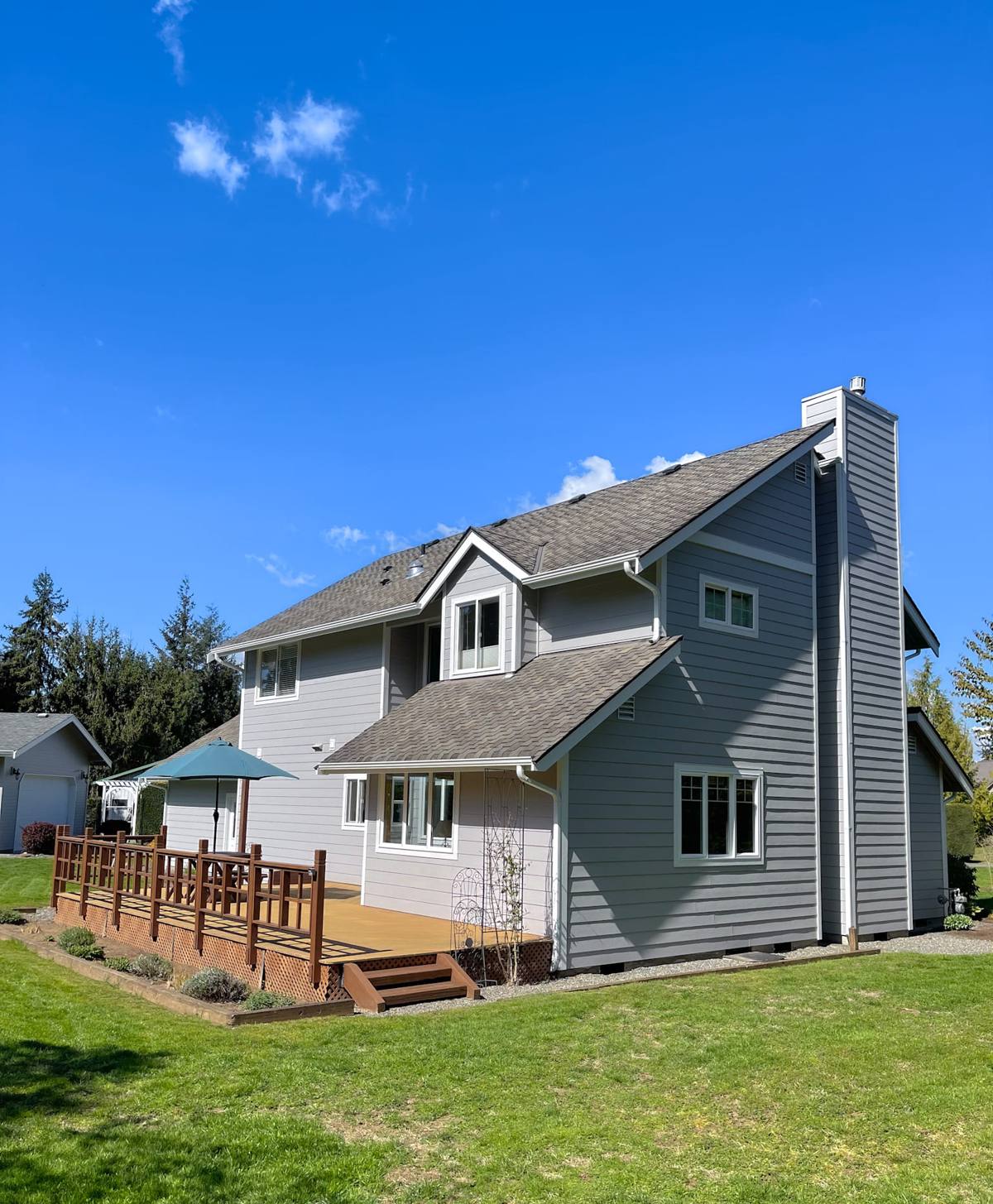
Why We Only Install James Hardie Fiber Cement Siding
We made a decision as a company to install one product system: James Hardie fiber cement siding. We don't install vinyl, LP SmartSide, Cemplank, Allura, primed spruce, or cedar. That's not a marketing gimmick — it's because after years of exterior work in Pinellas County, fiber cement is the only siding material we're willing to stand behind for the long haul in this climate.
Fiber cement is non-combustible, which matters in a state where lightning-sparked brush fires and electrical fires are a real risk. It doesn't warp or soften in high heat the way some engineered wood and vinyl products can, and it holds paint and factory finishes far longer under constant sun exposure. James Hardie also builds a version of its siding specifically engineered for hot, humid, storm-prone climates — which is exactly the environment Pinellas Park sits in.
What We're Not Saying
Other materials aren't inherently bad products — they just come with trade-offs (moisture sensitivity, shorter paint life, more frequent maintenance, or warranty limitations) that we're not willing to install and then have to explain to a homeowner five years later. Fiber cement lets us install something once and have it perform for decades with reasonable upkeep.
HardieZone HZ5: The Product Line Built for This Exact Climate
James Hardie doesn't sell one generic siding product nationwide. The company engineers its formulations by climate zone under what it calls the HardieZone system, and Florida — including Pinellas County — falls into the HZ5 zone, built around moisture, humidity, and temperature swings rather than freeze-thaw cycles like northern states deal with.
For a Pinellas Park home, that means the siding itself is formulated to resist moisture absorption and the swelling, cracking, or delamination that can come with it, while still handling constant sun without degrading. It's a meaningful difference from installing a one-size-fits-all product and hoping it holds up in a Gulf Coast climate.
Product Options for Pinellas Park Homes
- HardiePlank lap siding — the most common choice, available in multiple textures (smooth, cedarmill, beaded) for a traditional horizontal look.
- HardiePanel vertical siding — used for board-and-batten style facades or accent sections.
- HardieTrim boards — matching trim for corners, window and door surrounds, and fascia.
- HardieSoffit panels — vented and non-vented options for eaves and overhangs, which take a beating from wind-driven rain.
What a Correct James Hardie Installation Actually Involves
Fiber cement siding is only as good as the installation behind it. James Hardie publishes detailed installation specifications, and skipping steps is the single biggest reason a siding job underperforms — regardless of the material.
Moisture Management Comes First
Before a single piece of siding goes up, the wall needs a correctly installed water-resistive barrier and properly integrated flashing around every window, door, and penetration. In a climate with regular wind-driven rain, water will find any gap in that system. The siding is the visible layer; the drainage plane behind it is what actually keeps your walls dry over time.
Fastening and Clearances Matter More Here
James Hardie specifies fastener types, spacing, and minimum clearances from rooflines, decks, and grade — and those specs get more important, not less, in a high-wind coastal environment. Correct fastening keeps panels secure in gusts; correct clearances keep water from wicking into the bottom edge of the siding. We follow manufacturer specs on every job because that's also what keeps the warranty valid if something ever needs to be addressed.
Caulking and Joint Treatment
Every seam, joint, and butt edge needs to be treated according to spec — sealed or shiplap-fitted depending on the product line. Done wrong, these are the first spots where water intrusion starts, often invisibly, behind the wall.
ColorPlus Technology: Why Factory Finish Beats Field Paint Here
James Hardie's ColorPlus finish is baked on at the factory in a controlled environment, rather than brushed or sprayed on-site after installation. For a Pinellas Park home, that matters because factory-cured finishes hold up better against constant UV and humidity than field-applied paint, which can suffer from inconsistent application, weather during application, or premature failure at cut edges.
ColorPlus finishes also come backed by their own dedicated warranty coverage against fading and peeling, separate from the substrate warranty on the siding itself. For homeowners who want a lower-maintenance exterior, this is one of the more practical reasons to choose factory-finished panels over siding that will need repainting on a maintenance cycle.
What Drives the Cost of a James Hardie Job in Pinellas Park
Every home is different, but a few factors consistently move the price of a siding project up or down. We give straightforward, itemized estimates rather than vague ballpark numbers, but here's what typically affects cost:
| Cost Factor | Why It Matters |
|---|---|
| Home size and wall area | More square footage means more material and labor, the biggest single driver of total cost. |
| Tear-off of existing siding | Removing and disposing of old siding, and repairing any sheathing damage found underneath, adds time and cost. |
| Siding profile and trim complexity | Multiple gables, dormers, or decorative trim details take longer to fit and finish than a simple rectangular facade. |
| Story height and access | Second-story and steep-roof sections require more scaffolding, staging, and safety setup. |
| ColorPlus vs. field-painted finish | Factory finish costs more up front but reduces or eliminates future repainting. |
Our Process, From Estimate to Finished Job
1. On-Site Evaluation
We walk the exterior with you, look at the current siding condition, check for existing moisture or rot issues, and talk through product and color options that fit the home.
2. Written, Itemized Estimate
You get a clear scope of work and price — no vague allowances, no pressure to decide on the spot.
3. Tear-Off and Substrate Repair
If replacing existing siding, we remove it and address any sheathing or framing damage before anything new goes up. Covering up a rot problem is how small issues become expensive ones.
4. Weather Barrier and Flashing Installation
This is the step that protects the house long after the siding's finish is old news — done to spec, every time.
5. Siding, Trim, and Soffit Installation
Installed to James Hardie's published specifications for fastening, clearance, and joint treatment.
6. Final Walkthrough
We go over the finished job with you before we consider it done.
Why Hiring a Crew That Already Works in Pinellas Park Matters
Siding installation isn't identical everywhere. A crew that regularly works Pinellas Park and the surrounding Pinellas County area already understands the local wind load expectations under the Florida Building Code, knows how homes in this area are typically framed and sided, and has already worked through the area's permitting process. That familiarity shows up in fewer surprises and fewer delays.
It also means we're not learning on your home. We've seen how siding performs here over multiple storm seasons — which details hold up and which shortcuts cause problems — and we install accordingly, not by generic national guidelines alone.
Signs Your Pinellas Park Home May Need New Siding
- Cracking, warping, or buckling panels, especially after storm season
- Soft spots or visible rot when you press on the siding near the bottom edge
- Paint that's chalking, peeling, or fading unevenly across the facade
- Water stains or discoloration on interior walls near exterior corners
- Visible gaps opening up at trim, corners, or window and door surrounds
- Noticeably higher cooling bills, which can point to compromised insulation behind failing siding
- Siding that's simply reached the end of its expected service life and shows widespread wear
If you're seeing any of these on a Pinellas Park home, it's worth having someone take a real look before the next storm season rather than after damage shows up.
If you'd like a straightforward look at your home's siding and an honest, no-pressure estimate for James Hardie installation, the form below is the easiest way to get started.