 Largo Siding
 Why Siding Repair Takes More Than a Quick Patch in Palm Harbor
Palm Harbor sits in Pinellas County, close enough to the Gulf that salt-laden air is part of daily weather, not just something that shows up after a named storm. Add in Florida's intense, near-constant UV load and the wind-driven rain that comes with hurricane season, and siding here is under more sustained stress than siding in most parts of the country. A repair that only addresses what's visible on the surface tends to fail again within a season or two, because the conditions that caused the damage the first time are still working on the same wall.
Done correctly, siding repair in Palm Harbor means understanding which of these forces caused the damage, whether the problem is isolated or spreading, and whether the existing material is even a good candidate for repair versus a section of full replacement. This page covers what actually goes wrong with siding out here, how a proper repair is scoped, and why hiring a crew that already works this part of Pinellas County matters more than it might seem.
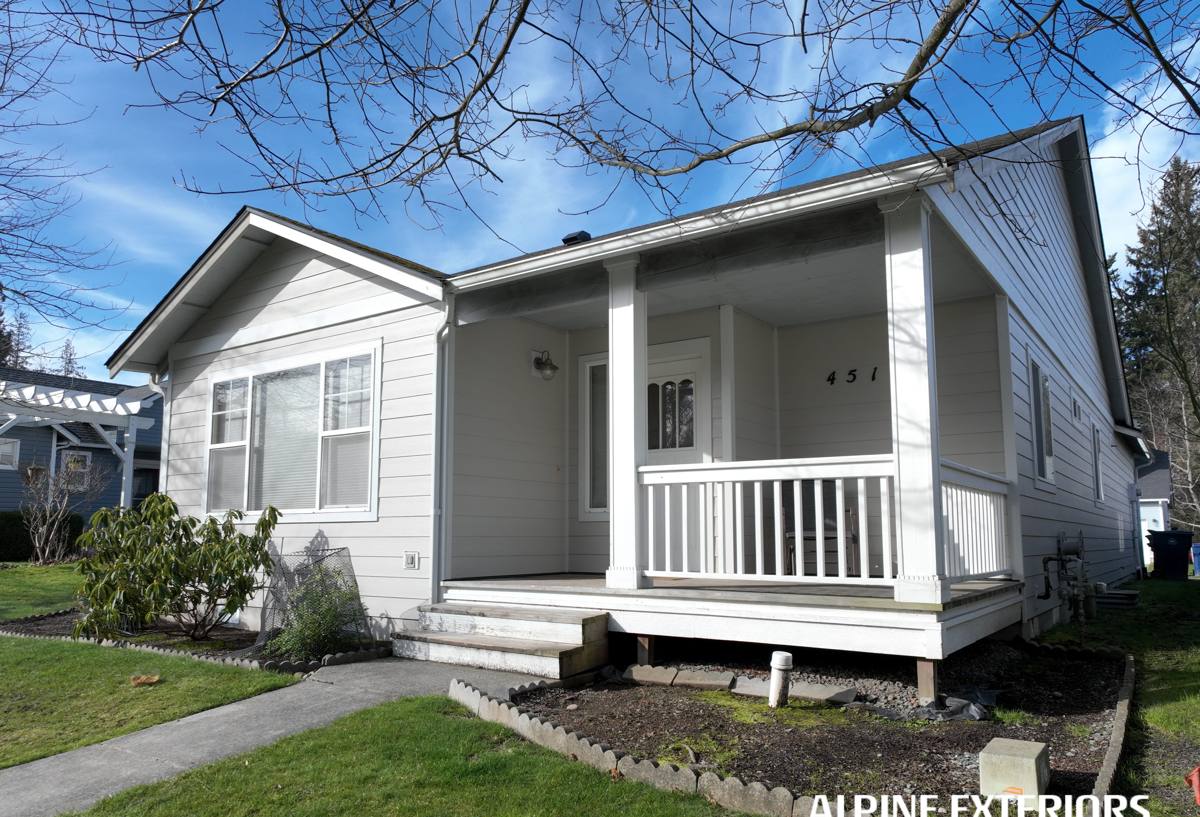
What Actually Damages Siding in This Area
UV and Sun Exposure
Florida gets some of the highest year-round UV exposure in the country, and a south- or west-facing wall takes that load directly, day after day. On vinyl siding, this shows up as fading, chalking, and a surface that becomes brittle enough to crack from minor impacts that wouldn't have damaged it when new. On wood or engineered wood products, UV breaks down the surface finish first, which then opens the door to moisture problems underneath. Fiber cement with a factory-applied finish holds color and surface integrity far longer under this kind of sun load, which is one of the practical reasons it's become the standard we install.
Wind-Driven Rain and Moisture Intrusion
Ordinary rainfall mostly runs down a wall. Wind-driven rain during a tropical system or a strong summer storm gets pushed sideways and upward, forcing water behind seams, around penetrations, and under lap joints that were never designed to handle water moving in that direction. This is how moisture gets in behind siding without an obvious point of entry, and it's often the real cause of a soft spot or stain that only shows up months after the storm that caused it.
Salt Air and Corrosion
Even away from the immediate waterfront, salt carried on Gulf air settles on exterior surfaces and accelerates corrosion in fasteners, trim flashing, and any exposed metal components. A repair that reuses standard-grade fasteners in a salt-exposed wall tends to show new rust staining and loosening within a few years, which is a common reason we get called back to a previous repair that wasn't done with coastal conditions in mind.
Storm Impact and Wind Load
Beyond the moisture and corrosion, actual wind load and wind-borne debris cause direct physical damage — cracked or blown-off panels, lifted lap siding, and impact dents that compromise a weather barrier even when they look minor. Hurricane-force wind is a real design condition for this region, and siding that isn't rated or installed for it is more likely to need repair after every storm season rather than holding up through it.
How Repair Needs Differ by Siding Material
Not all siding fails the same way, and a repair approach that works for one material can be the wrong move for another. This is one of the first things we sort out before recommending anything.
| Material | Common Failure Mode Here | Repairability |
|---|---|---|
| Vinyl siding | UV brittleness, cracking, warping from heat | Often repairable if the color hasn't faded past a reasonable match; brittle panels can shatter during removal |
| Wood siding | Rot from trapped moisture, insect damage, finish failure from UV | Repairable if rot is localized; widespread moisture damage usually means a larger scope |
| LP SmartSide / engineered wood | Edge swelling, delamination at seams exposed to wind-driven rain | Repairable in isolated spots; swelling at multiple seams often signals a broader moisture problem |
| Older fiber cement (non-Hardie or early-generation) | Cracking at fastener points, caulk joint failure, edge chipping | Usually repairable; color matching can be harder on older or discontinued lines |
| James Hardie fiber cement with ColorPlus finish | Rare — isolated impact damage or fastener issues, not material breakdown | Highly repairable; ColorPlus finish is designed for factory-consistent color matching on replacement boards |
This is also where the honest conversation about repair versus replace usually starts. A wall with a handful of cracked vinyl panels is a straightforward repair. A wall where every south-facing panel shows the same UV degradation is telling you the material has reached the end of what it can offer, not that one panel happened to fail.
Cosmetic Wear vs. a Problem That Needs Attention Now
Not every mark on a wall means the same thing, and telling these apart correctly is the actual value of a real inspection rather than a guess from the driveway.
- Fading or chalking color — usually cosmetic on its own, but worth noting on vinyl as an early sign of UV brittleness
- Small surface cracks with no give underneath — often a straightforward panel or board replacement
- Soft, spongy, or dark-stained sections — almost always a sign of moisture trapped behind the siding, and it needs attention before it spreads to framing
- Bulging or separated seams — can indicate moisture-driven swelling underneath, especially on engineered wood products
- Rust streaking near fasteners — cosmetic if isolated and shallow, but a sign of hardware failure if it's widespread
- Gaps at trim, corners, or where siding meets the roofline — a common entry point for wind-driven rain and worth checking even if the siding itself looks fine
How We Diagnose a Repair Before Recommending Anything
An estimate that's actually useful starts with checking what's happening behind the visible surface, not just describing what's already obvious. Our process typically includes:
- Inspecting the full wall, not just the reported problem area, since UV and moisture damage rarely stay confined to one spot
- Checking for soft spots and moisture intrusion by probing suspect areas, not relying on a visual look alone
- Examining fasteners, flashing, and trim for corrosion consistent with salt air exposure
- Assessing seams, laps, and penetrations for signs that wind-driven rain has found a way behind the siding
- Confirming whether a color or profile match is realistically available for the existing material
- Giving a straight read on whether the issue is isolated and repairable, or a sign the material itself is past its useful life on this wall
We walk through what we find plainly, including when a repair genuinely is the right call and a bigger scope isn't necessary.
What a Correct Repair Actually Involves
Matching the Existing Material Honestly
Repairing a wall means working with what's already there, and that's easiest on James Hardie siding with a ColorPlus factory finish, since replacement boards from the same product line match consistently in a way field-applied paint often can't. On other materials, especially older or discontinued products, an exact match isn't always possible, and we'll say so before starting rather than after the work is done.
Correcting the Cause, Not Just the Symptom
A cracked panel or a soft board is the symptom. A failed flashing detail, a gap that lets wind-driven rain behind the wall, or trapped moisture with nowhere to drain is usually the cause. Replacing the visible damage without fixing what let water or UV get to it in the first place is how the same spot ends up needing repair again, often sooner the second time.
Using Fasteners and Flashing Rated for This Environment
Given the salt air common across Pinellas County, we use fasteners and flashing suited to coastal exposure rather than standard-grade hardware that will corrode again on a shortened timeline. This is one of the details that separates a repair that holds for years from one that needs redoing after the next storm season.
Proper Sequencing at Seams and Penetrations
Repairs around windows, doors, and utility penetrations need the same attention to water-shedding sequence — flashing over the layer below it, not under — as new construction. Skipping this step to save time is one of the more common reasons a repair looks fine for a year and then fails at exactly the point where the shortcut was taken.
When Repair Isn't the Right Answer
Part of an honest repair conversation is saying when repair isn't the better option. That's usually the case when damage is spread across multiple sections rather than isolated, when the existing material is a product known to have ongoing moisture or durability challenges in this climate, or when a homeowner is already facing repeat repairs on the same wall every few years. In those situations, we'll explain why we'd recommend replacing the affected sections — or the full elevation — with James Hardie fiber cement rather than continuing to chase the same problem. It's non-combustible, holds its ColorPlus finish under Florida's UV load far longer than field-painted alternatives, and is engineered in HZ product lines built for climates like this one. We won't push a bigger job than a home actually needs, but we also won't recommend repeatedly patching a material that's already shown it can't handle the exposure here.
Maintenance That Extends a Repair's Lifespan
- Rinse siding periodically to remove salt residue before it works into seams and fastener points
- Keep gutters and downspouts clear so water sheds away from the wall instead of running down it repeatedly
- Trim vegetation back from siding to reduce trapped moisture and improve airflow against the wall
- Recaulk or reseal joints on the schedule appropriate to the material, since sun exposure here shortens that interval compared to inland climates
- Address soft spots, gaps, or bulging seams as soon as they're noticed rather than waiting for the next storm season
- Have trim, flashing, and fastener points checked after major storms, since wind-driven rain damage isn't always visible right away
Why It Matters That We Already Work This Part of Pinellas County
A crew that occasionally works Palm Harbor can still do a competent repair, but one that works this area regularly isn't guessing at what actually causes damage here — the specific combination of Gulf-driven salt air, sustained UV, and wind-driven rain that Pinellas County homes deal with every year. That means a more accurate inspection from the start, fastener and flashing choices that are already matched to coastal conditions rather than generic defaults, and a repair scope that accounts for how this climate behaves rather than applying a one-size approach borrowed from a different region. It also means fewer surprises once work is underway, because the estimate was built around this environment in the first place.
Whether you're dealing with a specific issue — a cracked panel, a soft spot near a window, storm damage from the last system that came through — or just want a straight assessment of where your siding actually stands, we're glad to take a look and tell you plainly what we find. Reach out below for a free, no-pressure estimate.