 Largo Siding
 Roofing in Palm Harbor Isn't the Same Job as Roofing Inland
Palm Harbor sits close enough to the Gulf that its roofs deal with a specific combination of stresses most inland homes never see: salt-laden air that accelerates corrosion on fasteners and flashing, intense year-round UV that breaks down shingle asphalt faster than in cooler climates, wind-driven rain that finds every weak seam, and the real possibility of hurricane-force gusts during storm season. None of these factors are unique on their own, but together they shorten the useful life of a roof that isn't specified and installed correctly for this part of Pinellas County.
We're based in Largo and work Palm Harbor regularly, so this isn't theoretical for us. It shapes which materials we recommend, how we flash penetrations, and how we sequence a tear-off so a home isn't left exposed if weather turns. This page covers what a correctly built asphalt shingle roof looks like for a Palm Harbor home, and what our process involves from first call to final inspection.
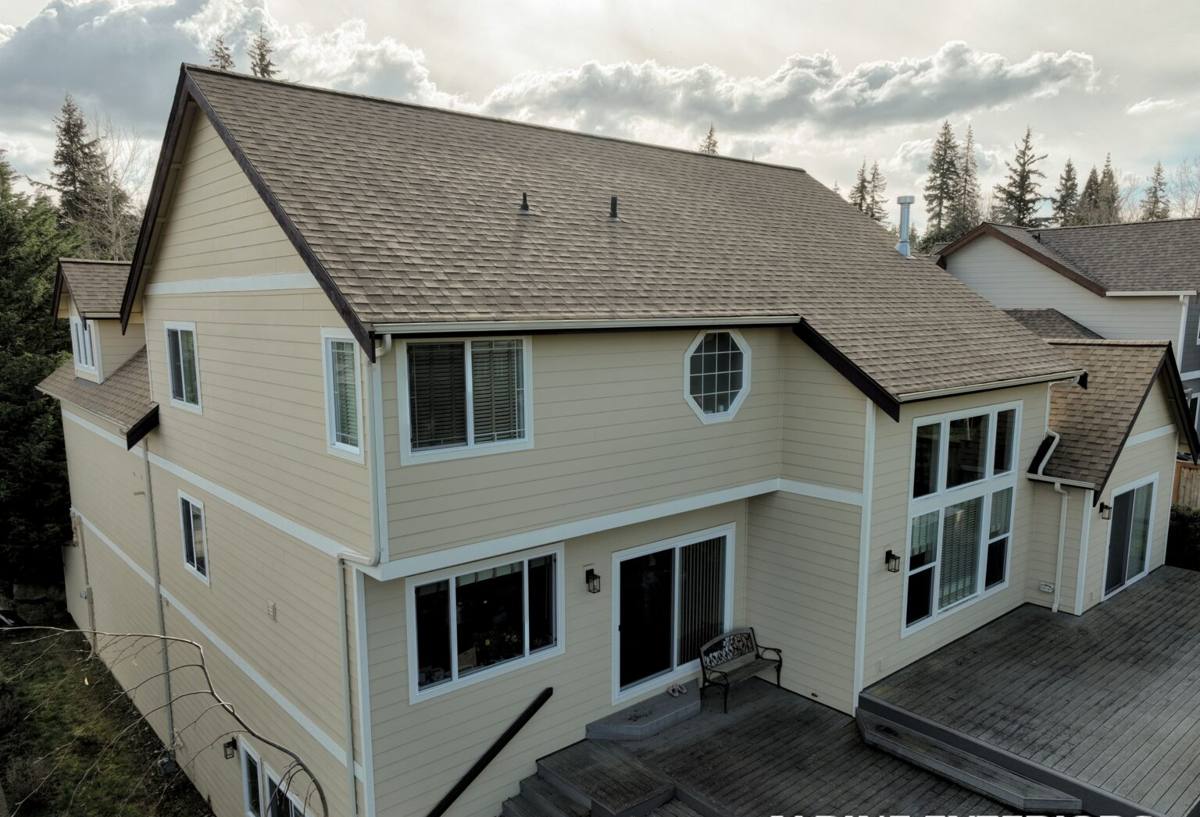
What Coastal Pinellas County Demands From a Shingle Roof
Wind Resistance
Florida building code sets minimum wind-uplift requirements by region, and coastal Pinellas County is not a place to install the cheapest shingle on the shelf. Wind rating isn't just about the shingle itself — it's the shingle, the nailing pattern, the number of fasteners per shingle, and the underlayment working together. A shingle rated for high wind speeds that's installed with four nails instead of six, or nailed too high on the shingle, won't perform to that rating in a real storm.
UV and Heat Exposure
Asphalt shingles rely on their granule coating to protect the asphalt layer underneath from UV breakdown. Year-round Florida sun accelerates that breakdown compared to northern climates, which is part of why shingle warranties are often prorated and why attic ventilation matters more here than the shingle brochure lets on — trapped heat under the roof deck bakes shingles from below as well as above.
Wind-Driven Rain
Standard vertical rain is easy to shed. Wind-driven rain during a tropical system or even a strong afternoon storm can push water sideways and upward under shingle tabs, valleys, and around penetrations like vent stacks and chimneys. This is a underlayment and flashing problem as much as a shingle problem — self-adhering underlayment at eaves, valleys, and roof-wall intersections is what actually stops that water, not the shingle alone.
Salt Air Corrosion
Being close to the coast means metal components — nails, flashing, vent boots — corrode faster than they would further inland. We spec corrosion-resistant fasteners and flashing for Palm Harbor roofs for this reason; it costs a little more up front and saves a homeowner from flashing failures years before the shingles themselves are due for replacement.
Signs a Palm Harbor Roof Needs a Closer Look
Most shingle roof problems don't show up as a sudden leak — they build gradually. Homeowners who catch these signs early usually have more options and lower repair costs than those who wait for a ceiling stain.
- Granules collecting in gutters or at the base of downspouts
- Shingles that look curled, cupped, or are lifting at the corners
- Bald or shiny patches where granule coverage has worn thin
- Cracked shingles, especially on south- and west-facing slopes that get the most sun
- Visible gaps or rust at flashing around chimneys, vent stacks, or skylights
- Dark streaking or moss/algae growth in shaded or humid areas of the roof
- Soft spots underfoot or sagging visible from the ground
- Daylight visible through the roof deck from inside the attic
Matching the Shingle to the Job
Not every Palm Harbor home needs the same shingle. The right choice depends on budget, how long you plan to stay in the home, and how much of a priority storm performance is versus upfront cost. Here's how the common tiers compare for this climate.
| Shingle Type | Typical Wind Rating | Expected Lifespan Here | Best Fit |
|---|---|---|---|
| 3-Tab (economy) | Lower end of code minimums | Shorter, due to UV and coastal exposure | Budget-driven projects, rental properties |
| Architectural / Dimensional | Higher wind ratings available, code-compliant for the coast | Longer, with better granule adhesion and thicker construction | Most owner-occupied Palm Harbor homes |
| Impact-Resistant / High-Wind Rated | Highest ratings, often paired with insurance discounts | Comparable to or longer than standard architectural | Homes prioritizing storm resilience or insurance savings |
We walk homeowners through this trade-off honestly. A higher-tier shingle costs more per square, but in a wind-and-salt environment like Palm Harbor, the difference in real-world performance and how long the roof actually looks and functions like new is often worth the gap — especially if you're not planning to sell in the next few years.
What a Correct Installation Actually Involves
Tear-Off and Deck Inspection
We remove the existing roofing down to the deck rather than layering over old shingles. This lets us inspect the plywood or OSB underneath for soft spots, water damage, or delamination that a layover would hide — and hiding those problems is how small issues turn into structural ones.
Underlayment
Self-adhering, waterproof underlayment goes at eaves, valleys, and other vulnerable areas, with synthetic underlayment across the rest of the deck. This layer is what actually keeps a home dry if wind drives rain under the shingles — it matters as much as the shingle brand itself.
Flashing
New flashing at chimneys, walls, vent stacks, and valleys, sized and fastened for coastal conditions. Reusing old, corroded flashing to save time is a shortcut we don't take — it's usually the first thing to fail after a "new" roof goes on.
Nailing Pattern and Fastening
Shingles are only as wind-resistant as their installation. We follow manufacturer nailing specifications for the region's wind requirements — correct nail count, placement, and fastener type — rather than a generic pattern that might pass a quick glance but won't hold up in a real storm.
Ventilation
Proper intake and exhaust ventilation keeps attic temperatures and moisture in check, which protects both the shingles from the underside and the roof deck itself. We check existing ventilation as part of every project and flag it if it's inadequate.
Final Inspection and Cleanup
We walk the completed roof, check flashing and ridge lines, and do a magnetic sweep of the property for stray nails before we consider the job finished.
Why a Crew That Already Works Palm Harbor Matters
A roofing crew that regularly works Palm Harbor and the surrounding Largo area already knows the local wind and building code requirements, has relationships with the same permitting office, and has seen how different shingle lines actually hold up in this specific coastal environment over years — not just in a manufacturer's marketing material. That local track record shows up in small decisions: which underlayment to use in a valley that catches wind-driven rain, how to flash a chimney against salt-air corrosion, which fastener spec actually holds in a coastal wind event.
It also matters after the job is done. A local crew is easy to reach if a question comes up during the next storm season, and stands behind its work because it isn't leaving the area.
Repair or Full Replacement?
Not every roofing problem in Palm Harbor requires a full replacement. We assess honestly based on the roof's age, the extent of damage, and whether the underlying deck and structure are sound.
| Factor | Favors Repair | Favors Replacement |
|---|---|---|
| Age of roof | Well within expected lifespan | Near or past expected lifespan for its shingle type |
| Extent of damage | Isolated to a small area (one valley, one vent boot) | Widespread granule loss, curling, or multiple leak points |
| Deck condition | Solid, no soft spots | Soft spots or water staining suggesting deck damage |
| Storm history | Minor wind or debris damage | Repeated storm exposure with cumulative wear |
| Insurance/resale plans | Not a near-term concern | Considering a wind-mitigation discount or upcoming sale |
Protecting the Roof Once It's Installed
A well-installed shingle roof still benefits from basic upkeep in this climate. Keeping gutters clear so water doesn't back up under eave shingles, trimming back overhanging branches that hold moisture and drop debris, and having the roof looked at after a significant storm all extend its service life. We're happy to do a quick post-storm check for past clients — catching a lifted shingle or a compromised seal early is far cheaper than dealing with the water damage it eventually causes.
Get a Straight Answer About Your Roof
If you're noticing wear on a Palm Harbor roof, dealing with storm damage, or just planning ahead, we'll come take a look and give you an honest assessment — no pressure, no inflated scope. Use the form below to request a free estimate and we'll walk you through exactly what your roof needs and why.