 Largo Siding
 Why Oldsmar Roofs Wear Out Faster Than the Manufacturer's Warranty Suggests
Oldsmar sits in the same weather corridor as the rest of Pinellas County, and that corridor is hard on roofs. A roof here isn't just shedding rain — it's absorbing months of intense UV exposure that bakes shingle oils out of asphalt, wind gusts that work at nail lines and edge flashing during every named storm season, wind-driven rain that finds any gap in the underlayment or flashing detail, and a steady dose of salt air drifting in off the surrounding bays and Gulf coast that accelerates corrosion on anything metal. None of these factors are dramatic on their own. Together, over ten or fifteen years, they're why a roof that "looked fine" from the driveway can be failing underneath the shingles.
A new roof installation done for this specific climate isn't the same job as a new roof installation done in a mild, dry inland market. The materials, fastening patterns, flashing details, and ventilation choices all need to account for what Oldsmar actually throws at a roof year after year.
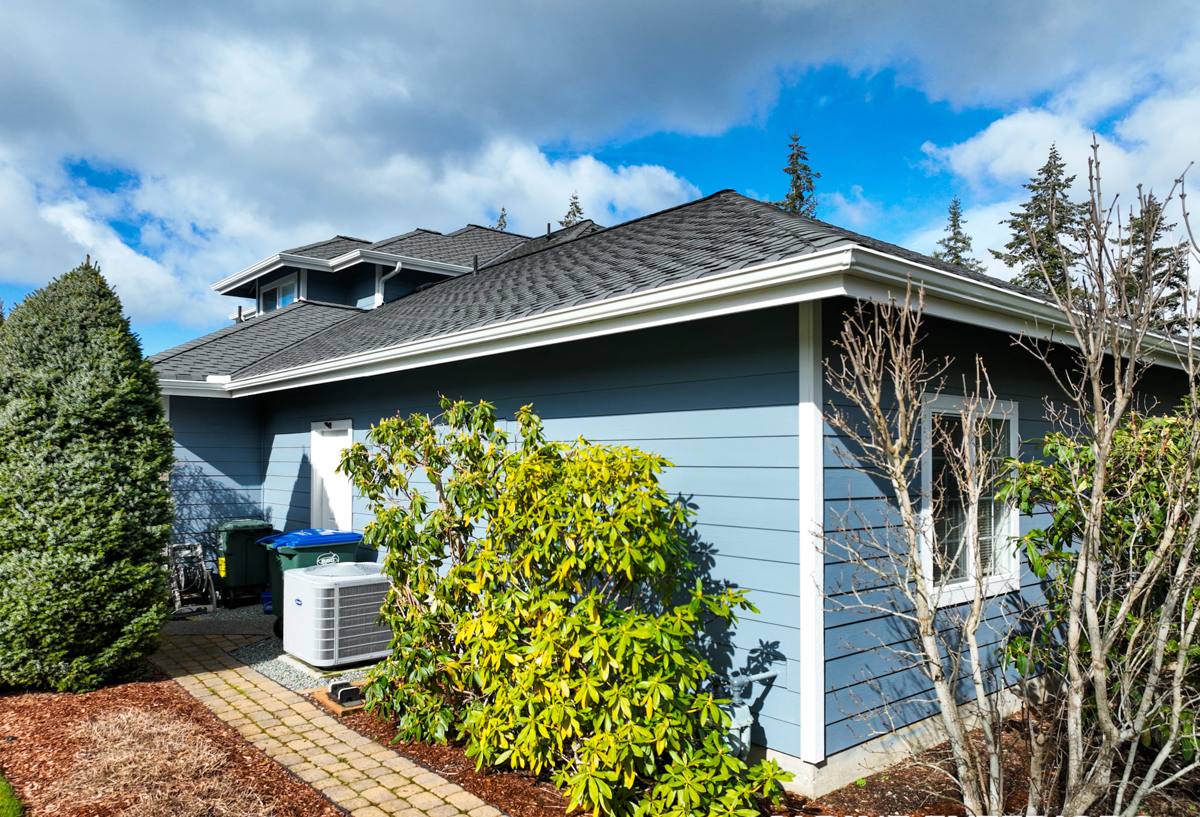
Signs an Oldsmar Roof Needs Full Replacement, Not Another Repair
What we look for on an inspection
Not every roof problem calls for a full tear-off. But there's a point where repeated patching stops making financial sense and starts masking a bigger issue. Common signs we see on Oldsmar homes include:
- Granule loss heavy enough that shingles look blotchy or bald in sun-exposed sections
- Curling or cupping shingle edges, especially on south- and west-facing slopes
- Soft spots or sagging in the roof deck when walked
- Repeated leaks around the same penetration even after prior repairs
- Visible rust or corrosion streaking from flashing, vents, or fasteners
- A roof already at or past its expected service life for this climate, regardless of how it looks from the ground
Why age matters more here than elsewhere
Manufacturer warranty numbers are usually based on moderate, mixed-climate testing conditions. In a Gulf Coast climate with this much UV and salt exposure, we generally see asphalt shingle roofs age faster than those published numbers suggest. That doesn't mean every roof needs replacing early — it means the age conversation should be based on condition, not just a warranty document.
Roofing Materials That Actually Hold Up in Pinellas County Conditions
Material choice is where a lot of the long-term performance gets decided. Here's how the common options compare for a coastal Florida application like Oldsmar:
| Material | Wind performance | UV/heat resistance | Salt air behavior | Typical service life here |
|---|---|---|---|---|
| Standard 3-tab asphalt shingle | Lower wind rating | Ages faster under intense sun | Adequate with proper fasteners | Shorter end of range |
| Architectural (laminate) asphalt shingle | Higher wind rating options available | Better UV tolerance than 3-tab | Adequate with proper fasteners | Mid-to-long range |
| Metal roofing (standing seam/panel) | Strong wind performance when installed correctly | Reflects heat well, minimal UV degradation | Needs corrosion-resistant coatings/fasteners near salt exposure | Long range |
| Tile (concrete or clay) | Heavy, performs well when fasteners/underlayment are correct | Excellent UV tolerance | Very good, but underlayment beneath tile is the real wear point | Long range for tile itself; underlayment needs earlier attention |
We walk homeowners through these trade-offs honestly rather than pushing one product. The right choice depends on your budget, your roof's structure, your HOA rules if applicable, and how long you plan to stay in the home. What matters more than the material name on the shingle wrapper is whether the fastening, flashing, and underlayment underneath it are done correctly for wind and moisture — that's where most early failures actually start.
What a Correct New Roof Installation Actually Involves
Tear-off and deck inspection
We remove the old roofing down to the deck rather than layering over it. This lets us actually see the plywood or OSB underneath — soft, delaminated, or water-stained decking gets replaced, not covered up. Skipping this step is one of the most common shortcuts that leads to problems years later.
Underlayment
In a wind-driven rain climate, underlayment is doing more work than people assume. We install a synthetic or self-adhering underlayment system appropriate to the roof pitch and material, with particular attention to valleys, eaves, and any low-slope transitions where water tends to back up.
Flashing details
Flashing around chimneys, walls, skylights, and vent penetrations is where most leaks actually originate — not in the open field of the roof. We replace flashing rather than reuse it wherever the metal shows corrosion or the old sealant has failed, since salt air accelerates that corrosion faster than inland installations typically see.
Fastening pattern and wind rating
Nailing pattern and fastener count matter as much as the shingle's rated wind speed. We follow the manufacturer's high-wind installation instructions, which typically call for more fasteners per shingle and specific placement than a standard-wind installation.
Ventilation
Proper attic ventilation keeps shingle temperatures and moisture levels in check, which matters for both shingle lifespan and interior comfort. We check existing intake and exhaust ventilation and correct it as part of the installation rather than leaving an undersized or blocked system in place.
Florida Building Code and Wind Mitigation Considerations
Roof replacements in this area fall under Florida Building Code wind-borne debris and uplift requirements, and Pinellas County permitting applies. A code-compliant installation isn't optional paperwork — it's the difference between a roof that performs in a real windstorm and one that doesn't, and it also affects your homeowner's insurance. Many insurers offer wind mitigation credits for roofs installed to current code with documented fastening, sealed roof decks, and secondary water barriers. We pull permits, install to current code, and provide the documentation homeowners need for a wind mitigation inspection after the job is done.
Our Installation Process, Start to Finish
- On-site inspection and honest assessment — we look at the deck, flashing, ventilation, and current material condition before recommending replacement over repair
- Written estimate — material options, scope of work, and pricing laid out clearly, no vague allowances
- Permitting — pulled through Pinellas County before work begins
- Tear-off and deck repair — full removal of old roofing, deck inspected and repaired as needed
- Underlayment and flashing installation — done to current code and manufacturer wind-rated specifications
- Material installation — shingles, metal, or tile installed with the fastening pattern and ventilation corrections the roof actually needs
- Final walkthrough and cleanup — magnetic sweep for debris, site cleanup, and a walkthrough with the homeowner before we consider the job done
- Final inspection and documentation — county inspection closed out and paperwork provided for warranty and insurance purposes
Why Local Experience in Oldsmar Actually Matters
A crew that already works in and around Oldsmar and greater Largo knows the practical realities that don't show up in a generic roofing brochure: which neighborhoods run into HOA architectural review for roof color or material changes, how Pinellas County permitting and inspection scheduling typically moves, and what wind exposure category and code requirements apply in this specific area versus further inland. That familiarity shortens the timeline and avoids the surprises that come from a crew learning local permitting on your dime.
It also means we're a known quantity if a warranty question or storm-related concern comes up after the job — we're not a crew that worked the area once and moved on.
Questions Worth Asking Before You Hire Anyone for This Job
A new roof is a major investment, and the difference between a correct installation and a shortcut one often isn't visible until years later. Before signing with any contractor for a new roof installation in Oldsmar, confirm:
- Are they licensed to perform roofing work in Florida, and can they provide proof?
- Do they carry current liability insurance and workers' compensation coverage?
- Will they pull the permit themselves, in the company's name?
- Do they inspect and repair the deck, or just install over whatever is there?
- What underlayment and flashing materials are specified in writing, not just verbally?
- What fastening pattern will be used, and does it match the shingle's high-wind installation requirements?
- Will they provide documentation needed for a wind mitigation insurance inspection?
- What does the manufacturer's warranty actually cover versus the workmanship warranty from the installer?
Any contractor should be able to answer these plainly, without hedging. If the answers are vague, that's worth noticing before the tear-off starts, not after.
Living With a New Roof in This Climate
Once a new roof is installed correctly, the maintenance load is fairly light: periodic visual checks after major storms, keeping gutters and valleys clear of debris, and addressing any flashing or sealant wear at penetrations before it becomes a leak. Salt air exposure means metal components — flashing, vents, fasteners — are worth a closer look during routine checks than they might get in an inland home. A roof built correctly for Oldsmar's conditions from day one needs far less of this kind of attention than one where shortcuts were taken during installation.
If you're weighing repair versus replacement, or just want a straight answer on what condition your roof is actually in, we're glad to take a look. Reach out for a free, no-pressure estimate using the form below — we'll walk the roof, tell you what we see, and lay out your real options.