 Largo Siding
 Why Dunedin's Spot on the Gulf Changes What Siding Has to Do
Dunedin sits right up against the water on Florida's Gulf coast in Pinellas County, and that position means the exterior of a Dunedin home works harder than siding in most parts of the country. Hurricane-force winds test every seam and fastener during storm season. Wind-driven rain gets pushed sideways into laps and trim that were only ever designed to shed water falling straight down. Intense, nearly year-round UV breaks down finishes and sealants faster than a milder climate ever would. And salt air drifting off the Gulf accelerates corrosion on anything metal behind the cladding. None of those forces are unique to Dunedin on their own — but stacked together, on a property this close to open water, they add up faster than they do a few miles inland.
That combination is exactly why the siding material and the installation detailing matter more here than a homeowner might expect. This page focuses specifically on James Hardie fiber cement siding for Dunedin properties: what the local climate demands from it, what a correct installation actually involves, and why working with a crew that's already used to this stretch of coastline makes a measurable difference.
The Housing Stock We See Most in Dunedin
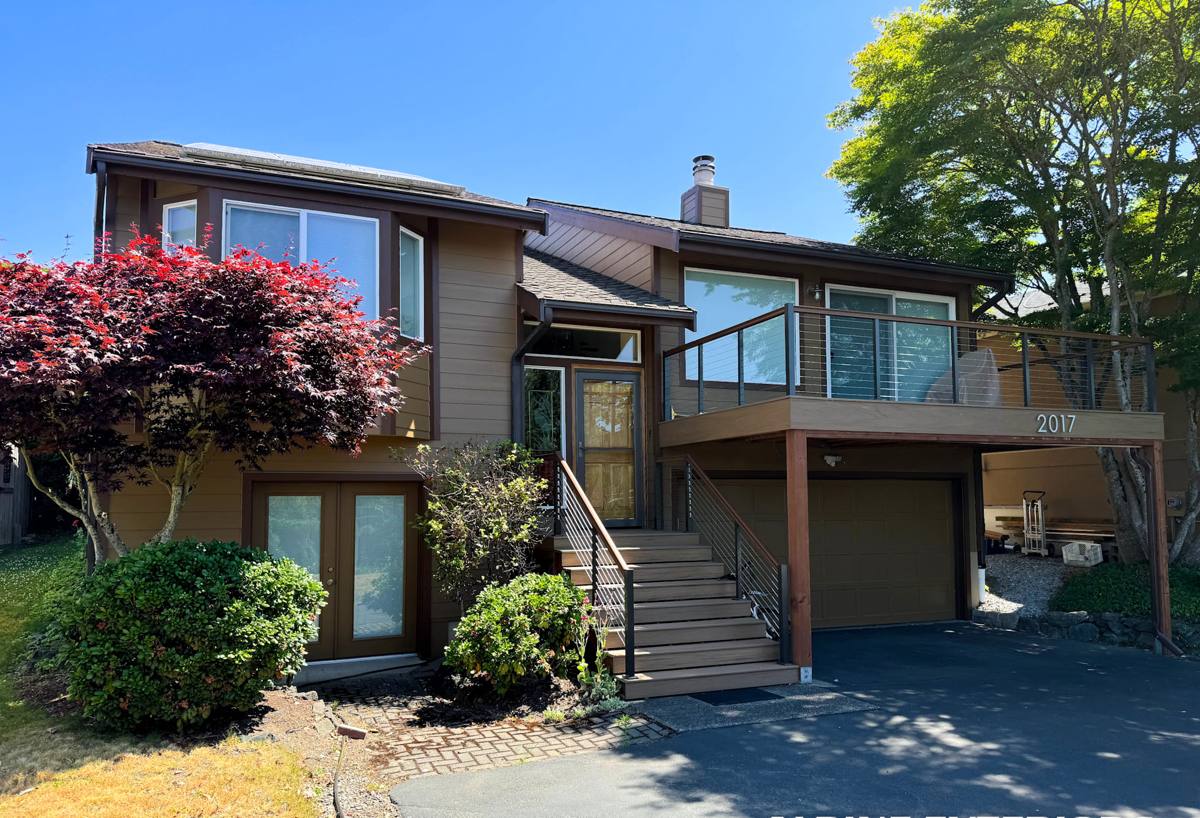
Dunedin's homes span a wide range of ages and construction types, from older Florida ranch and bungalow-style houses to newer construction closer to the water. That mix matters for siding decisions in a few practical ways.
Older Homes
Many older Dunedin homes were built with wood siding, older stucco systems, or early-generation siding products that have since been repainted or patched multiple times. On these homes, a siding replacement is often the first real chance in decades to correct wall assembly issues — missing or degraded water-resistive barrier, inadequate flashing, or sheathing that's taken on moisture over the years — before the new siding goes up. Skipping that step and simply re-cladding over old problems is one of the more common shortcuts we see, and it's one we don't take.
Newer and Waterfront-Adjacent Homes
Newer builds and homes closer to the water tend to already meet more current wind-load and flashing standards, but they're also the properties taking the most direct, sustained salt exposure. On these homes, the fastener corrosion resistance and finish durability of the siding matter as much as the wind rating, since the material is working against a harsher exposure from day one.
Why We Standardized on James Hardie for Homes Like These
We install James Hardie fiber cement exclusively — not vinyl, not LP SmartSide, not primed spruce or cedar, not other fiber cement brands like Cemplank or Allura. That's not a marketing preference; it's a standard we settled on after weighing how different siding materials actually hold up to sustained coastal exposure over years, not just how they look on install day.
HZ5 Engineering
James Hardie manufactures regionally engineered products, and homes in our part of Florida receive the HZ5 formulation, built specifically for high-humidity, high-moisture-exposure climates. That's a real manufacturing difference from the product line sold in drier inland regions, and it's the baseline reason fiber cement performs the way it does here rather than swelling, cupping, or delaminating the way moisture-absorbing materials can.
ColorPlus Factory Finish
Dunedin's UV load is intense for most of the year, and a field-applied paint job has to fight that exposure from day one. ColorPlus finish is baked on in multiple coats at the factory rather than sprayed or brushed on site, which gives it meaningfully better fade and chip resistance than a standard paint job — a real advantage on a coastline where the sun and the salt air are both working against the finish continuously.
Non-Combustible, Dimensionally Stable Core
Fiber cement is a mix of Portland cement, sand, and cellulose fiber, cured into a dense board that doesn't absorb and release moisture the way wood-based siding does. That dimensional stability is what keeps panels flat and seams tight over time instead of gapping or telegraphing movement through the paint film, and it comes with the added benefit of a non-combustible material on the exterior of the home.
What a Correct Installation Involves in a Coastal Wind Zone
Pinellas County sits in a high-wind coastal zone, and installation details that would be optional in a calmer inland climate aren't optional here. A correct James Hardie installation on a Dunedin home includes:
- Fastening pattern and fastener type matched to the local wind zone requirement, not a generic minimum spec
- Corrosion-resistant fasteners appropriate for sustained salt air exposure, especially on properties closer to open water
- A continuous, properly lapped water-resistive barrier behind the siding, with no gaps or reversed laps
- Flashing installed in the correct sequence at every window, door, and wall penetration, so water sheds outward rather than tracking behind the cladding
- Correct panel and trim gapping at butt joints and terminations, per James Hardie's published specifications
- Proper clearance between the bottom of the siding and grade, decking, or roof lines so it isn't sitting in standing water after storms
These aren't Hardie-specific details — they're the same details that determine whether any siding system survives storm season intact. But because fiber cement is less forgiving of moisture intrusion behind a poorly sequenced installation than some materials, getting them right matters more, not less.
How the Process Works on a Dunedin Project
We keep the process straightforward and avoid surprises once work starts.
Assessment and Estimate
We walk the property, look at the current siding and what's likely happening behind it, and talk through what the home actually needs — a full re-side, a partial replacement, or repair of storm or moisture-related damage. This is also where we talk color, profile, and whether the project needs to account for anything like an HOA or architectural review process, which is more common on some Dunedin streets than others.
Permitting and Wind Zone Compliance
Pinellas County requires permitting for siding replacement, and the fastening and wind-load requirements that apply to your project depend on the property's specific wind zone designation. We handle that permitting and build the installation to the requirement that applies to your address, not a generic statewide minimum.
Tear-Off, Prep, and Correction
Old siding comes off, and we inspect the sheathing and water-resistive barrier underneath before anything new goes up. Any moisture damage, missing flashing, or degraded barrier gets addressed at this stage — it's far cheaper and far more effective to fix it now than to bury it under new siding.
Installation and Final Inspection
Panels, trim, and flashing go up per James Hardie's fastening and clearance specifications, followed by a walkthrough so you know exactly what was done and why.
What Drives Cost on a Dunedin Siding Project
| Factor | Why It Matters Locally |
|---|---|
| Home size and number of stories | More surface area and more complex staging on multi-story homes near the water increase labor time |
| Condition of the existing wall assembly | Older Dunedin homes with wood siding or aging stucco often need sheathing or barrier repair once the old cladding comes off |
| Wind zone and fastening requirements | Properties closer to open water may fall under stricter fastening schedules than homes further inland in the same city |
| Siding profile and trim complexity | Board and batten, shingle-style accents, and detailed trim work take more labor than standard lap siding |
| Tear-off and disposal | Removing old wood or vinyl siding and hauling it off adds cost that a straightforward re-side doesn't carry |
| Color and finish selection | ColorPlus factory finishes are priced by line and color depth, and darker, more saturated colors can carry a different cost than lighter standard options |
Why a Crew That Already Works Dunedin Matters
Siding contractors who only occasionally work this stretch of the Gulf coast often default to generic, minimum-code installation details because that's what they're used to elsewhere. A crew that regularly works Dunedin and the surrounding Pinellas County coastline brings a few concrete advantages instead:
- Familiarity with the county permitting process and typical turnaround times, so a project doesn't stall waiting on paperwork
- Working knowledge of the wind zone requirements that apply along this part of the coast, rather than defaulting to a statewide minimum
- Experience with the older wall assemblies common in Dunedin's established neighborhoods, so problems behind the old siding get caught rather than missed
- Faster mobilization for storm-damage replacement, since local crews aren't traveling in from another part of the state after a major weather event
- A track record of installations that have already been through a few storm seasons in this exact climate, not just a showroom sample
We're based in Largo, centrally located in Pinellas County, and Dunedin is a regular part of our service area — not a one-off trip.
Maintenance in a Coastal Environment
One practical upside of a correctly installed James Hardie system is how little it asks of you afterward. Realistic maintenance for a Dunedin home looks like:
- An occasional rinse to clear salt residue and general grime, especially on wall faces that catch onshore wind
- A visual check after major storms for any loosened trim, damaged panels, or flashing that shifted
- Keeping irrigation and landscaping from spraying directly onto the base of the wall
- Touch-up only where physical damage occurs, not as a routine repainting cycle
Compare that to the recurring caulk-and-repaint maintenance that wood-based or poorly finished siding demands in this climate, and the difference shows up in both the homeowner's time and long-term cost.
Getting Started
If your Dunedin home's siding is original, aging, storm-damaged, or you're simply ready to stop maintaining it, we're happy to take a look and walk you through exactly what we find — no pressure, no upsell script. Reach out below for a free estimate from a crew that already knows this coastline.