 Largo Siding
 Roofing on a Barrier Island: What Indian Shores Homes Are Up Against
Indian Shores sits on a narrow strip of land with the Gulf of Mexico on one side and the Intracoastal Waterway on the other. That location is what makes the area beautiful, and it's also what makes roofing here harder than it is a few miles inland. A roof in Indian Shores takes wind from two directions instead of one, sits in a near-constant salt mist, and spends more hours under direct UV exposure than a shaded, tree-covered lot ever would. Add wind-driven rain during the Gulf Coast's storm season, and you have a combination that wears down a roofing system faster than most homeowners expect.
None of this means asphalt shingles are the wrong choice for a home this close to the water — they're not. It means the installation has to account for that exposure from the first nail to the last ridge cap, instead of treating this job like a standard inland reroof.
Why proximity to the water changes the math
Three things compound here in a way they don't a few miles inland: sustained wind loading, salt-laden air, and heat cycling off reflective water. Wind loading affects how a shingle has to be fastened and sealed. Salt air accelerates corrosion on any exposed metal — nails, flashing, vent stacks — that isn't rated for it. Heat cycling off the water and pavement stresses the asphalt and sealant strips faster than shade-covered roofs experience. A roofer who only works inland Pinellas County neighborhoods may not build in margin for any of that.
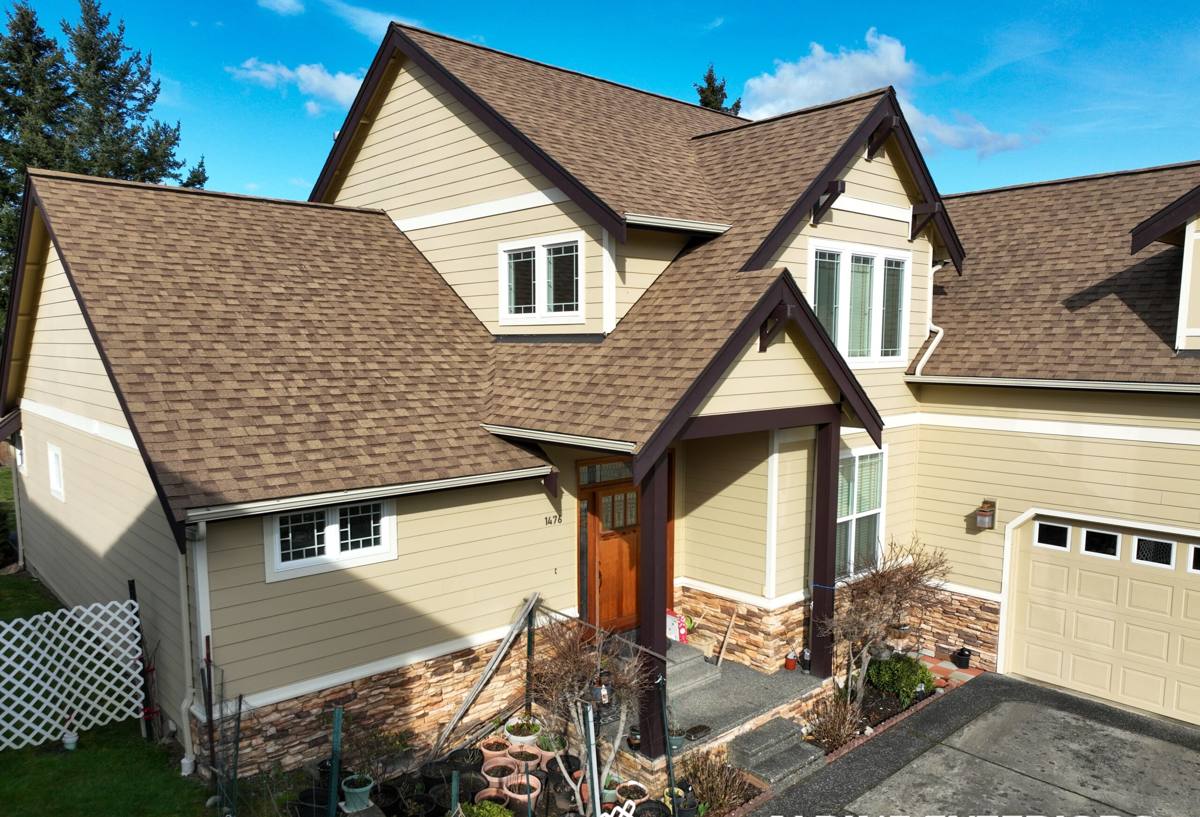
What a Correct Asphalt Shingle Job Requires in This Environment
"Correct" isn't just laying shingles in straight rows. For a barrier island property, it means every layer under the shingles is doing its job, because the shingles are the last line of defense, not the only one.
Fastening and wind resistance
Florida's coastal wind zones call for a specific nailing pattern and nail count per shingle — more fasteners, placed correctly in the nailing zone, using ring-shank or coil roofing nails that resist backing out under repeated wind flex. Staple guns and under-driven or over-driven nails are a common source of early wind failure, and it's not something you can inspect from the ground after the fact.
A sealed roof deck, not just shingles on plywood
We treat the underlayment as a backup roof, not a formality. That means synthetic underlayment with taped or lapped seams across the field, and self-adhering membrane at the valleys, eaves, and around every penetration — pipe boots, vent stacks, skylight curbs. If wind-driven rain ever gets past a shingle edge during a storm, a properly sealed deck is what keeps that water out of the attic instead of into the ceiling.
Flashing that won't corrode
Exposed metal near saltwater needs to be corrosion-resistant, not just galvanized. That applies to step flashing at walls and chimneys, drip edge along the eaves and rakes, and any exposed fasteners on flashing components. Standard galvanized steel can start showing rust streaks within a few years this close to the Gulf; it's a small material upgrade with a real payoff.
Choosing the Right Shingle for This Climate
Not every asphalt shingle product is built the same way, and the differences matter more here than they would inland. The table below covers the general categories homeowners in Indian Shores typically choose between.
| Shingle Type | Typical Wind Rating | Algae/Staining Resistance | Best Fit For |
|---|---|---|---|
| Standard 3-tab | Lower end of code-rated range | Standard granules only | Budget rebuilds, non-waterfront lots |
| Architectural/dimensional | Higher wind rating, better uplift resistance | Often available with algae-resistant granules | Most Indian Shores homes |
| Impact-resistant (Class 4) | High wind rating plus impact rating | Algae-resistant granules standard | Homes prioritizing insurance credits and storm resilience |
For most properties this close to open water, we steer homeowners toward architectural shingles with algae-resistant granules at minimum, and discuss Class 4 impact-rated products when insurance savings or long-term durability are the priority. We'll walk through the real trade-offs — material cost versus expected lifespan versus potential insurance credit — rather than pushing the most expensive option by default.
Our Installation Process
- Roof and attic inspection — we check the existing deck, ventilation, flashing, and any signs of past leaks before quoting anything.
- Tear-off — old shingles and underlayment removed down to the deck so we can actually see what we're working with, not roofing over hidden problems.
- Deck repair — any soft, rotted, or delaminated plywood gets replaced before anything new goes down.
- Underlayment and sealing — synthetic underlayment with self-adhering membrane at vulnerable areas, as described above.
- Flashing and drip edge — new, corrosion-resistant flashing at every wall, chimney, and penetration.
- Shingle installation — installed to the wind-zone nailing pattern with manufacturer-specified starter strips at eaves and rakes.
- Ventilation check — ridge and soffit venting confirmed or upgraded so the new roof isn't trapping heat and moisture.
- Final walkthrough and cleanup — magnetic sweep for stray fasteners, debris removal, and a walk-through so you know exactly what was done.
Ventilation Matters as Much as the Shingles Themselves
A shingle roof that isn't ventilated correctly will underperform its rated lifespan no matter how good the installation is. Balanced intake (soffit vents) and exhaust (ridge vents) keep hot, humid attic air moving instead of baking the underside of the deck and the shingles above it. In a coastal climate where the sun is intense nearly year-round, poor ventilation shows up as premature granule loss, curling shingles, and higher attic temperatures that push your cooling costs up. It's a detail that's easy to skip and expensive to ignore.
Signs Your Indian Shores Roof Needs Attention
- Granules collecting in gutters or at downspout outlets
- Shingle edges curling, cupping, or lifting at the corners
- Dark streaking or staining across the roof field
- Nail heads visible or "popped" through the shingle surface
- Soft spots or sagging when walked on (a sign to call a professional, not to keep walking)
- Rust streaks below flashing, vent stacks, or exposed fasteners
- Interior ceiling stains or musty attic odor after heavy rain
- Visible daylight through the attic decking
Any one of these on its own isn't necessarily an emergency, but on a barrier island roof they tend to compound faster than inland, so it's worth having them looked at sooner rather than later.
Repair or Replace? Cost Factors to Weigh
| Factor | Leans Toward Repair | Leans Toward Replacement |
|---|---|---|
| Roof age | Under 10-12 years | Approaching or past shingle manufacturer's rated lifespan |
| Damage extent | Isolated to one area or slope | Widespread across multiple slopes |
| Deck condition | Solid, no rot found | Soft spots or repeated moisture intrusion |
| Insurance/wind mitigation | Current roof already meets favorable rating | Replacement would unlock better wind mitigation credits |
| History of leaks | First occurrence, clear single cause | Recurring leaks in different spots |
We'll always give you a straight answer on which side of that line your roof falls on, including when a repair is genuinely the right call and a full replacement would be premature.
Why Hiring a Crew That Already Works Indian Shores Matters
Roofing on a barrier island isn't identical to roofing a few miles inland in Largo or elsewhere in Pinellas County, and the difference shows up in places homeowners don't always think to check. Wind mitigation inspections — the ones that affect your insurance premium — score details like roof deck attachment, roof-to-wall connections, and secondary water resistance, all of which get built in (or missed) during installation. A crew that installs coastal roofs regularly builds to those standards as a matter of course, not as an afterthought when someone mentions insurance.
There's also the practical side: permitting through the correct local building department, scheduling around storm season so a tear-off doesn't get caught mid-project by an approaching system, and coordinating with condo associations or HOAs that are common along this stretch of coast. None of that is complicated, but it's the kind of thing that goes smoothly when a contractor has done it before and goes sideways when they haven't.
Maintenance That Extends Roof Life in Salt Air
A well-installed shingle roof still benefits from basic upkeep in this environment:
- Rinse accumulated salt residue off the roof surface periodically, especially after long dry stretches without rain
- Keep gutters and downspouts clear so water doesn't back up under shingle edges
- Trim back overhanging vegetation to reduce debris buildup and shade-driven moisture retention
- Have the roof visually checked after any significant storm, even if nothing looks obviously wrong from the ground
- Address small issues — a lifted shingle corner, a loose vent boot — before the next wind event finds them
None of this replaces a professional inspection, but it goes a long way toward getting the full expected lifespan out of the roof you've invested in.
If you're weighing a repair, a full reroof, or just want an honest read on where your roof currently stands, we're happy to take a look. We offer free, no-pressure estimates for Indian Shores homeowners — use the form below to get started.