 Largo Siding
 Indian Rocks Beach Asks More of Its Siding Than Most of Florida
Indian Rocks Beach sits on a narrow barrier island between the Gulf of Mexico and the Intracoastal Waterway, and that position matters more than most homeowners realize until they're staring at siding that's failed years ahead of schedule. Homes here take on salt-laden air from two directions, near-constant Gulf breeze, and the kind of wind-driven rain that finds every gap a lesser installation leaves behind. Add Pinellas County's intense year-round UV load and the occasional hurricane-force gust, and you have a climate that's genuinely harder on exterior materials than a home ten miles inland in Largo proper.
That's not a sales pitch — it's why siding replacement decisions on Indian Rocks Beach need to be made differently than they would be elsewhere. The material has to hold up to salt corrosion and moisture cycling, and the installation has to be done to a standard that accounts for wind and water intrusion, not just appearance.
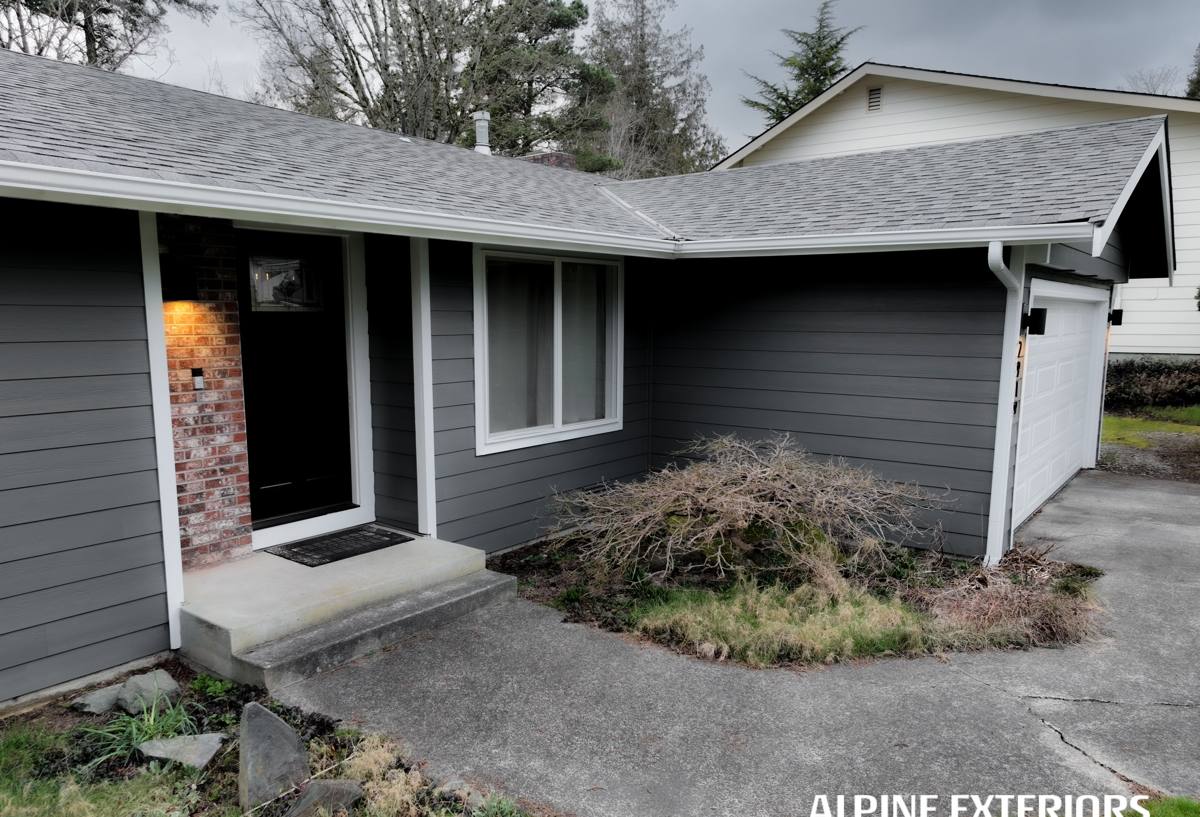
What Salt Air and Sun Actually Do to Siding
Salt Air
Airborne salt settles on exterior surfaces and works into any seam, fastener head, or coating weak point. Over years, it accelerates corrosion of fasteners and hardware, and it breaks down cheaper coatings faster than manufacturers' inland-tested warranties assume. On a barrier island like Indian Rocks Beach, this isn't occasional exposure — it's a daily condition.
UV and Heat
Florida sun is intense and constant. Coatings and finishes that aren't formulated for it fade unevenly, chalk, or become brittle over time, especially on south- and west-facing walls that take the most direct exposure through the afternoon.
Wind-Driven Rain
Rain that comes in sideways during a Gulf storm doesn't just hit siding — it drives into any gap in the water-resistive barrier, flashing, or seams. If the installation underneath isn't done right, that moisture ends up in the wall assembly, and by the time it shows up as a stain or soft spot inside, real damage has already happened.
Signs an Indian Rocks Beach Home Needs Replacement, Not Repair
Repair makes sense when damage is isolated and the rest of the siding is sound. Replacement is the right call when the damage is systemic — a sign the whole envelope has been fighting a losing battle against the coastal climate for years. Common indicators we see on the island include:
- Soft or spongy sections when pressed, especially near the bottom courses and around window and door trim
- Visible swelling, buckling, or delamination across multiple wall sections rather than one spot
- Paint that won't hold — repeated repainting every couple of years with fading or peeling returning quickly
- Rust streaking from fastener heads, a sign of coastal corrosion working through the surface
- Visible gaps at seams, corners, or trim where the original installation wasn't sealed or flashed correctly
- Interior signs — musty smell, staining on interior walls near exterior corners, or bubbling drywall
If you're seeing more than one of these, it's worth a real inspection before deciding between a patch job and a full replacement.
Why We Only Install James Hardie Fiber Cement Here
We install James Hardie fiber cement siding exclusively — we don't install vinyl, LP SmartSide, Cemplank, Allura, or wood siding, including on Indian Rocks Beach homes. That's a deliberate standard, not a limitation of what we're capable of installing.
Vinyl softens and can distort under sustained heat and direct sun, and its seams and fastening system aren't the strongest match for wind-driven rain on an exposed barrier island. Wood-based products, including primed spruce and cedar, need consistent maintenance to keep moisture out, and coastal humidity plus salt air shortens the window between maintenance cycles. Engineered wood siding performs well inland but is more sensitive to sustained moisture exposure at seams and cut edges if installation and caulking aren't kept up over time — a real ongoing commitment for a home that takes on more moisture than most.
James Hardie fiber cement is non-combustible, dimensionally stable in heat and humidity, and holds its factory-applied ColorPlus finish far longer than field-applied paint on other materials. Hardie also engineers specific product lines — the HZ10 designation — for high-humidity, high-moisture climates like ours, which is exactly the profile a barrier island home fits. That's the whole reason we standardized on it: it's the product that holds up to what Indian Rocks Beach actually throws at a house, year after year.
What a Correct Siding Replacement Involves
Replacing siding on a coastal home isn't just removing old panels and nailing up new ones. The parts nobody sees are what determine whether the job lasts 5 years or 30.
Full Tear-Off and Substrate Inspection
We remove the existing siding down to the sheathing and inspect for hidden rot, moisture damage, or compromised framing before anything new goes up. On homes that have taken on years of wind-driven rain, this step often reveals problems the homeowner didn't know existed.
Water-Resistive Barrier and Flashing
A correctly lapped weather-resistive barrier, properly integrated window and door flashing, and correct treatment of every penetration is what actually keeps wind-driven rain out of the wall assembly. This is the step that gets shortcut most often on rushed jobs, and it's the one that matters most on an exposed island lot.
Fastening for Wind and HZ10 Climate Engineering
Correct fastener type, spacing, and placement matter for wind performance, and using the HZ10 product line accounts for the sustained humidity and moisture exposure specific to our climate zone.
Trim, Caulking, and Finish Details
Proper trim and joint treatment, factory ColorPlus finish, and correctly sealed seams round out an installation that's built to actually perform in coastal conditions, not just look good on installation day.
How the Job Runs on Indian Rocks Beach
Working on a barrier island brings logistics that don't come up on a typical Largo mainland job — narrower lots, tighter street access, limited staging space, and in some cases HOA or community guidelines to work around. A crew that already works the island knows to plan material staging and dumpster placement around that from day one, rather than figuring it out on site.
Our process on Indian Rocks Beach jobs:
- On-site inspection and honest assessment of whether the home needs repair or full replacement
- Written estimate covering material, labor, tear-off, disposal, and any substrate repair contingencies
- Permitting through Pinellas County or the applicable local jurisdiction, including wind-load and coastal construction considerations where they apply
- Tear-off, substrate inspection, and any necessary sheathing or framing repair
- Weather barrier, flashing, and James Hardie HZ10 installation to manufacturer spec
- Final walkthrough and cleanup
What Drives the Cost of a Siding Replacement Here
| Factor | Why It Matters on Indian Rocks Beach | Typical Impact |
|---|---|---|
| Substrate condition | Years of wind-driven rain can hide rot behind old siding | Can add repair cost once tear-off exposes the sheathing |
| Home size and wall complexity | More corners, trim, and window openings mean more flashing and detail work | Moderate to significant |
| Access and staging | Narrow island lots and limited street parking can slow material handling | Minor to moderate |
| Product line selection | HZ10 and specific Hardie profiles/colors vary in material cost | Moderate |
| Permitting requirements | Coastal and wind-load provisions may apply depending on the property | Fixed permit cost, minor |
We don't quote fake numbers here because every home is different — but a real, itemized estimate after an on-site look is the only honest way to price a job like this.
What to Ask Before Hiring a Siding Contractor on the Island
- Do you install James Hardie fiber cement to the manufacturer's specifications, including the correct HZ climate zone product?
- Will you inspect and repair the substrate if you find hidden damage during tear-off, or is that a separate negotiation later?
- How do you handle flashing and the water-resistive barrier around windows and doors?
- Are you licensed and insured to work in Pinellas County, and will you handle permitting?
- Have you worked on Indian Rocks Beach or similar barrier-island properties before, and do you understand the access and HOA considerations?
- What does the manufacturer's warranty cover, and is it transferable if you sell the home?
Why a Crew That Already Works Indian Rocks Beach Matters
Coastal construction isn't the same job as inland siding work, even within the same county. A crew that already works Indian Rocks Beach understands the wind exposure, the salt air, the tighter lot access, and the permitting path specific to barrier-island properties — none of which is a guessing game the first time out. That familiarity shows up in fewer surprises during the job and a finished installation built for the conditions the home actually faces, not generic conditions from a mainland job three towns over.
If your Indian Rocks Beach home is showing signs of siding failure, or you're simply due for a replacement and want it done right the first time, we're happy to take a look and give you a straightforward, no-pressure estimate — no obligation, just an honest read on what your home needs. Use the form below to get started.