 Largo Siding
 Building a Deck That Can Actually Handle Indian Rocks Beach
Indian Rocks Beach sits on a narrow barrier island between the Gulf of Mexico and the Intracoastal Waterway, which means every deck built here is exposed to a harsher mix of conditions than a deck built a few miles inland in Largo or Clearwater. Salt-laden air moves through the neighborhood constantly, the sun is intense and nearly year-round, and during storm season the wind and wind-driven rain can hit a structure from more than one direction in the same afternoon. A deck built to a generic spec sheet might look fine for a year or two, but the barrier island environment finds every weak point eventually — the wrong fastener, an untreated cut end, a railing post that was never properly flashed.
We build decks for homeowners across Pinellas County, and the Indian Rocks Beach jobs get treated differently from the start. Material selection, fastener choice, framing details, and even how we sequence the build all shift when the site is a block or two from open water. This page covers what actually matters for a deck on or near Indian Rocks Beach — not generic decking advice, but the specifics that determine whether a deck lasts five years or twenty-five.
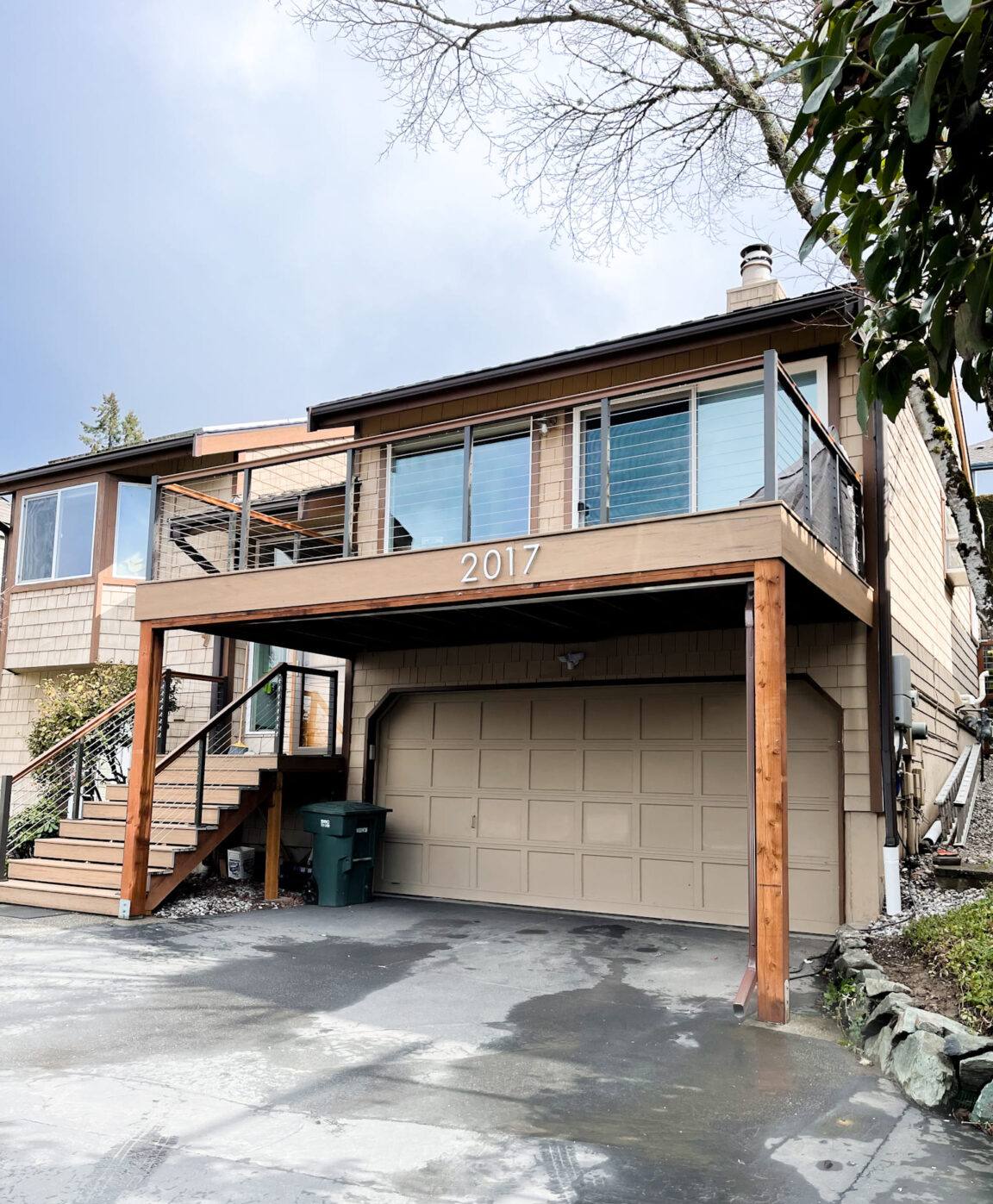
What Salt Air and Sun Actually Do to a Deck Over Time
It helps to understand the mechanics of why coastal decks fail faster than inland ones, because it explains almost every material and construction decision that follows.
Salt Air and Metal Corrosion
Airborne salt is conductive and corrosive. It settles on metal fasteners, hardware, and connectors and accelerates rust and galvanic corrosion, especially where two dissimilar metals touch. On an inland deck, standard exterior-rated hardware can hold up for decades. On a barrier island deck, the same hardware can start showing rust streaks and pitting within a few years if it wasn't rated for a marine or coastal environment to begin with.
UV Exposure
Florida sun is intense for most of the year, and a deck has no shade of its own. UV breaks down the surface fibers of untreated or poorly capped wood-composite blends, fades color, and dries out natural wood, which leads to checking, splintering, and warping. Composite and PVC products vary a lot in how well their UV inhibitors actually hold up, which is a real factor when comparing brands.
Wind-Driven Rain and Moisture Cycling
The Gulf coast doesn't just get rain — it gets wind-driven rain that hits decking, railings, and fascia at an angle, working into joints, screw holes, and end grain that a vertical rain would never reach. Combined with high humidity, this creates constant wet-dry cycling. That cycling is what causes cupping, fastener pull-through, and rot at board ends and post bases if the deck wasn't detailed correctly during construction.
Choosing the Right Decking Material for a Barrier Island Property
There's no single "best" decking material for every home — it depends on budget, how the deck will be used, and how much upkeep the homeowner actually wants to do. What we won't do is recommend a product based on price alone without walking through the coastal trade-offs.
| Material | Coastal Performance | Maintenance | Typical Lifespan Here |
|---|---|---|---|
| Pressure-Treated Wood | Good if properly sealed and re-sealed on a regular schedule; end cuts need field treatment | Annual cleaning, periodic sealing/staining | 10-15 years with consistent upkeep |
| Capped Composite | Strong resistance to salt and UV; cap layer blocks moisture absorption into the core | Occasional washing, no sealing or staining | 20-25+ years, varies by brand |
| Cellular PVC | Excellent moisture resistance since it contains no wood fiber; handles salt air well | Very low; occasional washing | 25-30+ years |
| Uncapped/Budget Composite | Weaker performance near the coast; some older formulations absorb moisture at cut edges | Low but can mold or stain in humid, salty air | Shorter than capped composite; brand-dependent |
For homes directly in Indian Rocks Beach's salt-air zone, we generally steer homeowners toward capped composite or PVC decking for the field of the deck, specifically because uncapped or lower-grade composite products can absorb moisture at cut edges and fastener penetrations over time — that's a maintenance and warranty issue, not a claim that any particular brand is defective. Pressure-treated wood is still a legitimate, lower-cost option for homeowners who don't mind resealing it on a real schedule; we're upfront that skipping that maintenance is what causes early failure, not a flaw in the wood itself.
Framing Lumber Matters Too, Not Just the Decking Surface
A beautiful composite deck surface on undersized or poorly protected framing is still a short-lived deck. We frame with appropriately rated pressure-treated lumber sized for the actual span and load, and we pay attention to ledger board attachment and flashing at the house connection — that's one of the most common failure points on older decks in humid coastal climates, because trapped moisture behind an unflashed ledger rots the rim joist from the inside out where nobody sees it until it's a structural problem.
Framing, Fasteners, and Hardware: Where Coastal Decks Actually Fail
Most deck failures near the water don't start with the decking boards — they start with the connections. This is the part of the build that's invisible once the project is finished, which is exactly why it's worth getting right the first time.
- Fastener grade: We use stainless steel or coastal-rated coated fasteners appropriate for the framing and decking materials, not standard interior-grade hardware, to resist the accelerated corrosion salt air causes.
- Joist hangers and structural connectors: Rated for exterior/coastal exposure and installed with matching fastener types to avoid galvanic corrosion between dissimilar metals.
- Hurricane ties and uplift resistance: Post-to-beam and beam-to-ledger connections are tied down to resist wind uplift, which matters on a structure exposed to sustained hurricane-force gusts.
- Post bases: Elevated above the decking surface and, where posts meet concrete, isolated to reduce moisture wicking into the post base.
- Ledger flashing: Properly flashed and sealed where the deck attaches to the house, so wind-driven rain can't work its way behind the ledger board.
None of these details show up in a finished photo. They show up five or ten years later, either as a deck that's still solid or one that's started to feel spongy underfoot near the house.
Railings, Stairs, and Code Requirements
Railing height, baluster spacing, and stair geometry are governed by Florida Building Code and enforced locally, and that doesn't change because a home is on the beach. What does change is how those railing components hold up. Metal balusters and cable rail hardware are especially exposed to salt corrosion since they're thin-gauge and often at eye level where any rust streaking is immediately visible. We select railing hardware with coastal exposure in mind and pay attention to how it's fastened, since a loose or corroding baluster connection is both a maintenance headache and a safety issue on a second-story deck.
Permits, Elevation, and Working Within Pinellas County Requirements
Deck construction on the barrier island generally requires a building permit, and depending on the property's elevation and flood zone designation, there can be additional requirements around how the structure is attached to the home and how it's built relative to base flood elevation. Many homes on Pinellas County's barrier islands, including Indian Rocks Beach, fall within FEMA-designated flood zones that affect what can be attached to a home versus what needs to be a freestanding structure. We handle the permitting process and coordinate with the local building department so the homeowner isn't the one figuring out zoning and flood-zone paperwork — but every property is different, and we verify the specifics for your address before finalizing a design rather than assuming.
Our Deck-Building Process, Start to Finish
The process for a custom deck in Indian Rocks Beach follows the same core steps as any of our deck projects, with extra attention paid at the material selection and hardware stages given the environment.
- On-site assessment: We look at the home's elevation, existing structure (if replacing an old deck), sun and wind exposure, and how close the site is to open water or brackish canals, since exposure varies even within a few blocks on the island.
- Design and material selection: We walk through decking material, railing style, and layout options with the coastal trade-offs explained plainly, along with a realistic budget range for each option.
- Permitting: We prepare and submit the permit package to the appropriate local building department and handle inspections as required.
- Demolition (if replacing an existing deck): Old decking, framing, and hardware are removed, and we inspect the ledger and any structural connections to the house for hidden moisture damage before building over them.
- Framing: Pressure-treated framing lumber, coastal-rated connectors, and properly flashed ledger attachment.
- Decking, railing, and stairs installed: Using the material selected during design, with fastening details appropriate to that specific product's manufacturer requirements.
- Final walkthrough and inspection: We review the finished deck with the homeowner, cover basic care for the specific material installed, and schedule any final inspection required by the county or city.
Maintaining a Deck in a Salt-Air Environment
Even the most coastal-appropriate materials benefit from some routine attention. The maintenance burden is real but manageable if it's done consistently rather than skipped for years and then addressed all at once.
- Rinse the deck surface periodically to remove salt residue, especially after storms or extended dry, windy stretches when salt deposits build up.
- Check railing hardware and fastener heads for early rust streaking, which is easier to address early than after it's spread to the surrounding material.
- Keep gutters and downspouts near the deck clear so runoff isn't dumping extra water onto the structure or ledger connection.
- If you have pressure-treated wood decking, keep to a real resealing schedule rather than waiting until it visibly grays and checks.
- Watch for soft spots or give near the ledger board or post bases, which can indicate hidden moisture issues worth having inspected.
- Trim back vegetation that holds moisture against framing or the underside of the deck.
Why a Local Largo Crew Matters for an Indian Rocks Beach Project
We're based in Largo and work throughout Pinellas County, which means Indian Rocks Beach isn't an unfamiliar drive or a one-off job for us — it's part of the coastal territory we build in regularly. That familiarity matters in practical ways: we know which local building departments to coordinate with, we've seen how quickly generic hardware and uncapped materials fail this close to open water, and we're not learning coastal fastener and flashing requirements on your project. A crew that mostly works inland subdivisions and only occasionally takes a barrier island job doesn't have that same working knowledge of how differently these homes age.
Hiring locally also means faster response if something needs a warranty follow-up or a maintenance check a few years down the road, rather than trying to track down a contractor who was only ever passing through the area for one project.
Get a Straightforward Estimate
If you're planning a new deck or replacing an aging one in Indian Rocks Beach, we're glad to take a look at your property, talk through material options honestly — including the trade-offs, not just the upsell — and give you a clear, no-pressure estimate. Use the form below to get started.