 Largo Siding
 Why Fiber Cement Matters for Homes Near Clearwater
Homes in the Clearwater area sit in one of the more demanding exterior environments in the country. You've got salt-laden air drifting in off the Gulf, sun exposure that runs strong nearly every month of the year, wind-driven rain that finds every gap in a poorly sealed wall system, and the standing threat of hurricane-force wind loads during storm season. Siding here isn't just a cosmetic choice — it's the first line of defense between that environment and your home's structure. We install James Hardie fiber cement siding exclusively, and on Clearwater-area homes specifically, that choice comes down to how the product actually performs under those four stressors, not just how it looks on day one.
Pinellas County's building climate is unforgiving on cladding that wasn't engineered for it. Materials that hold up fine in a drier, milder region can fail early here — warping, swelling, losing paint adhesion, or letting moisture behind the wall assembly without any obvious sign until rot sets in. Fiber cement, done correctly, resists that pattern because of what it's made of and how it's engineered to handle water and heat.
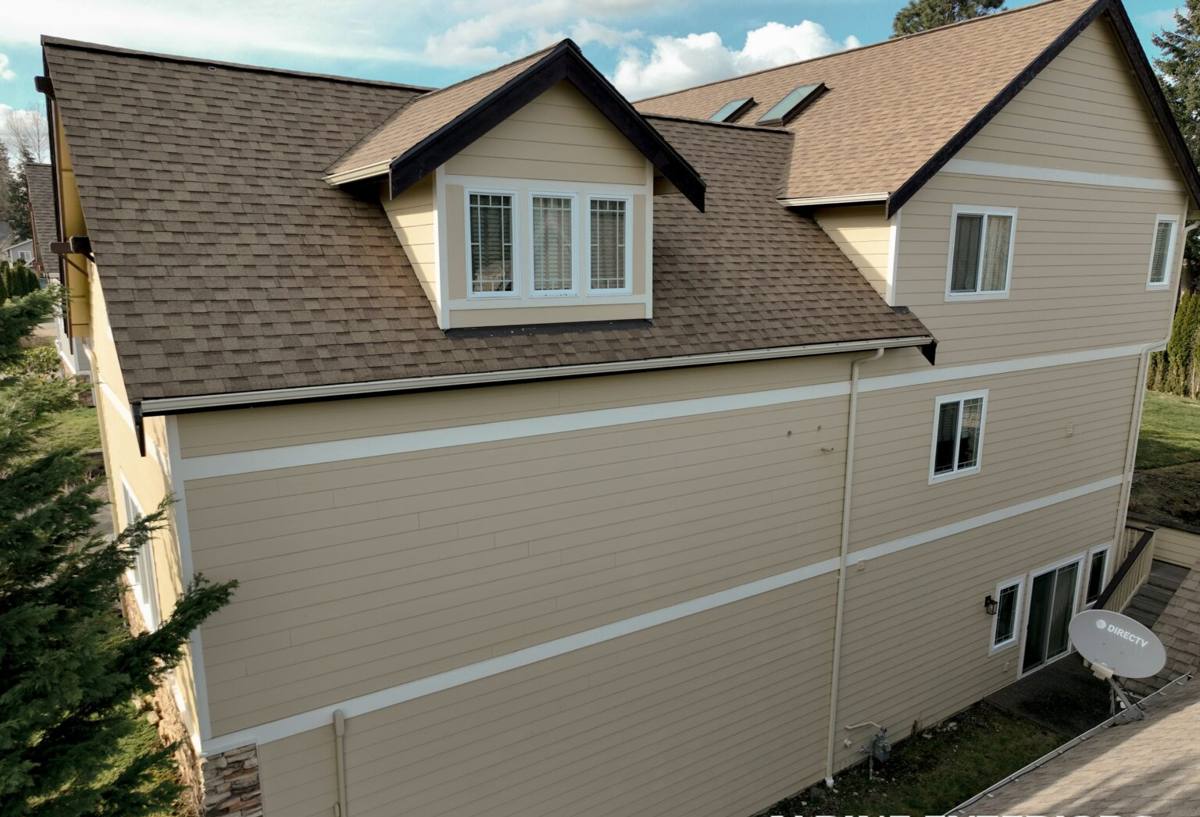
What Clearwater's Climate Actually Does to Siding
Salt Air and Corrosion
Proximity to the Gulf means airborne salt settles on exterior surfaces continuously, not just during storms. Salt is corrosive to metal fasteners and trim, and it accelerates the breakdown of coatings that aren't rated for coastal exposure. Siding systems with weak factory finishes chalk, fade, and lose their protective layer faster near the coast than they would twenty or thirty miles inland.
UV Exposure
Florida sun is intense and consistent across most of the year. UV breaks down pigments and resins in lower-grade coatings, which is why some products fade unevenly or need repainting well ahead of schedule. A factory-applied finish engineered for UV resistance holds color and integrity far longer than a field-applied coat.
Wind-Driven Rain and Moisture Intrusion
Rain in this region rarely falls straight down. Wind pushes it sideways and up under laps, around trim, and into any seam that wasn't flashed or caulked correctly. Materials that absorb moisture — or that swell and shrink with wet-dry cycles — are especially vulnerable here, because the cycle repeats constantly rather than a few times a year.
Hurricane-Force Wind Loads
Pinellas County sits in a wind zone where siding has to be installed to a fastening schedule that accounts for real uplift and lateral pressure, not just standard practice. Panels that aren't nailed to spec, or that use fastener spacing suited to a calmer climate, are the first thing torn loose in a significant wind event — and once siding starts peeling in high wind, it becomes airborne debris that can damage the rest of the house or a neighbor's property.
Why James Hardie Fiber Cement Fits This Environment
James Hardie's fiber cement is engineered from cement, sand, and cellulose fibers — a composition that doesn't rot, doesn't support fungal growth, and isn't attractive to pests. It's also non-combustible, which matters less for storm resistance and more as a baseline durability advantage over wood-based or foam-backed products. For a coastal, high-UV, storm-exposed market like Clearwater, three specific things about the Hardie system matter most:
- ColorPlus factory-applied finish: baked-on in a controlled environment rather than painted on site, giving significantly better UV and fade resistance than field-applied paint, and better adhesion under salt-air conditions.
- HZ5 climate-engineered formulation: Hardie manufactures certain product lines specifically for higher-moisture, higher-humidity climate zones — this isn't a one-size-fits-all product nationally, and installing the right formulation for this region is part of doing the job correctly.
- Dimensional stability: fiber cement doesn't expand and contract with moisture the way wood-based siding does, which matters directly in a climate with constant wet-dry cycling from wind-driven rain.
None of that replaces correct installation. A great material installed wrong will still fail in this climate — which is why the installation details below matter as much as the product choice itself.
What a Correct Installation Involves Here
Fastening for Wind Zone Requirements
Fastener type, spacing, and embedment depth all need to match both the manufacturer's specification and the wind uplift requirements for this part of Pinellas County. This isn't a place to use generic fastening patterns — it's an area where under-fastened siding is a real liability once storm season arrives.
Flashing and Water Management
Every horizontal joint, window and door opening, and penetration needs proper flashing so wind-driven rain has nowhere to travel behind the cladding. A weather-resistive barrier installed correctly behind the panels, with laps shingled the right direction and sealed at penetrations, is what actually keeps water out — the siding itself is only one layer of the system.
Proper Clearances and Gaps
Fiber cement needs clearance from grade, roofing, decks, and other abutting surfaces so water can drain and the material doesn't sit in standing moisture. Manufacturer-specified gaps at joints also allow the panels to perform as designed rather than trapping moisture at seams.
Caulking and Joint Treatment
Butt joints, trim intersections, and penetrations need the right sealant, applied correctly, matched to what Hardie's installation guidelines call for in high-moisture climates. Skipping or rushing this step is one of the most common ways otherwise-good siding jobs fail early on Gulf Coast homes.
Common Installation Shortcuts We Watch For
| Shortcut | Why It Fails in This Climate |
|---|---|
| Under-spec fastener spacing | Panels loosen or blow off under hurricane-force wind loads |
| Skipped or minimal flashing at openings | Wind-driven rain tracks behind the wall assembly, leading to hidden rot |
| Panels installed tight with no expansion gap | Trapped moisture at joints, premature caulk failure and cracking |
| Wrong climate formulation for the region | Reduced moisture performance versus the HZ5 product engineered for this zone |
| Field-touching factory finish incorrectly | Mismatched color and weaker UV/salt resistance at repaired areas |
How Our Process Works
- On-site assessment: we walk the exterior, check current siding and substrate condition, and identify moisture or structural issues that need addressing before new siding goes up.
- Product and line selection: we help you choose the right Hardie product line, profile, and ColorPlus finish for your home, using the climate-appropriate formulation for this area.
- Substrate and moisture barrier prep: any damaged sheathing gets addressed, and the weather-resistive barrier is installed or verified before panels go up.
- Installation to spec: fastening schedule, flashing, clearances, and joint treatment are all executed to manufacturer and local wind-zone requirements — not generalized practice.
- Final walkthrough: we review the completed job with you, including care and maintenance basics for the specific product installed.
Why Hiring a Crew That Already Works Clearwater Matters
Installation quality is the single biggest variable in how long siding lasts in this environment — more than the brand name on the product. A crew that regularly works in Pinellas County already understands the wind-zone fastening requirements, has seen how wind-driven rain finds weak points in a wall assembly, and knows which Hardie formulations and finishes actually hold up to sustained salt air rather than just looking good in a showroom. That local, repeated experience is what prevents the small shortcuts — a skipped flashing detail, a slightly-off fastener spacing — that don't show up as problems for a year or two, but eventually do.
It also means fewer surprises during permitting and inspection, since wind-load and fastening requirements are checked against local code, and a crew that already knows those requirements moves through that process without redoing work.
Maintenance Expectations After Installation
Correctly installed James Hardie siding is low-maintenance, not no-maintenance. In a coastal climate like this, a few basics extend its life meaningfully:
- Rinse siding periodically to remove salt film and airborne grime buildup, especially on sides facing prevailing wind.
- Inspect caulked joints annually and after major storms for cracking or separation.
- Keep landscaping and irrigation from spraying directly on siding surfaces long-term.
- Address any impact damage promptly rather than letting it sit exposed.
What This Costs to Get Right
Pricing depends on your home's size, current siding condition, trim complexity, and the Hardie product line and profile you choose. What we can tell you upfront is that the cost difference between a correctly flashed, correctly fastened installation and a rushed one is small compared to the cost of repairing wind or moisture damage from a job that wasn't done to spec — which is why we don't cut corners on the details above regardless of budget.
If you're considering fiber cement siding for a home in the Clearwater area, we're happy to walk the exterior with you, look at what your current siding is telling us, and put together a straightforward, no-pressure estimate. There's no obligation — just an honest look at what your home needs.