 Largo Siding
 Dunedin Roofs Work Harder Than People Realize
Dunedin sits right on the water, tucked between the Gulf and St. Joseph Sound, which means the roofs here take a combination of stresses that inland Florida homes simply don't see. Salt-laden air corrodes fasteners, flashing, and metal drip edges faster than in drier climates. Intense, near-constant UV exposure bakes shingle mats and breaks down sealants year-round, not just in summer. And when a tropical system or a strong afternoon storm rolls through with wind-driven rain, that rain doesn't just fall on a roof — it gets pushed sideways into laps, seams, and fastener penetrations that were never designed to handle water moving uphill.
None of that means every Dunedin roof needs to be replaced. Most of the time, a roof that's leaking, missing shingles, or showing granule loss just needs a correctly diagnosed, correctly executed repair. The problem is that "correctly" is doing a lot of work in that sentence — a lot of repairs in this area fail again within a year or two because they patched a symptom instead of finding where water was actually getting in.
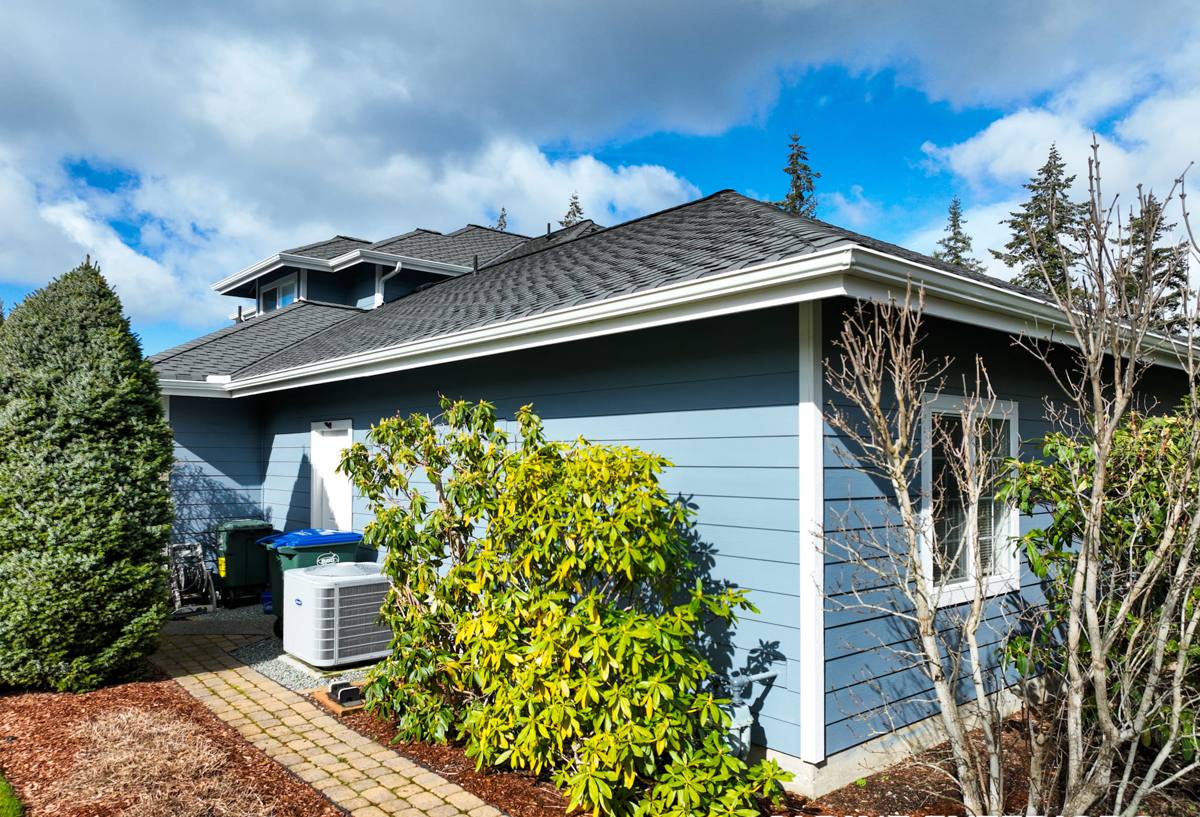
Signs a Dunedin Roof Needs Repair
Roof damage in Pinellas County doesn't always show up as an obvious hole. More often it's subtle, and it shows up inside the house before you ever see it on the roof itself.
What to look for outside
- Shingles that are curling, cracked, or visibly balder (losing granules) than the rest of the roof
- Missing shingles or tabs after a windy afternoon storm
- Lifted or rusting flashing around chimneys, vent pipes, and skylights
- Dark streaking or soft, sagging spots along the roofline
- Debris or granules collecting in gutters after normal rain, not just a hurricane
What to look for inside
- Brown or yellow stains spreading on ceiling drywall
- Peeling paint or bubbling on interior ceilings near exterior walls
- A musty smell in the attic or top-floor closets
- Visible daylight through the attic decking
If you're seeing any of the interior signs, don't wait. Water that's reached your ceiling has usually been getting into the roof deck for a while, and Florida's humidity turns a slow leak into mold and soft decking faster than in drier states.
What a Correct Roof Repair Actually Involves
A roof repair that holds up isn't just replacing the shingle that's obviously missing. Water travels — it can enter at one point and show up as a stain several feet away, following the slope of the deck or a rafter line before it drips through. That's why a repair worth paying for starts with tracing the leak to its actual source, not the most visible symptom.
The pieces of a real repair
- Diagnosis first. We check flashing, valleys, pipe boots, and fastener lines before assuming the field shingles are the problem — those are the most common failure points on Gulf Coast roofs, not the open shingle field.
- Deck inspection. Once the damaged shingles are pulled back, we look at the plywood or OSB decking underneath. Soft, delaminated, or water-stained decking gets replaced — patching shingles over bad decking just hides the problem for another season.
- Matching materials, not just covering the hole. We use shingles and underlayment compatible with what's already on the roof so the repair doesn't create a mismatched patch that ages differently and fails at the seam.
- Flashing and sealant done right. Most recurring leaks trace back to flashing that was reused when it should have been replaced, or sealant used as a substitute for proper flashing. We don't rely on sealant alone to do a flashing's job.
- Clean, sealed penetrations. Every pipe boot, vent, and fastener gets checked and re-sealed as part of the repair, not left for "next time."
Common Dunedin Roof Repairs We Handle
| Repair Type | Typical Cause in This Area | What's Involved |
|---|---|---|
| Wind-lifted or missing shingles | Gusts from thunderstorms or tropical systems catching a shingle edge | Remove damaged shingles, inspect deck, install matched replacements with correct nailing pattern |
| Flashing leaks (chimney, wall, valley) | Salt-air corrosion and thermal cycling loosening seams over years | Remove old flashing, inspect for deck rot, install new flashing correctly lapped and sealed |
| Pipe boot failures | UV breakdown of rubber boot collars, a common wear point regardless of shingle age | Replace boot, check surrounding shingles, reseal |
| Granule loss / UV-aged shingles | Year-round intense sun exposure accelerating shingle mat breakdown | Assess remaining shingle life; localized replacement or plan for future full replacement |
| Soft or stained roof decking | Slow, undetected leaks allowing moisture into plywood over time | Cut out and replace affected decking sections before re-covering |
Our Repair Process
1. Inspection and honest assessment
We start by getting on the roof (or using a camera where access is limited) and tracing the actual path of the leak — not just patching where the stain shows up inside. We'll tell you plainly if what you're looking at is a simple repair or something bigger.
2. A clear, written scope
Before any work starts, you know what's being repaired, what materials are being used, and roughly what it will cost. No vague "we'll fix it and see" — Dunedin homeowners deserve a straight answer up front.
3. The repair itself
Damaged materials come off, the deck gets inspected and repaired if needed, and new materials go in matched to what's already on your roof. We work efficiently but don't skip steps to save time — especially flashing and sealing, which are where most repeat leaks come from.
4. Cleanup and check
We clear debris, nails, and old material from the yard and gutters, then do a final check of the repair area before we consider the job done.
Repair or Replace? How We Help You Decide
Not every roof problem calls for the same fix, and an honest contractor tells you when a repair is the right call versus when you're better off putting that money toward a replacement instead.
| Factor | Repair usually makes sense | Replacement is worth considering |
|---|---|---|
| Roof age | Well within expected lifespan for the material | Nearing or past typical asphalt shingle lifespan |
| Extent of damage | Localized — one area, one cause | Multiple areas failing independently |
| Deck condition | Solid, dry decking under the damaged area | Widespread soft or rotted decking |
| Granule loss | Isolated to the damaged section | Uniform, roof-wide thinning |
| Storm history | First significant repair needed | Repeated repairs to the same roof over a few years |
We're not going to sell a full replacement when a targeted repair will genuinely hold. But we're also not going to patch a roof that's telling us, through its overall condition, that it's on borrowed time — that just costs you money twice.
Workmanship Standards We Hold Ourselves To
A repair is only as good as the details most homeowners never see once the shingles are back down. On the coast, those details matter more, not less.
- Flashing gets replaced, not reused, whenever it's been compromised — corroded or bent flashing doesn't get "cleaned up and put back"
- Nailing patterns follow manufacturer specification, which matters directly for wind resistance in a county that sees regular tropical-storm-force gusts
- Underlayment and sealants are rated for the sustained UV and humidity this area sees, not generic all-climate products
- Any decking replacement is documented so you know exactly what was found and fixed, not just "repaired as needed" on an invoice
We treat every repair as something that has to survive the next storm season, because in Pinellas County, it will be tested.
Timeline, Permits, and Insurance Considerations
Most straightforward repairs — a section of shingles, a flashing fix, a pipe boot — can be completed in a single day. Larger repairs involving deck replacement may take longer depending on the extent of damage found once we're into the work.
Some repair work in Dunedin and the surrounding Pinellas County jurisdictions requires a permit depending on scope; we handle that as part of the job rather than leaving it for you to sort out. If your repair is storm-related and you're filing an insurance claim, we can document the damage clearly with photos and a written scope that supports your claim — though we work for you, not the insurance company, and our recommendations reflect what the roof actually needs.
Why It Matters to Hire a Crew That Already Works This Area
A roofer who works Pinellas County regularly already knows which flashing details fail first on Gulf-facing homes, which shingle lines hold up to sustained UV without excessive granule loss, and what "wind-driven rain" actually does to a roof versus straight-down rain. That's not something you pick up from a single job — it's pattern recognition built from doing this work, on roofs like yours, in this specific climate, over and over.
It also means someone answers the phone when a named storm is in the forecast and again after it passes, instead of a company that only shows up between hurricane seasons chasing storm-damage work. As a Largo-based crew, Dunedin is inside our regular service area — not a special trip.
Simple Maintenance That Extends a Repair's Life
- Clear gutters and downspouts regularly so water isn't backing up under the roof edge
- Trim back overhanging branches that scrape shingles in wind or drop debris that traps moisture
- Have flashing and pipe boots checked every year or two, since they wear out well before shingles typically do
- After any major storm, do a visual check from the ground for missing or lifted shingles
- Address small leaks immediately — a stain the size of a dinner plate today can mean rotted decking in a year
If you're seeing signs of roof damage or just want a second opinion on a quote you've already gotten, we're happy to take a look. The estimate is free, there's no pressure to sign anything on the spot, and you'll get a straight answer about what your roof actually needs — just fill out the form below to get started.