 Largo Siding
 Composite Decking Built for Clearwater's Coastal Conditions
A deck in Clearwater lives a harder life than a deck almost anywhere inland. Between the intense year-round sun, the salt-laden air blowing in off the Gulf, and the wind-driven rain and hurricane gusts that come with a Pinellas County summer, outdoor living spaces here take a beating that most decking products simply weren't designed for. Composite decking, installed correctly, is one of the few materials that holds up to that combination without demanding constant upkeep. This page covers what Clearwater homeowners actually need to know before installing a composite deck: what the climate does to a deck over time, what a correct installation looks like, and what to expect from our process.
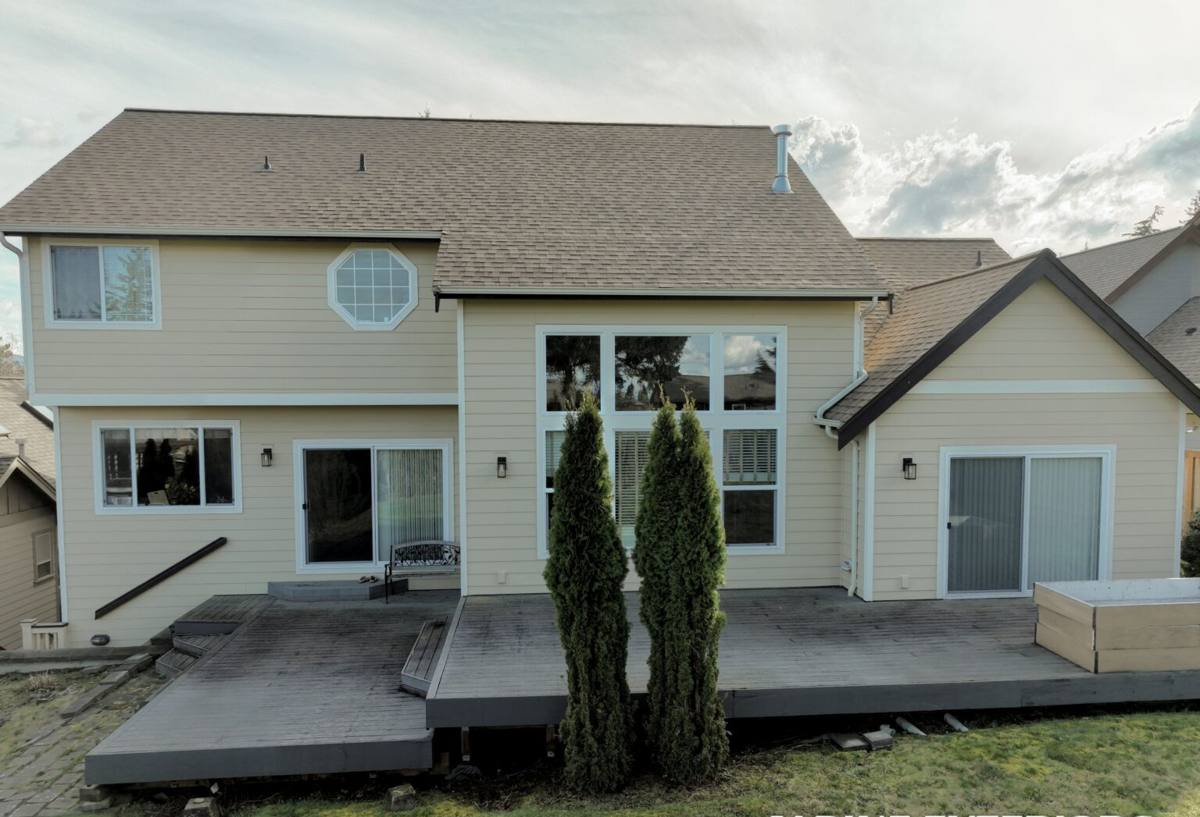
What Clearwater's Climate Does to an Outdoor Deck
Before talking about materials, it helps to understand what a deck is actually up against here.
Constant UV Exposure
Florida sun is stronger and more consistent than most of the country sees. Untreated or poorly finished wood grays and splinters within a season or two under that kind of exposure, and even lower-grade composite products can fade or chalk faster than advertised if they aren't properly capped.
Salt Air
Clearwater's proximity to the Gulf means airborne salt reaches decks even well away from the immediate coastline. Salt accelerates corrosion in fasteners, brackets, and any exposed metal hardware, which is often the real point of failure on a deck long before the boards themselves give out.
Wind-Driven Rain and Humidity
Afternoon storms don't just fall straight down here — wind pushes rain sideways and up under railings, fascia, and board ends. Combined with Florida's humidity, that moisture has to have somewhere to go, or it sits against fasteners and framing and causes problems that don't show up until years later.
Hurricane-Force Wind Loads
Deck structures, railings, and their attachment to the house all need to be built to handle real wind uplift and lateral load, not just support foot traffic. This is a structural engineering question as much as a materials one.
Why Composite Outperforms Wood in This Climate
Wood decking can look great and, with diligent maintenance, can last a long time anywhere. In a Gulf Coast climate, though, that maintenance burden is higher and less forgiving — miss a season of sealing and the damage compounds fast. Composite decking, particularly capped composite, is engineered to resist the specific things that wear a deck out here.
| Factor | Wood Decking | Capped Composite Decking |
|---|---|---|
| UV fading | Grays and roughens without regular sealing | Color-stable cap resists fading much longer |
| Moisture and rot | Prone to swelling, splitting, and rot if not sealed annually | Non-porous cap resists moisture absorption |
| Salt air effects | Accelerates wood decay and fastener corrosion | Board material unaffected; corrosion risk limited to hardware |
| Annual maintenance | Sanding, sealing, or staining most years | Periodic cleaning; no sealing or staining |
| Typical lifespan here | Shorter without consistent upkeep | Longer with minimal upkeep, backed by manufacturer warranties |
| Upfront material cost | Lower | Higher |
The trade-off is straightforward and honest: composite costs more up front, wood costs less to buy but more in labor and materials over the years it's in the ground. For a lot of Clearwater homeowners who want to actually use their deck instead of maintaining it, composite is the better long-term math.
What a Correct Composite Deck Installation Involves
Composite boards are only as good as what's underneath them. Most of the complaints we hear about composite decking — squeaking, sagging, board movement, premature hardware failure — trace back to shortcuts in the substructure, not the decking material itself.
Substructure and Framing
Joist spacing has to match the board manufacturer's specification, which is often tighter than typical wood-decking spacing, especially at angles or picture-frame borders. We use pressure-treated or composite-compatible framing sized for the actual load and span, not the minimum that will pass a quick look.
Fasteners and Hardware
Given the salt air, we use stainless steel or coated fasteners rated for coastal exposure throughout — not just on the visible decking, but at every structural connection. This is one of the easiest things for a corner-cutting installer to skip, and one of the most expensive things to fix later.
Flashing and Ledger Attachment
Where a deck attaches to the house, proper flashing keeps wind-driven rain from working its way behind siding or into the rim joist. This connection also carries a significant share of the structural load, so it has to be both watertight and mechanically sound.
Ventilation and Drainage
Composite decks need airflow underneath to prevent moisture and heat from being trapped against the framing. We account for drainage slope and clearance so water sheds off the deck instead of pooling against the structure.
Choosing the Right Composite Board
Not all composite decking is built the same way, and the right choice depends on how the deck will be used and how much direct sun it sees.
Capped vs. Uncapped Composite
Capped composite has a protective polymer shell around a wood-plastic core, which is what gives it its fade and stain resistance. Uncapped composite is more affordable but more exposed to moisture and staining over time. In a climate like ours, we generally steer homeowners toward capped products for anywhere the deck sees full sun or regular weather exposure.
Board Profile
Grooved-edge boards allow for hidden fastener systems, which give a cleaner look and avoid exposed screw heads that can corrode or streak over time. Square-edge boards are sometimes used at borders or stair treads where a hidden-fastener clip isn't practical.
Color
Darker composite colors absorb more heat, which matters on a Florida deck that gets barefoot traffic. Lighter and mid-tone colors stay noticeably cooler underfoot during peak summer sun, which is worth factoring in alongside how the color looks against the house.
Permits, Code, and Elevation in Pinellas County
Deck work in Largo, Clearwater, and the surrounding Pinellas County area typically requires a building permit, and inspectors will check structural connections, railing height, guard spacing, and stair geometry against current code — not just whether the decking looks finished. Depending on the property's elevation and proximity to water, flood zone requirements can also affect how the structure is framed. We handle the permitting process as part of the job rather than leaving it for the homeowner to sort out, and we build every deck to current wind-load requirements for this area, not the minimum that was code a decade ago.
Our Composite Decking Process
- Site evaluation. We look at the existing structure (if any), grade, drainage, and how the deck ties into the house before we talk products or pricing.
- Design and material selection. We walk through board options, color, railing style, and layout based on how the space will actually be used.
- Permitting. We prepare and submit what's needed for the local building department and schedule required inspections.
- Demolition, if applicable. Old decking, framing, and ledger connections are removed and hauled off.
- Framing and structural work. This is where the long-term durability of the deck is decided — proper joist spacing, coastal-rated fasteners, and correct ledger attachment.
- Decking, fascia, and railing installation. Boards are installed to manufacturer spec, with attention to expansion gaps and fastening pattern.
- Final walkthrough. We go over the finished deck with the homeowner and cover basic care before we consider the job done.
Maintenance in a Salt Air Environment
One of the appeals of composite is how little upkeep it needs compared to wood, but "low maintenance" doesn't mean "no maintenance," especially this close to the Gulf. A few habits go a long way:
- Rinse the deck periodically to clear salt residue and pollen buildup, especially after dry spells followed by storms.
- Sweep off leaves and organic debris regularly so it doesn't trap moisture against the boards.
- Wash with mild soap and water once or twice a year to prevent mildew film, which grows readily in Florida humidity.
- Check visible hardware and railing connections annually for corrosion or looseness.
- Keep furniture feet and grill mats from trapping moisture against the surface for long periods.
Why Hire a Crew That Already Works in Clearwater
A deck built to a generic national spec doesn't always hold up to what Pinellas County actually throws at it. A crew that already works in Clearwater knows the local permitting process, understands what inspectors here are looking for, and has already seen firsthand what salt air and storm exposure do to decks that weren't framed or fastened correctly. That local track record matters more than it might seem — it's the difference between a deck that's built to survive its first real hurricane season and one that isn't.
Before hiring anyone for a composite deck project, it's worth asking a few direct questions:
- Are you licensed and insured to do this work in Pinellas County?
- Will you be pulling the permit, or is that left to me?
- What fastener and hardware grade do you use for coastal exposure?
- What's your joist spacing for the composite board I'm choosing?
- Can you walk me through how the railings and ledger board will be secured for wind load?
- What does the manufacturer's warranty actually cover, and does your installation keep it valid?
A contractor who answers those questions clearly and specifically, without hesitation, is one who's actually done the work before — not just sold the material.
Get a Free Estimate
If you're weighing composite decking for a home in the Clearwater area, we're happy to take a look at your space, talk through board options, and give you a straightforward, no-pressure estimate. Use the form below to get started.