 Largo Siding
 Why Belleair Homes Need Siding Built for This Exact Climate
Belleair sits close enough to the Gulf and the Intracoastal that homes here take on a different kind of weathering than siding fifty miles inland ever sees. It isn't one big event that wears siding out — it's the daily grind of salt-laden humidity, intense UV, wind-driven rain, and the periodic gut-check of hurricane-force wind loads. Any siding product installed on a Belleair home has to survive all four at once, year after year, without babysitting.
Salt Air and Coastal Humidity
Airborne salt is corrosive to fasteners and hard on paint film, and it doesn't stop at the beach — it travels inland on prevailing winds and settles on every exterior surface it touches, including homes set back from the water. Combine that with Pinellas County's humidity and siding materials that trap moisture behind them, or that swell and contract with every wet-dry cycle, start failing from the inside long before the outside looks bad.
Wind and Storm Pressure
Belleair sits within a coastal wind-borne debris region, which means siding, fastening patterns, and trim details all have to meet a higher bar than a standard suburban install elsewhere in the state. Wind doesn't just push on a wall — it gets under loose edges and behind panels that weren't fastened or flashed correctly, and that's usually where storm damage starts.
UV and Heat Cycling
Florida sun is relentless on painted and coated surfaces. Siding that isn't engineered for UV exposure chalks, fades, and eventually cracks as the material behind the finish expands and contracts through daily heat cycles. On a home in Belleair, a south- or west-facing wall can see decades of paint wear compressed into a fraction of the time compared to a shaded, cooler climate.
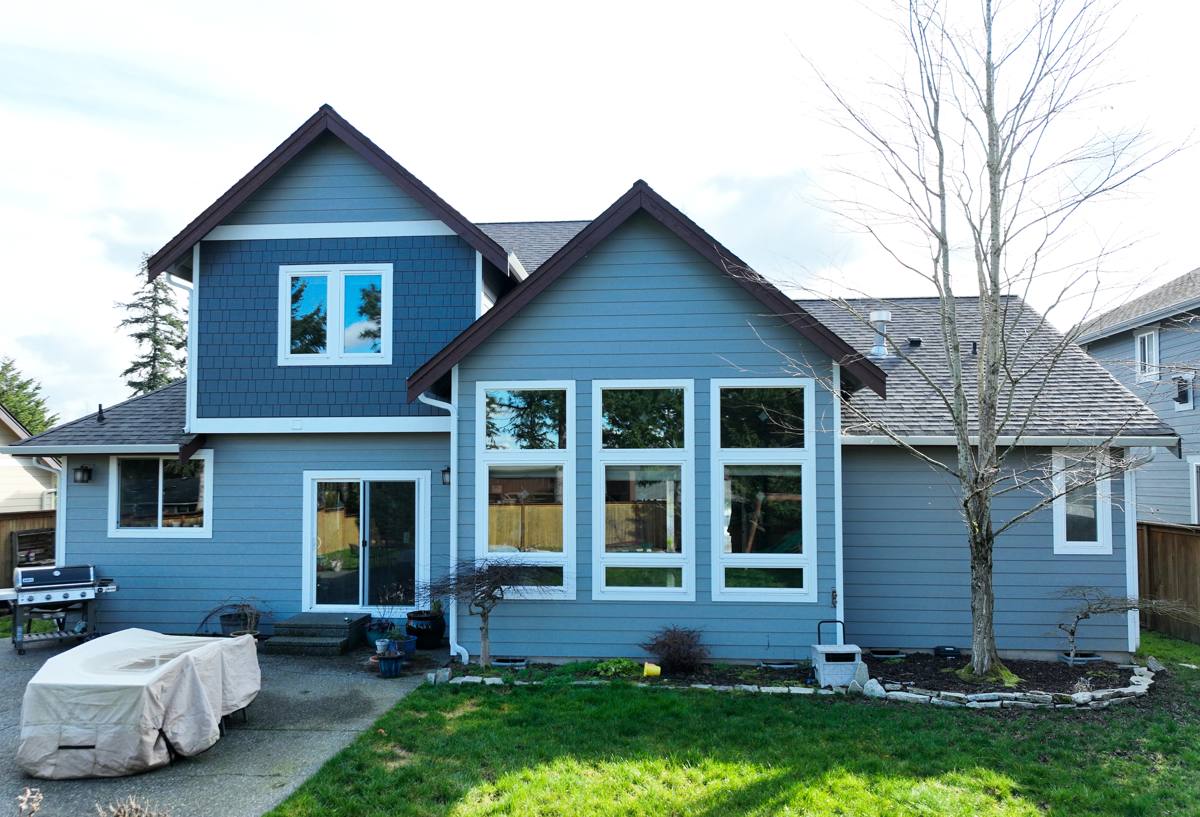
Why We Install Only James Hardie Fiber Cement
We made a deliberate decision as a company to install James Hardie fiber cement siding exclusively — not vinyl, not LP SmartSide, not primed wood or cedar. That's not a marketing angle; it's a standard we hold because of what this climate does to exterior building materials over time, and because we'd rather stand behind one product system we trust completely than juggle several we have reservations about.
Non-Combustible Core
James Hardie siding is made primarily of cement, sand, and cellulose fiber. It doesn't burn, it doesn't feed a fire, and it holds up to radiant heat in a way wood-based and polymer sidings simply can't. That matters anywhere, but it's a meaningful, permanent upgrade for a coastal Florida home.
ColorPlus Factory Finish
Rather than relying on paint applied on site — which is only as good as the weather conditions and preparation on install day — Hardie's ColorPlus finish is baked on in a factory-controlled process with multiple coats and a clear topcoat. It resists fading and chipping far better than field-applied paint and comes with its own finish warranty separate from the substrate warranty.
Climate-Engineered HZ Product Line
James Hardie manufactures its siding in different formulations for different climate zones — the HZ5 line is engineered for humid, high-moisture regions like ours, with a moisture and mold resistance package built for exactly the conditions Belleair sees every summer. It's not a one-size-fits-all product, and using the wrong formulation in the wrong climate defeats the purpose of installing fiber cement at all.
What a Correct James Hardie Installation Actually Involves
Fiber cement siding is only as good as the installation behind it. Most of the Hardie failures we get called out to inspect on older jobs trace back to shortcuts taken during install, not a flaw in the material itself. James Hardie publishes detailed installation instructions for coastal and high-wind regions, and skipping steps to save time is where problems start.
- Correct clearance from the siding to roof lines, decks, and grade to prevent wicking moisture
- Properly lapped and sealed weather-resistive barrier and flashing at every window, door, and penetration
- Fastener type, spacing, and embedment matched to the wind zone — not just "close enough"
- Butt joints and seams treated per manufacturer spec, not just caulked and hoped for
- Correct starter strip installation so the first course sits true and sheds water properly
- Factory-cut and factory-primed edges kept intact; field cuts sealed where required
- Proper fastening pattern at corners and edges, which see the highest wind uplift pressure
Every one of these details is inspectable, and we don't consider a job finished until they're all correct — not just the parts that show.
Choosing the Right Hardie Line for a Belleair Home
Belleair has a mix of home ages and architectural styles, from older coastal cottages to larger newer builds, and the right Hardie product and profile depends on the look you're going for as much as the performance you need. We walk through these options during the estimate rather than defaulting to one product for every house.
| Product | Best Use | Look |
|---|---|---|
| HardiePlank Lap Siding | Most common choice for full re-sides | Traditional horizontal lap, several width and texture options |
| HardiePanel Vertical Siding | Gables, accent walls, modern or coastal styling | Clean vertical lines, often paired with battens |
| HardieTrim Boards | Corners, window and door surrounds, fascia | Crisp, paintable trim that resists rot |
| HardieShingle | Accent gables, historic-style detailing | Staggered or straight-edge shingle profiles |
Color is part of this decision too. ColorPlus finishes are available in a curated palette engineered to hold up to Florida sun, and we can also install Hardie primed for field paint when a specific custom color is required — though we'll always explain the maintenance trade-off of doing so up front.
Our Process, Start to Finish
1. On-Site Assessment
We walk the exterior, check the condition of the existing siding and sheathing, and look for signs of moisture intrusion, soft spots, or prior repair work that needs to be addressed before new siding goes on. This is also when we take actual measurements rather than estimating from a satellite photo.
2. Product and Profile Selection
We go over lap width, texture, trim details, and color together, factoring in the home's style and any HOA or neighborhood expectations you're working within.
3. Prep and Removal
Old siding comes off, the sheathing gets inspected and repaired where needed, and a proper weather-resistive barrier goes on before a single piece of Hardie touches the wall. This step gets skipped more often than it should on lower-bid jobs — we don't skip it.
4. Installation to Manufacturer and Wind-Zone Spec
Siding, trim, and flashing go on following James Hardie's installation instructions for our wind zone, with the fastening and clearance details covered above.
5. Final Walkthrough
We inspect the finished job with you, cover care and maintenance, and provide the documentation tied to your Hardie warranty.
What Drives the Cost of a Hardie Siding Job in Belleair
We don't quote prices sight unseen, but these are the main factors that move a project's cost up or down. We'll walk through all of them at your estimate so there are no surprises.
| Factor | Why It Matters |
|---|---|
| Home size and wall complexity | More corners, gables, and dormers mean more cutting, trim, and labor time |
| Extent of sheathing repair | Moisture or rot found during removal adds material and labor before new siding can go on |
| Product selection | Lap width, texture, and vertical panel accents price differently than a straightforward plank job |
| Trim and detail work | Window surrounds, fascia, and accent gables add finish carpentry time |
| Color | Factory ColorPlus finishes vs. field-painted primed siding carry different upfront and long-term costs |
| Access and site conditions | Tight lots, landscaping, and multi-story walls affect staging and labor |
Why It Matters That We Already Work in Belleair
A crew that regularly works in and around Belleair and the rest of Pinellas County already knows the local wind zone requirements, understands what permitting here typically involves, and has a feel for how homes in this area are built — lot sizes, common construction eras, and the kind of moisture and salt exposure specific to this stretch of coastline. That familiarity shows up in small decisions throughout a job: how flashing gets detailed around an older window, how much clearance to leave at grade on a lot that floods a little differently than the one next door, how to sequence work around a Florida summer storm pattern. It's the difference between a crew executing a generic install and a crew building for the specific conditions your house actually faces.
Maintenance in a Coastal Climate
One of the real advantages of fiber cement over other siding materials is how little ongoing maintenance it needs when it's installed correctly — but "little" isn't "none," especially this close to the coast.
- Rinse the exterior periodically to clear accumulated salt film and pollen, especially on walls facing prevailing wind
- Keep an eye on caulking at trim joints and penetrations; it's the first thing to age and the easiest thing to touch up
- Trim back landscaping that holds moisture against the siding or creates constant shade and dampness
- Have any settling, cracking, or impact damage from a storm inspected promptly rather than left through another wet season
Homeowners who choose ColorPlus finishes typically find they can go many years without repainting, which is a real cost and time savings compared to field-painted siding options in this climate.
If you're weighing a siding replacement or repair for a Belleair home, we're happy to walk the property, answer questions honestly, and put together a free, no-pressure estimate — no obligation either way.