 Largo Siding
 Building Decks for Belleair Bluffs Homes
Belleair Bluffs sits close enough to the Intracoastal and the Gulf that "coastal" isn't a marketing word here — it's a design constraint. A deck built the way you'd build one in Ohio or inland Georgia will not hold up the same way a few miles from saltwater in Pinellas County. Between the humidity, the UV load, and the salt-laden air drifting in off the water, outdoor structures in this part of Largo get tested every single day, not just during storm season. We build decks for this specific environment, not a generic one, and that shows up in the materials we spec, the fasteners we use, and the way we frame the substructure underneath.
A deck in Belleair Bluffs isn't just an outdoor platform — it's usually the transition space between the house and the yard, the pool, or a water view. It needs to look finished, handle bare feet in July heat, and survive hurricane season without warping, splitting, or corroding at the connections. That's the standard we build to.
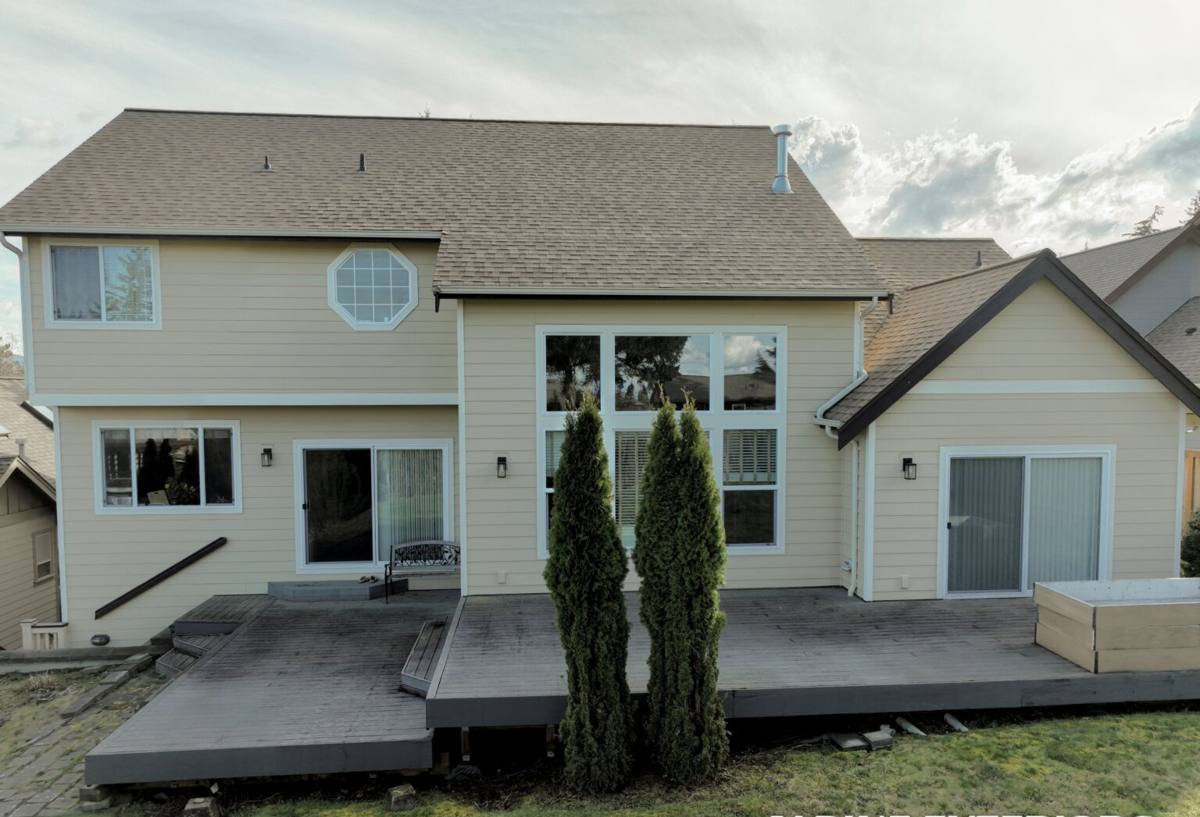
What Coastal Pinellas County Conditions Do to a Deck
If you've lived in this area for any length of time, you already know the basics. Here's how those conditions specifically attack a deck structure over time:
- Salt air corrosion: Standard steel fasteners, brackets, and hardware corrode faster this close to the coast. Rust stains bleed into decking boards and weaken structural connections from the inside out, often before any visible damage shows on the surface.
- UV exposure: Florida sun is intense nearly year-round. Untreated or poorly finished wood grays, cracks, and splinters faster here than in most of the country. Composite decking without UV-stabilized capping fades unevenly.
- Wind-driven rain: Storms in this area rarely come straight down. Rain gets pushed sideways into ledger connections, stair stringers, and any exposed end-grain, which is where rot typically starts on a wood deck.
- Hurricane-force wind loads: Railings, post connections, and ledger attachment to the house all need to be engineered for uplift and lateral load, not just vertical weight from foot traffic.
- Humidity and moisture cycling: Constant swings between soaked and dry cause wood to expand and contract repeatedly, which loosens fasteners and opens joints over the years if the framing wasn't detailed correctly from the start.
Decking Material Options for This Climate
There's no single "best" decking material for every homeowner — it depends on budget, maintenance appetite, and how the deck will be used. Here's how the common options actually perform under Belleair Bluffs conditions:
| Material | Salt/UV Performance | Maintenance | Typical Lifespan Here |
|---|---|---|---|
| Pressure-treated pine | Fair — needs sealing to resist salt and sun | Annual cleaning and re-sealing recommended | 10-15 years with upkeep |
| Tropical hardwood (e.g. ipe) | Very good natural density and rot resistance | Periodic oiling to maintain color, or allow to gray naturally | 25+ years |
| Capped composite | Strong — UV-stable capping resists fading and doesn't absorb salt spray | Occasional washing, no sealing or staining | 25-30 years |
| PVC decking | Excellent — fully synthetic, won't rot or corrode | Low — soap and water | 25-30+ years |
We won't tell a homeowner that any of these is a bad product — each has honest trade-offs. Pressure-treated wood costs less up front but asks for more of your time every year. Composite and PVC cost more initially but essentially remove the maintenance burden, which matters if the deck sits near a pool or gets salt spray on breezy days off the water. Hardwood sits in between: beautiful and genuinely durable, but installation-sensitive and pricier per square foot. What we won't do is cut corners on the fasteners and framing underneath, regardless of which decking surface you choose — that's where coastal deck failures actually start.
Framing and Fasteners Matter More Than the Surface
A gorgeous composite deck board over a poorly fastened, standard-grade framing system is still a coastal liability. We use stainless steel or coated fasteners rated for coastal/marine-grade exposure, and we detail ledger boards and post bases to shed water rather than trap it. This is the part of the job that isn't visible once the deck is finished, but it's the part that determines whether the deck is still solid in fifteen years or needs structural repair in five.
What a Correctly Built Deck in Belleair Bluffs Involves
Site and Structural Assessment
We start by looking at how the deck ties into the house, the existing grade and drainage, and any wind exposure specific to the lot — a deck facing open water or a wide yard sees different wind loading than one tucked against the house on a shaded side.
Permitting and Code Compliance
Pinellas County and the local jurisdiction have specific requirements for deck permits, including railing height, guard spacing, footing depth, and structural attachment to the home — especially important given the wind loading required throughout this part of Florida. We handle the permitting process rather than leaving it to the homeowner to navigate.
Footings and Substructure
Footings need to be sized and set to local frost-free depth requirements and soil conditions, with post bases that keep wood off the ground and away from standing moisture. This is a bigger deal on lots with poor drainage or that sit low relative to the street.
Framing
Joist spacing, beam sizing, and ledger attachment all get engineered for the actual span and load — not just "what's typical" from a big-box framing chart. This is where hurricane strapping and coastal-rated hardware come in.
Decking and Railing Installation
Board spacing needs to account for Florida's humidity swings so the deck doesn't buckle in wet season or gap excessively in dry season. Railings are set to code height and spaced to meet guard requirements, with attention to how the railing posts tie into the frame so they don't loosen under wind load over time.
Finish Details
Fascia, stair details, and any lighting or built-in seating get finished last, with fastener choices and sealant details that match the coastal environment rather than a generic install spec.
Our Process, Start to Finish
- Free on-site estimate. We walk the property, discuss how you'll use the deck, and talk through material options honestly, including budget trade-offs.
- Design and material selection. We finalize layout, decking material, railing style, and any add-ons like built-in seating or stairs to the yard or pool.
- Permitting. We pull the required permits and coordinate any inspections with the local jurisdiction.
- Construction. Footings, framing, decking, and railings go in with coastal-rated hardware throughout.
- Final walkthrough. We inspect the finished deck with you, cover any care instructions specific to your decking material, and close out inspections.
Common Mistakes We See on Existing Decks in This Area
When we're called out to repair or replace a deck built by someone else, the same handful of problems show up repeatedly around Largo and the surrounding coastal neighborhoods:
- Standard (non-coastal-rated) fasteners used on a deck within a mile or two of saltwater, leading to early rust staining and weakened connections
- Ledger boards attached to the house without proper flashing, allowing wind-driven rain to work into the rim joist and cause rot
- Undersized or improperly spaced footings that shift over time in Florida's sandy or shifting soils
- Decking installed without enough gap allowance for humidity-driven expansion, causing buckling
- Railings that meet code on paper but were fastened into framing that wasn't reinforced to handle real lateral load in a wind event
Most of these aren't visible to a homeowner until something fails — which is exactly why the framing and fastener choices matter as much as which decking board you pick.
Maintenance Guidance by Material
Whatever material you choose, a little routine care goes a long way in this climate:
- Wood decks: Rinse off salt residue periodically, inspect and re-seal on a regular schedule, and check fastener heads for early rust staining.
- Composite/PVC decks: Wash with soap and water a few times a year to prevent salt and pollen buildup; check railing post connections annually since the decking itself needs little attention.
- All decks: After a significant storm, walk the deck and check railings, stairs, and any visible fastener points before assuming everything is fine.
Why Hire a Crew That Already Works Belleair Bluffs
A contractor who mainly builds decks inland doesn't think about salt exposure, wind uplift, or coastal permitting requirements by default — they have to be reminded. A crew that regularly works this part of Pinellas County builds those details in automatically, because we've seen what standard-spec construction does here within a few years. We also already know the local permitting process and inspection expectations, which keeps your project from stalling on paperwork.
If you're planning a new deck or need to replace one that's showing its age, we'd be glad to take a look and give you an honest, no-pressure estimate — no obligation, just a clear read on what your project needs and what it will cost. Use the form below to get started.