 Largo Siding
 Siding Repair Built for Pinellas Park's Weather
Pinellas Park sits in the middle of a peninsula that takes weather from two directions at once — Tampa Bay pushes humidity and storm surge risk from the east, while the Gulf sends salt-laden air and afternoon squalls from the west. Homes here don't fail because of one bad storm. They fail slowly, from years of small exposures that never get addressed: a cracked panel that lets water behind the wall, a loose seam that flexes in every gust, a sun-baked finish that starts chalking and never gets caught. Siding repair in this part of Pinellas County isn't a cosmetic job. It's a moisture-management job, and it has to be treated that way from the first inspection to the last caulk line.
We work on homes throughout the Largo and Pinellas Park area regularly, which means we're not guessing at what the local climate does to siding — we're looking at it every week.
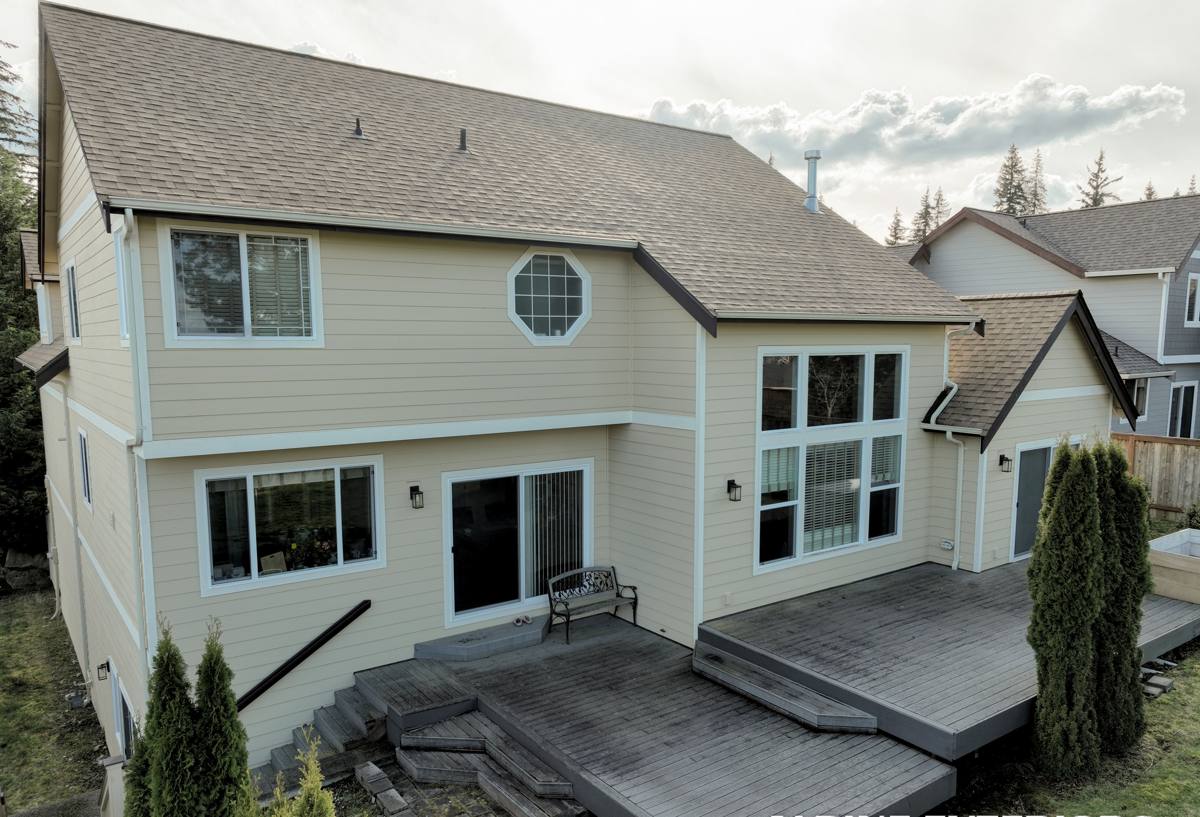
What Hurricane-Force Wind, UV, and Salt Air Do to Siding
Wind and Wind-Driven Rain
Pinellas Park doesn't need a direct hurricane hit to feel storm-force wind. Tropical systems tracking anywhere in the Gulf or across the state can push sustained gusts strong enough to work siding panels loose at the fasteners, especially on gable ends and upper stories where wind pressure is highest. Wind-driven rain is the bigger long-term problem — it doesn't fall straight down, it gets forced sideways and upward, finding any gap in a seam, a J-channel, or a fastener hole and driving moisture behind the cladding where it can sit against sheathing for days.
Year-Round UV Exposure
Florida doesn't have an off-season for sun. Siding here takes a near-constant UV load twelve months a year, which breaks down cheap or unstable finishes over time — fading unevenly, chalking, and in some materials, softening the surface enough that it becomes more vulnerable to impact and moisture. South- and west-facing walls typically show it first and worst.
Salt Air
Pinellas Park isn't beachfront, but it's close enough to Tampa Bay and the Gulf that salt-laden air is a real factor, particularly on days with onshore wind. Salt accelerates corrosion on fasteners, trim, and any exposed metal components, and it can accelerate the breakdown of finishes not engineered to handle it.
None of these forces act alone. A panel weakened by UV is more likely to crack under wind load. A loose seam from wind stress becomes the entry point for salt-carried moisture. Repair work that only addresses what's visible on the surface, without accounting for how these factors compound, tends to fail again within a season or two.
Signs Your Pinellas Park Home Needs Siding Repair
- Cracked, split, or buckled panels — especially near corners, window trim, or gable ends
- Soft or spongy spots when pressed, which usually indicate moisture has already reached the substrate
- Visible gaps or separation at seams, J-channels, or where siding meets trim
- Chalking, uneven fading, or finish that rubs off on your hand
- Bubbling, peeling, or discoloration on interior walls that back up to exterior siding
- Loose panels that flex or rattle in wind
- Rust streaks around fasteners or trim
- Any area that was recently exposed to a storm, falling debris, or lawn equipment impact
Any one of these on its own might be a small fix. Several together, or any sign of interior moisture, usually means the damage extends further than what's visible from the ground.
What a Correct Siding Repair Actually Involves
Diagnosing the Cause, Not Just the Symptom
A cracked panel is a symptom. The real question is why it cracked — impact damage, a fastening problem, trapped moisture that swelled the substrate, or a finish failure that made the material brittle. Replacing the visible piece without answering that question just resets the clock on the same failure.
Checking What's Behind the Siding
Any repair involving suspected moisture intrusion needs the affected panels pulled back far enough to inspect the water-resistive barrier and sheathing underneath. In Pinellas County's humidity, wood sheathing that's stayed wet for any length of time can start to soften or support mold growth. Covering that up with a new panel and calling it done is how small repairs turn into bigger problems a year later.
Matching Material and Fastening Correctly
Repairs need to match the existing product's profile, thickness, and exposure — and just as important, they need to be fastened per the manufacturer's specification for wind zone and substrate. A repair that looks right but is nailed incorrectly, or caulked where it should have been flashed, will fail again in the next windstorm.
Sealing and Flashing Details
Most siding failures in this climate trace back to a detail, not the field of the wall — a missed piece of flashing above a window, a butt joint that wasn't sealed correctly, a kick-out flashing that was never installed where a roofline meets a wall. Correct repair work addresses these details every time, not just when they're the obvious point of failure.
Repair or Replace? Weighing the Real Factors
| Factor | Favors Repair | Favors Replacement |
|---|---|---|
| Extent of damage | Isolated to one or two areas | Spread across multiple elevations |
| Moisture behind siding | None found on inspection | Found in multiple locations |
| Age of existing siding | Under 10-15 years, sound condition | Approaching or past expected service life |
| Material match availability | Original product/color still obtainable | Discontinued or badly weathered compared to new material |
| Underlying sheathing condition | Solid, dry, undamaged | Soft, delaminated, or previously repaired multiple times |
| Storm exposure history | Isolated recent event | Repeated cycles of damage over years |
We'll always tell you honestly which side of that table your home falls on. A well-timed repair can add years of service to sound siding. But when the underlying material or structure is compromised in multiple places, patching it piece by piece usually costs more over time than doing the job once, correctly.
Why We Only Work With James Hardie Fiber Cement
When a repair calls for replacing sections of siding — or when the inspection reveals the existing material has reached the point where full replacement makes more sense — we install James Hardie fiber cement, and only James Hardie. We don't install vinyl, LP SmartSide, or other fiber cement brands, and we won't quote them, because our standard is built around what performs under exactly the conditions Pinellas Park deals with.
Fiber cement is non-combustible and doesn't soften, warp, or become brittle under sustained Florida heat and UV the way some other claddings can. Hardie's ColorPlus factory-applied finish is engineered specifically to resist fading and chalking under intense, year-round sun exposure — a real advantage in a climate that doesn't give a finish a break. Hardie's HZ5 product line is engineered for high-humidity, moisture-prone climates like ours, which matters directly for repair work: material that resists moisture-related swelling and degradation means fewer repeat repairs down the road. It also carries a strong, transferable manufacturer warranty when installed to spec — something we take seriously, because installation quality is what actually determines whether that warranty means anything in practice.
We're not going to tell you every other product on the market is worthless — plenty of homes have other sidings on them today. But when it's our crew, our fasteners, and our name behind the repair, we install the product we trust to hold up here, and that's Hardie.
Our Siding Repair Process
1. On-Site Inspection
We look at the full elevation, not just the spot you called about — damage in this climate rarely stays isolated, and we want to catch what's starting before it becomes the next service call.
2. Honest Assessment
We'll tell you plainly whether you're looking at a straightforward repair, a repair with some sheathing work involved, or a case where replacement is the smarter long-term move. No upselling, no downplaying.
3. The Repair Itself
Damaged panels are removed, the substrate is checked and dried or replaced as needed, and new material is fitted, flashed, and fastened to spec — matched as closely as possible to your existing siding.
4. Sealing and Finish Detail
Seams, joints, and trim transitions get sealed correctly the first time, since these are the details most likely to fail again if rushed.
5. Cleanup and Walkthrough
We clear the site and walk the repair with you so you know exactly what was done and why.
Why It Matters That We Already Work in Pinellas Park
A crew that works this area regularly already knows which elevations in Pinellas Park take the worst of the wind-driven rain, what a typical fastening pattern looks like on homes built in different eras here, and how salt air and UV exposure actually show up on siding a few years in — not in theory, but from having seen it on the house down the street. That local pattern recognition shortens the diagnosis phase and reduces the chance of a repair being done to a generic standard instead of one that accounts for what this specific stretch of Pinellas County throws at a house year after year. It also means we're not a stranger showing up once — we're a local crew you can call again if a problem resurfaces, with a record of the work we did the first time.
Get a Free, No-Pressure Estimate
If you're seeing cracked panels, loose seams, or discoloration on your Pinellas Park home, it's worth having a professional look before the next storm season pushes it further. Fill out the form below for a free estimate — we'll give you an honest read on what's actually going on and what it will take to fix it right.