 Largo Siding
 Belleair Beach Sits on a Barrier Island, and Its Homes Take the Weather Accordingly
Belleair Beach is a narrow strip of land between the Gulf of Mexico and the Intracoastal Waterway, and that geography shapes almost everything about how siding performs there. A house a few miles inland in Largo deals with plenty of Florida weather on its own — intense year-round UV, wind-driven rain, and the seasonal threat of hurricane-force winds. A house on Belleair Beach deals with all of that at a higher intensity, plus salt-laden air moving in from open water on more than one side of the property. There isn't much land mass between these homes and the Gulf to slow any of it down before it reaches the siding.
We work throughout Pinellas County, and Belleair Beach comes up regularly because it's one of the more exposed pockets in our service area. This page is specifically about siding installation for homes there — new construction, full re-siding, and storm-related rebuilds — not general siding education or small patch repair. We install James Hardie fiber cement exclusively, and everything below assumes that system, since it's the only one we install to spec on barrier island homes.
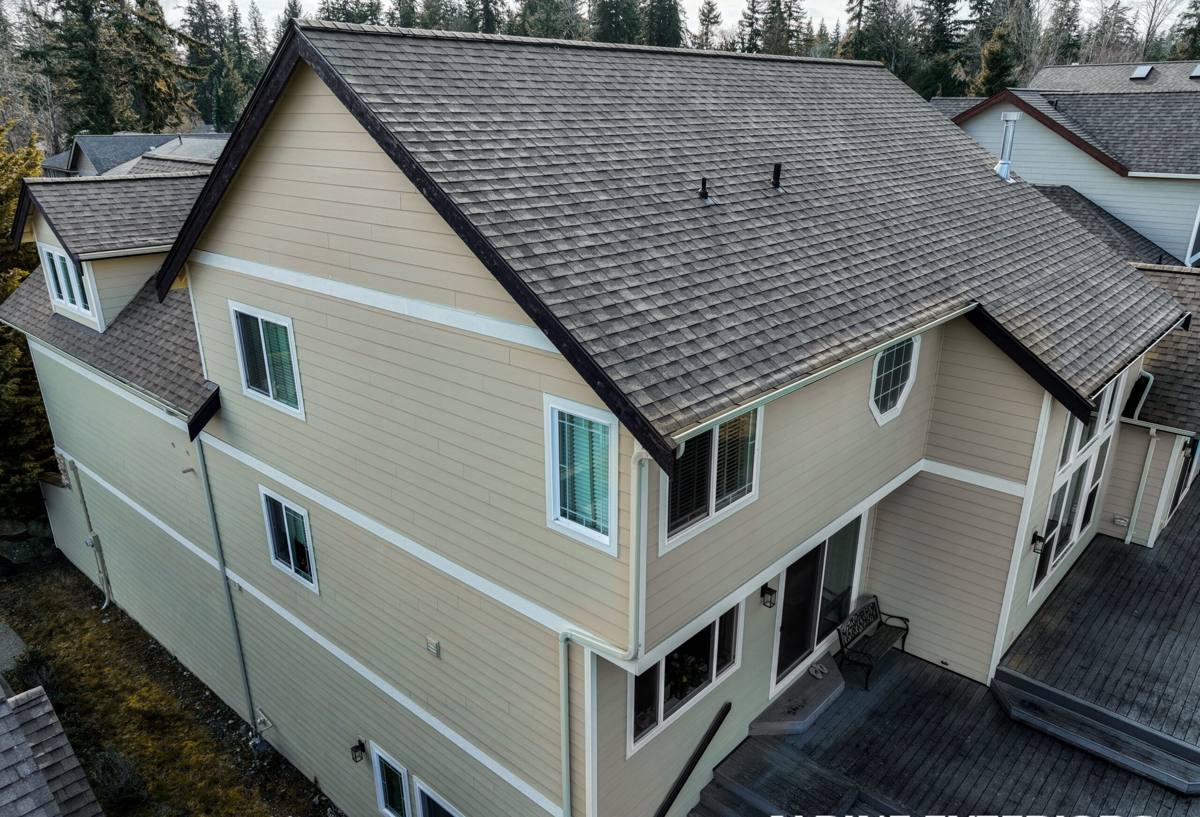
What a Barrier Island Location Demands From an Installation
Salt Air From More Than One Direction
Most Pinellas County homes face salt exposure from one general direction, whether that's toward the Gulf or toward the bay. On Belleair Beach, a single home can pick up salt-laden air off open Gulf water on one side and off the Intracoastal on the other, depending on which way the wind is blowing that day. That doesn't change which material belongs on the wall, but it changes how seriously fastener corrosion resistance, trim hardware, and sealant quality need to be treated during installation. Out here, corrosion pressure isn't an occasional condition — it's a steady, year-round one.
Hurricane-Force Wind Loads
Barrier islands take the first exposure from tropical systems moving in off the Gulf, and even storms that don't make a direct landfall nearby can still push sustained wind and gusts well above what a home a few miles inland experiences in the same event. Siding installed on Belleair Beach has to be fastened to withstand that specific wind load, not to a generic national standard that assumes less exposure than the property actually gets.
Constant, Intense UV
Open exposure on a barrier island generally means less mature tree canopy than older, more established inland neighborhoods provide. Siding and its finish take a fuller, more unbroken dose of Florida sun through most of the day, which accelerates fading, chalking, and coating breakdown on any finish that wasn't engineered to handle it.
Wind-Driven Rain
Rain that arrives during a Gulf storm rarely falls straight down on Belleair Beach — it gets pushed sideways by the same wind that's driving the storm, and it finds its way into panel joints, fastener penetrations, and trim intersections that would stay dry in a calmer, more sheltered setting. How well those points are flashed and sealed during installation is what decides whether that rain stays outside the wall assembly or gets in.
Why James Hardie Fiber Cement Is the Only Product We Install Here
We don't install vinyl, LP SmartSide, or other fiber cement brands like Cemplank or Allura, and a barrier island climate is a big part of why. Vinyl is a lightweight product that's mechanically fastened to allow for expansion, which also makes it more vulnerable to being pulled loose in sustained hurricane-force gusts than a rigid, more heavily fastened product. Engineered wood siding has a genuine track record, but it's still a wood-fiber core at its base — in a climate where humid air rarely lets a wall assembly fully dry out, any break in that product's factory edge seal becomes a place for moisture to get in and the core to swell. We standardized on James Hardie because its HZ5 formulation is engineered specifically for high-humidity, high-moisture climates like this one, its factory-applied ColorPlus finish resists the fading and chalking that this level of UV exposure causes on lesser coatings, and it's non-combustible, which matters to a lot of homeowners regardless of location. We'd rather install one product exceptionally well on every barrier island home we work than offer several products adequately.
What a Correct James Hardie Installation Actually Involves
Fastening to the Wind Zone, Not a Generic Spec
James Hardie publishes fastener type, spacing, and placement requirements that vary by product line and wind exposure. On a barrier island, that spec needs to reflect the wind zone Belleair Beach actually sits in, not a relaxed version carried over from work done further inland. Following it precisely is also what keeps the manufacturer's warranty valid if a problem ever surfaces.
Clearances at Grade, Decks, and Roof Lines
Hardie specifies minimum clearance between the bottom of the siding and grade, decking, roofing, and other horizontal surfaces. On barrier island homes — many of which sit on elevated foundations or pilings, with decks and outdoor living space built close to grade — those clearances are easy to compromise without anyone noticing at the time, and skipping them leaves the bottom courses sitting in splash-back or standing water after every heavy rain.
Flashing and Sealant at Every Penetration
Windows, doors, vents, hose bibs, and any fixture that interrupts the siding plane need correct flashing and sealant behind them, not just a bead of caulk at the visible surface. This is the slowest part of an installation to do correctly, and it's the part most likely to get rushed on a job that isn't held to spec — and also the part that decides whether wind-driven rain during the next storm stays outside the wall.
Field-Cut Edges, Sealed as They're Made
Every panel cut on site — around a window, at a corner, at the end of a run — needs its cut edge sealed or primed per Hardie's specification before it goes up, not at the end of the day after several unsealed cuts have already sat exposed. An unsealed cut edge is one of the more common places fiber cement actually takes on water, and it has nothing to do with a flaw in the material itself.
A Continuous, Properly Lapped Water-Resistive Barrier
Underneath the visible siding, the water-resistive barrier does most of the real work of keeping wind-driven rain out of the wall assembly. It needs correct overlap and taped seams at every joint and penetration before flashing and siding go over it — and it's completely hidden once the job is finished, which is exactly why it's worth confirming was done right rather than simply trusting that it was.
Installation Shortcuts That Fail Fastest This Close to the Gulf
| Shortcut | What it looks like on install day | How it shows up later on a Belleair Beach home |
|---|---|---|
| Standard-grade fasteners instead of corrosion-resistant hardware | No visible difference | Rust streaking, staining, and loosened panels within a few years |
| Skipped clearance at grade or deck ledger | Siding looks flush and tidy | Wicking, softness, and paint failure at the bottom courses |
| Rushed or taped-over window flashing | Looks sealed from outside | Hidden moisture intrusion, often not visible until interior staining shows up |
| Unsealed field-cut edges | Cuts look clean and painted | Localized swelling or edge delamination, especially on Gulf-facing walls |
| Fastening to a generic spec instead of the local wind zone | Passes a casual visual check | Panels working loose or failing outright in sustained hurricane-force gusts |
How We Handle an Installation, Step by Step
Site and Exposure Assessment
Before we price anything, we look at how each side of the house is actually exposed — which walls take direct Gulf wind and salt spray, which face the Intracoastal side, and whether there's any existing damage or chronic moisture pattern that needs to be addressed rather than built over.
Tear-Off and Sheathing Inspection
Old siding comes off and the sheathing underneath gets inspected before anything new goes up. Installing new siding over damaged sheathing just hides the problem for a while longer; we'd rather find and repair rot or soft spots at this stage, even if it adds time to the job.
Weather Barrier Installation
The water-resistive barrier goes on with proper overlap and taped seams before any flashing or siding covers it. This step matters everywhere we work, but it matters more on a barrier island home where wind-driven rain is a regular event rather than an occasional one.
Siding Installation to Manufacturer and Wind Zone Spec
Panels go up following Hardie's fastening, spacing, and clearance requirements as the baseline for every job, adjusted for the wind zone Belleair Beach actually sits in rather than a countywide average. Field cuts are sealed as they're made, not batched for later.
Final Walkthrough
We walk the finished job with the homeowner, confirm the work matches what was estimated, and talk through what basic maintenance looks like on a home this exposed to salt air and sun.
A typical installation on a Belleair Beach home includes:
- Exterior inspection and moisture check before tear-off begins
- Removal of existing siding and inspection of the sheathing underneath
- Repair of any damaged sheathing or framing found during tear-off
- Installation of a continuous water-resistive barrier with correctly integrated flashing
- James Hardie plank, panel, or shingle siding installed to manufacturer spec and local wind code
- Trim, corner boards, and fascia work matched to the chosen Hardie product line
- Final walkthrough covering caulking, touch-up needs, and care instructions
New Construction, Re-Siding, and Storm-Related Rebuilds
New Construction vs. Re-Siding an Existing Home
Installing siding on new construction and re-siding an existing Belleair Beach home get held to the same standard, but they don't start from the same place. New construction means building onto fresh sheathing and a new water-resistive barrier with no unknowns hiding behind the wall — the sequence still matters, but there's no guesswork about what's underneath. Re-siding an older home means tear-off, an honest look at what the original construction and any past repairs left behind, and sometimes correcting older detailing — inadequate clearances, missing flashing, a barrier that was never properly installed — before new siding goes on. Storm-related rebuilds fall somewhere between the two: often working with existing framing and foundation but requiring a fresh look at code compliance for everything above it.
Permitting, Wind Zone, and Flood Considerations
Pinellas County's wind zone requirements set the fastening schedule and product specifications for barrier island construction, and Belleair Beach's location means those requirements are applied at the stricter end of the county's range. Many homes here are also subject to flood zone and elevation rules that affect how low on the wall siding and other materials are permitted to sit. We pull permits and install to the requirements that actually apply to this specific location, not a generic standard that happens to be close enough.
Cost and Timeline Factors for a Belleair Beach Installation
Every estimate is specific to the house, but a few factors consistently drive both price and schedule on a barrier island installation:
| Factor | Why it matters |
|---|---|
| Square footage and number of stories | More area and height mean more labor, and taller walls often require more staging and access equipment |
| Trim and detail complexity | More windows, corners, and roofline transitions mean more flashing and cutting work |
| Sheathing condition underneath old siding | Rot or water damage found during tear-off adds repair scope before new siding can go up |
| Direct Gulf or Intracoastal exposure | Water-facing walls typically warrant closer attention to flashing, fastener spec, and drainage detail |
| Product line and finish selection | James Hardie offers multiple panel styles, textures, and ColorPlus finishes at different price points |
| Elevation and flood zone requirements | Homes with specific elevation rules may need adjusted clearance and material planning at the lower wall |
Storm season also affects scheduling more directly here than in more sheltered parts of the county — wind and rain off the Gulf can shut down safe staging and panel handling on days that would still be workable a few miles inland, so we build some flexibility into project timelines rather than promise a fixed date that a single bad weather stretch is likely to break.
A Checklist for a Correct Installation, and Why a Local Crew Matters
Whether you're evaluating our work or getting a second opinion from another contractor, these are reasonable things to confirm before a siding installation on a Belleair Beach home is considered finished:
- Fasteners and hardware rated for marine or coastal exposure, not standard-grade material
- Documented clearance between the bottom of the siding and grade, decks, and roofing
- Flashing visible and properly lapped at every window, door, and wall penetration before siding covers it
- All field-cut edges sealed or primed, not left raw
- A continuous, properly lapped water-resistive barrier underneath the siding
- A fastening schedule that matches the local wind zone, not a generic national spec
- A final walkthrough where the contractor explains the work, not just hands over an invoice
Installation quality on paper and installation quality in practice aren't always the same thing, and the gap shows up fastest on a barrier island. A crew that regularly works homes exposed to this much salt air, sun, and storm wind makes different judgment calls than one installing here occasionally between jobs elsewhere — where extra flashing attention is worth the time, which fastener spec actually holds up on a Gulf-facing wall, and which corners genuinely can't be cut regardless of schedule pressure. That judgment comes from doing this work repeatedly in this specific place, not from applying a generic installation checklist the same way everywhere.
If you're planning new siding for a Belleair Beach home, or want a straightforward second opinion on whether an existing installation was done correctly, we're glad to come take a look. Reach out using the form below for a free, no-pressure estimate.