 Largo Siding
 Siding Installation Built for Seminole's Coastal Climate
Seminole sits close enough to the Gulf that salt air is a daily fact of life, and far enough into Pinellas County that afternoon storms roll through on a predictable summer schedule. That combination is hard on exterior siding. Homes here deal with intense year-round UV that fades and chalks weaker materials, wind-driven rain that finds every gap in a poorly flashed installation, hurricane-force wind gusts that test how well siding is actually fastened to the wall, and a steady dose of airborne salt that accelerates corrosion and breaks down anything not engineered to resist it. A siding job that would hold up fine in a drier, cooler climate can fail here within a few years if it isn't installed with this environment specifically in mind.
We install siding across Pinellas County, and Seminole is one of the neighborhoods where we work regularly. That matters more than it might seem — a crew that only occasionally works this area has to relearn local wind exposure, drainage patterns, and inspection expectations on every job. A crew that works here consistently already knows what correct looks like before the first board goes up.
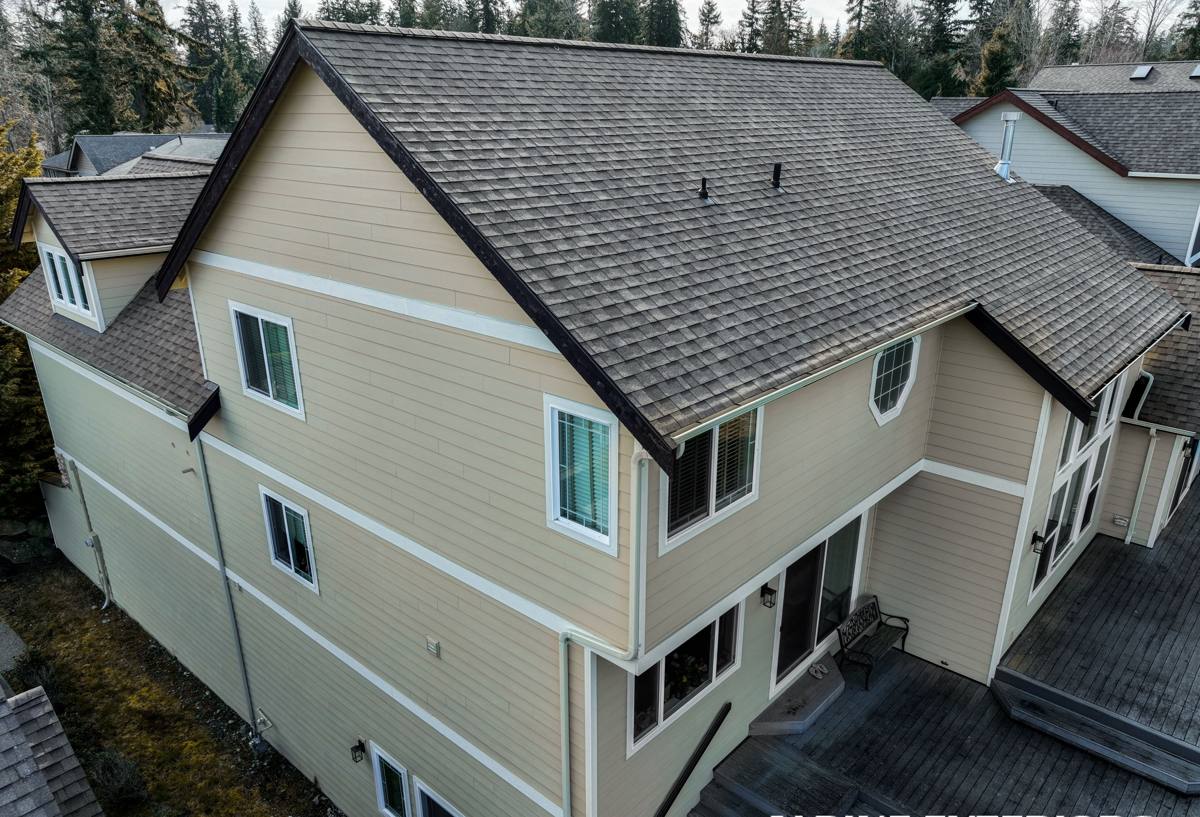
What Seminole Homes Actually Need From Their Siding
Before talking about installation technique, it's worth being clear about what the material itself needs to do. In this climate, siding has to manage four separate stresses at once, and most product failures trace back to one of these being underestimated.
Moisture Management
Wind-driven rain doesn't fall straight down — it gets pushed sideways into wall assemblies during storms, which means siding and the water-resistive barrier behind it have to work as a system, not just a surface layer. Any siding product that swells, delaminates, or wicks moisture when it gets wet repeatedly is working against the climate instead of with it.
UV and Heat Exposure
Florida sun is relentless on painted or coated surfaces. Finishes that aren't engineered for UV exposure chalk, fade unevenly, and need repainting far sooner than a homeowner expects when they first budget for siding.
Wind Load
Pinellas County's wind requirements reflect real storm history. Fastening patterns, nail types, and installation spacing all change based on wind exposure category, and cutting corners here is the single biggest cause of siding blow-off during tropical storms and hurricanes.
Salt Air Corrosion
Metal components — fasteners, flashing, trim accessories — corrode faster near the Gulf. Material choice and fastener selection both need to account for this, not just the siding panel itself.
Why We Install Only James Hardie Fiber Cement
We made the decision years ago to install one siding system: James Hardie fiber cement. We don't install vinyl, LP SmartSide, Cemplank, Allura, primed spruce, or cedar, and that's a deliberate professional standard, not a sales pitch. Each of those alternatives has real strengths, but each also carries trade-offs — moisture sensitivity, impact vulnerability, shorter finish life, or higher long-term maintenance — that we don't think hold up well against Seminole's specific combination of heat, humidity, salt, and wind.
James Hardie fiber cement is non-combustible, dimensionally stable in heat and humidity swings, and available in HZ5 formulations engineered for the exact wind and moisture conditions found in coastal Florida. The factory-applied ColorPlus finish is baked on and warranted separately from the substrate, which matters in a climate where UV is the primary reason siding finishes fail early. We'd rather stand behind one product system we know performs here than offer a menu of options with different long-term outcomes.
How James Hardie Compares to the Alternatives We Don't Install
| Factor | Vinyl / Engineered Wood | James Hardie Fiber Cement |
|---|---|---|
| Moisture behavior | Can swell, warp, or trap water depending on product | Dimensionally stable, engineered for humid climates |
| UV / fade resistance | Field-applied or standard finishes fade faster | Factory-baked ColorPlus finish with separate warranty |
| Fire behavior | Combustible (wood-based) or heat-sensitive (vinyl) | Non-combustible fiber cement |
| Wind performance | Varies widely by product and installation | HZ5 lines engineered for high-wind coastal zones |
| Long-term maintenance | Often higher — recaulking, repainting, panel replacement | Lower when installed and finished to spec |
What Correct Installation Actually Involves
Buying the right product is only half the job. Fiber cement siding is unforgiving of shortcuts, and most of the failures we're called to diagnose on other companies' work trace back to installation, not the material itself.
Water-Resistive Barrier and Flashing First
Before any siding goes up, the wall needs a properly lapped water-resistive barrier and correctly installed flashing at every window, door, and penetration. This is the layer that actually keeps wind-driven rain out of the wall assembly — the siding is the second line of defense, not the only one.
Fastening to Manufacturer and Wind-Zone Spec
Fastener type, spacing, and embedment all change based on the local wind exposure category. Using the wrong nail gauge or spacing too wide "to save time" is exactly the kind of shortcut that shows up as blown-off panels during the next tropical system.
Proper Clearances and Gaps
Fiber cement needs specific clearance from roofing, decks, and grade, plus expansion gaps at butt joints and trim. Skipping these details traps moisture against the material and voids manufacturer warranty coverage.
Caulking and Sealant Details
Joints, seams, and trim intersections need the right sealant, applied correctly — not just caulked over gaps as a cosmetic fix. Done wrong, this is one of the most common points where wind-driven rain gets behind the siding.
Our Process for Seminole Siding Projects
- On-site assessment — we walk the exterior, check existing siding and sheathing condition, and note wind exposure and drainage specifics for that property.
- Product and color selection — we go through James Hardie's HZ5 product lines and ColorPlus palette so the choice fits the home and the neighborhood.
- Detailed written estimate — scope, product, and pricing spelled out before any work starts, no vague allowances.
- Tear-off and substrate check — old siding comes off and we inspect sheathing for hidden moisture damage before closing anything back up.
- Water-resistive barrier and flashing installation — done to manufacturer and code specification, not skipped or minimized.
- Siding installation — fastened to the wind-zone-appropriate spec, with correct gaps and clearances maintained throughout.
- Trim, caulking, and final detailing — the finishing work that determines how well the assembly actually sheds water over time.
- Final walkthrough — we go over the finished work with the homeowner before considering the job complete.
Signs Your Current Siding Is Already Struggling
Homeowners in Seminole often reach out after noticing something specific rather than as a routine check-in. If any of the following sound familiar, it's worth having someone look at the siding before the next storm season:
- Visible warping, buckling, or panels that flex when pressed
- Chalky residue or noticeably faded color on south- or west-facing walls
- Cracked or missing caulk at seams, corners, and trim
- Soft spots or discoloration near the bottom courses, close to grade
- Rust streaking from fasteners or metal trim accessories
- Increasing energy bills that suggest the wall assembly is no longer performing
- Any history of siding blowing off or lifting during a previous storm
Cost Factors for a Seminole Siding Project
Every home is different, but the same handful of factors drive most of the variation in siding project pricing here. Understanding them upfront makes it easier to evaluate any estimate, including ours.
| Factor | Why It Affects Cost |
|---|---|
| Home size and wall complexity | More corners, gables, and dormers mean more cutting, flashing, and labor time |
| Substrate condition | Damaged sheathing found during tear-off adds repair scope before new siding goes on |
| Product line and profile | HZ5 lap, shingle, and panel profiles carry different material and labor costs |
| ColorPlus vs. field-painted finish | Factory-applied color adds cost upfront but reduces repainting over the siding's life |
| Trim and accessory scope | Corner boards, window trim, and soffit work add to both material and labor |
| Access and site conditions | Tight lot lines, landscaping, or multi-story walls affect scaffolding and staging time |
Why Local Experience in Seminole Matters
Siding installation isn't a one-size-fits-all process, even within Pinellas County. Wind exposure category can shift block to block depending on proximity to open water and surrounding structures, and local building department expectations for flashing, fastening documentation, and inspections are things a crew learns by working here repeatedly, not by reading a spec sheet once. A contractor who already knows the inspection process, the common substrate issues found in this area's housing stock, and how these homes actually perform through storm season brings a level of judgment that's hard to replicate from an out-of-area crew doing a single job in the neighborhood.
If your Seminole home needs new siding, or you want a straight answer about whether your current siding is holding up the way it should, we're glad to take a look. Reach out for a free, no-pressure estimate — we'll walk the exterior, answer your questions honestly, and give you a clear picture of what correct James Hardie installation looks like for your home.