 Largo Siding
 Why Decks in Redington Beach Wear Out Faster Than Inland Decks
Redington Beach sits right on the barrier island strip of Pinellas County, with salt air moving off the Gulf and across every property nearly every day of the year. That salt air is the single biggest reason decks here fail sooner than decks built even a few miles inland. Salt is corrosive, and it doesn't need a direct ocean view to reach your deck — it travels on wind and settles into fasteners, framing connectors, and any exposed wood grain it can find.
Layer on the rest of the local climate and it's easy to see why deck replacement comes up more often here than in other parts of the country. Intense, near year-round UV breaks down wood fibers and the surface resins in lower-grade composite boards, leaving them faded, brittle, or checked. Wind-driven rain during summer storms and hurricane season doesn't just fall straight down — it gets pushed sideways and upward, working into board gaps, ledger connections, and post bases where standing moisture leads to rot and hidden decay. And when a named storm does bring hurricane-force gusts, a deck's framing and connections are tested for uplift and racking forces that inland structures rarely see.
None of this means a deck can't last in Redington Beach — it means the materials, fasteners, and construction details have to be chosen specifically for this environment, not just pulled from a standard inland deck spec.
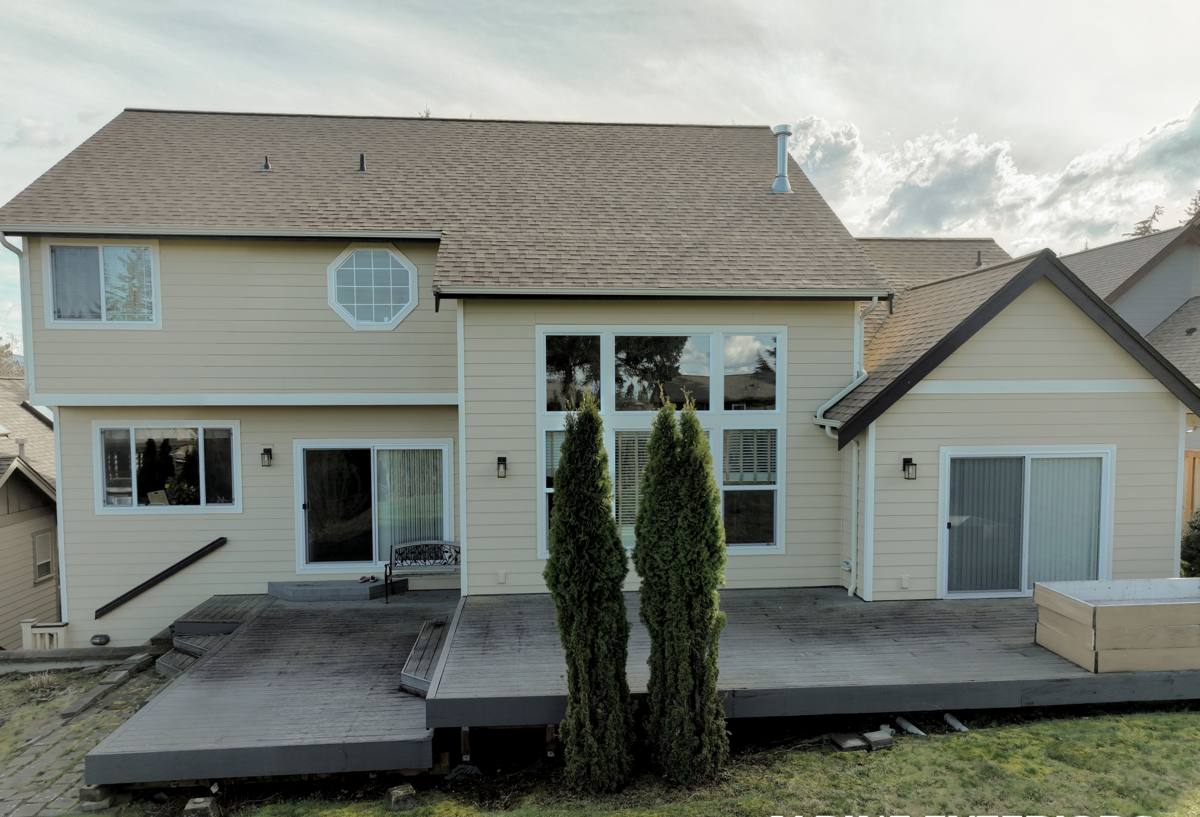
Signs Your Deck Needs Replacing, Not Just Repairing
Homeowners often ask us whether a deck can be patched instead of replaced. Sometimes it can. But once a coastal deck shows certain signs, spot repairs usually just delay a bigger problem — and cost more in the long run than doing the job right once.
- Boards that feel soft, spongy, or flex noticeably when you walk across them
- Rust streaks bleeding from screws, nails, or bracket hardware
- Gaps between boards that have widened well beyond their original spacing
- Visible separation, gapping, or staining where the deck ledger meets the house
- Wood posts that are soft or crumbling at the base, especially where they meet concrete footings
- Railings that wiggle, lean, or no longer feel solid when leaned on
- A structure that's simply old enough that the framing has never been inspected or upgraded to current wind-load hardware
Any one of these on its own might be repairable. Several at once, or a ledger/framing issue, usually means the structure itself has reached the point where full replacement is the safer and more cost-effective path.
What a Correct Deck Replacement Actually Involves
Structural Framing
The framing is what actually holds your deck up, and it's the part homeowners see least and value most. A correct replacement means properly sized joists and beams for the span and load, ledger flashing that keeps water from ever reaching the house's structure, and post-to-beam and joist-to-beam connections rated for both vertical load and wind uplift — not just gravity.
Fasteners and Hardware
In a salt-air environment, hardware choice matters as much as the lumber or decking itself. We use stainless steel or coated fasteners and connectors rated for coastal exposure. Standard interior-grade hardware will rust and weaken within a few seasons here, which is one of the most common causes of premature "deck failure" that actually started as a hardware failure.
Decking Surface
Whatever surface material you choose — wood, composite, or PVC — it needs to be installed with the right fastening pattern, expansion gaps, and ventilation underneath. Coastal humidity means trapped moisture under boards is a bigger risk here than in drier climates.
Railings and Guards
Railings take direct wind load and constant handling. They need to meet current code height and baluster spacing requirements and be anchored into structural framing, not just fastened to decking boards.
Choosing Decking Material for a Barrier Island Climate
There's no single "best" decking material for every home — it depends on your budget, how much upkeep you're willing to do, and how the deck will be used. Here's an honest comparison based on how each material actually performs in salt air, UV, and humidity.
| Material | Salt Air / Corrosion Resistance | UV Fading | Maintenance | Typical Lifespan |
|---|---|---|---|---|
| Pressure-Treated Wood | Good if hardware is coastal-rated | Fades and grays without regular sealing | Annual cleaning and resealing | 10-15 years |
| Composite Decking | Very good | Modern capped composites resist fading well; older/uncapped boards fade more | Occasional washing, no sealing | 20-30 years |
| PVC Decking | Excellent — no wood fibers to absorb moisture | Very good with quality products | Lowest — occasional washing | 25-30+ years |
| Tropical Hardwoods | Naturally dense and rot-resistant | Grays without regular oiling | Higher — periodic oiling recommended | 20-25 years with upkeep |
For most Redington Beach homes, we steer clients toward capped composite or PVC decking on the visible surface, paired with treated or coastal-grade framing underneath. It's not that wood decking can't work here — it's that the ongoing sealing and inspection schedule needed to keep it performing well in salt air is more demanding than most homeowners want to commit to. That's a maintenance trade-off, not a knock on wood as a material.
What Affects the Cost of a Deck Replacement
Every deck is different, so exact pricing depends on a site visit — but the factors below are what actually move the number up or down. We'll walk through these with you honestly during your estimate rather than quoting a flat number over the phone.
| Cost Factor | Why It Matters |
|---|---|
| Deck size and footprint | More square footage means more material and labor |
| Decking material selected | Composite and PVC cost more upfront than wood but less over time |
| Framing condition | Rotted or undersized framing found during demo adds structural work |
| Height and stairs | Elevated decks and multi-flight stairs add framing and railing complexity |
| Railing style | Cable, glass, and custom railing systems cost more than standard baluster rail |
| Permit and inspection requirements | Structural work typically requires permitting, which adds time and a fee |
Our Deck Replacement Process
- On-site assessment. We inspect the existing deck's framing, ledger connection, posts, and footings — not just the surface boards — to find out what's actually driving the failure.
- Honest recommendation and quote. You get a clear explanation of what needs to be replaced versus what can stay, with material options and pricing explained plainly.
- Permitting. We handle the permit application and coordinate required inspections so you don't have to navigate the process yourself.
- Demolition and disposal. The old deck is removed and hauled away, and we check the ledger and house connection point for any hidden water damage before rebuilding.
- Framing rebuild. New framing goes in with coastal-rated hardware, proper flashing, and connections sized for both load and wind uplift.
- Decking and railing installation. Your chosen decking material and railing system are installed to manufacturer specs, with attention to fastening pattern, expansion gaps, and ventilation.
- Final walk-through. We go over the finished deck with you, including basic care guidance specific to the material you chose.
Permits, Codes, and Coastal Considerations in Pinellas County
Deck replacement in Redington Beach, like most of Pinellas County, generally requires a permit once structural framing is involved — this isn't red tape for its own sake, it's what confirms your deck meets current wind-load and safety standards. Barrier island properties can also involve additional review depending on the property's flood zone designation and elevation, which is worth confirming before work begins rather than after. We handle this process as part of the job so you're not stuck deciphering code language or making trips to a permitting office.
Wind load is the code detail that surprises the most homeowners. A deck built to code twenty or thirty years ago may not meet current requirements for hurricane-force wind resistance, which is one more reason a full replacement — done to today's code — is often the more sound long-term choice over patchwork repair on an aging structure.
Keeping a New Deck Performing in Coastal Conditions
A well-built deck still benefits from a little seasonal attention in a salt-air environment. This short routine goes a long way toward protecting your investment:
- Rinse the deck surface periodically to clear salt residue, especially after windy stretches
- Do a visual check of fasteners and hardware once or twice a year for early rust or loosening
- Keep gutters and downspouts clear so runoff doesn't pool near posts or footings
- Trim back vegetation that traps moisture against framing or railings
- Reseal wood decking on the manufacturer-recommended schedule if you chose a wood surface
- Address any soft spots, rust, or movement right away rather than waiting for the next inspection
Why Hiring a Crew That Already Works Redington Beach Matters
Deck construction isn't the same job in every zip code. A crew that mostly builds inland decks may not think twice about fastener grade, ledger flashing detail, or wind-uplift connections — because inland, those shortcuts often go unnoticed for years. On a barrier island property, they show up fast. Working regularly in Redington Beach and the surrounding Pinellas County coastal communities means we already know which materials and hardware actually hold up here, what the local permitting process expects, and how to build a deck that's rated for the wind and salt exposure this location sees, not a generic spec sheet.
It also means faster, more realistic scheduling. We're not learning the coastal building conditions on your project — we're applying what already works on homes like yours nearby.
If your deck is showing its age or you're planning ahead of the next storm season, we're happy to take a look and give you a straightforward assessment. Fill out the form below for a free, no-pressure estimate on your Redington Beach deck replacement.