 Largo Siding
 Why Belleair Decks Wear Out Faster Than the Manual Says They Should
Every deck has a rated lifespan on paper. In Belleair, that number rarely holds up in practice. The combination of intense year-round UV exposure, salt-laden air drifting in off the Gulf and Intracoastal, wind-driven rain during summer storms, and the occasional direct hit from hurricane-force wind puts a deck through more stress in five Florida years than it would see in a decade further inland. We work on decks throughout Largo and the surrounding Pinellas County communities, and Belleair's mix of older, established homes and newer waterfront-adjacent construction means we see the full range of what this climate does to a structure that's mostly outdoors, mostly horizontal, and mostly unprotected.
A deck repair here isn't just about replacing a rotten board. It's about understanding which failures are cosmetic and which ones are structural, and knowing the difference before someone's standing on it.
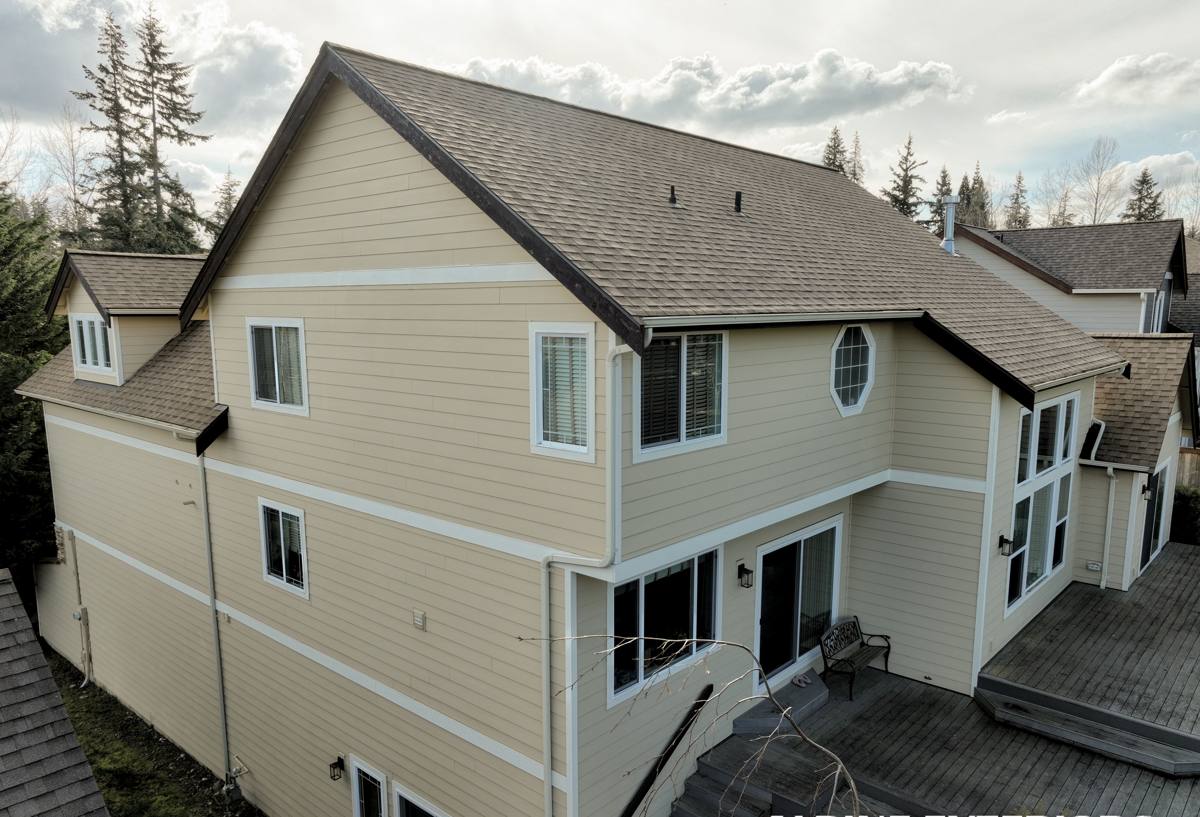
What Actually Breaks Down First
UV and Heat
Sun exposure in this part of Florida is relentless for most of the year. UV breaks down the lignin in wood fibers, which is why untreated or poorly maintained wood decking turns gray, splinters, and gets soft on the surface long before the structure underneath fails. Composite decking handles UV better than wood but isn't immune — older composite boards, especially first-generation capless products, can fade unevenly and lose surface integrity over time.
Wind-Driven Rain and Standing Water
Florida rain doesn't fall straight down. Wind pushes it sideways and up under railings, into ledger board connections, and between deck boards where it sits instead of draining. That trapped moisture is what actually causes rot — not the rain itself, but water that has nowhere to go. Decks with poor board spacing, clogged gaps, or a ledger board that wasn't properly flashed when it was built are the ones we get called out for most.
Salt Air
Belleair's proximity to coastal air means metal hardware — joist hangers, screws, bolts, railing brackets — corrodes faster than it would inland. Once a fastener starts to rust, it loses holding strength well before it looks obviously bad. This is one of the most common hidden problems we find: a deck that looks fine on the surface but has fasteners underneath that have been quietly weakening for years.
Hurricane-Force Wind
Wind doesn't just push against a deck — it gets underneath railings and stair structures and pulls upward. Connections that were adequate for everyday use can be marginal in a real wind event, particularly on older decks built before current attachment standards were common practice.
Signs Your Deck Needs Repair, Not Just a Pressure Wash
- Boards that feel spongy, springy, or give slightly underfoot
- Visible gaps, cracking, or separation where the deck meets the house (the ledger board connection)
- Rust stains bleeding from screw heads or around metal connectors
- Railings or stair rails that wiggle or flex when you put weight on them
- Gaps between deck boards that have closed up or reversed, causing water to pool instead of drain
- Visible daylight or gaps where support posts meet footings
- A grayed, dry, splintering surface on wood decking (cosmetic, but often a sign maintenance has lapsed)
- Soft spots you can press a screwdriver into with light pressure
Any one of these on its own might be minor. Several together, especially around the ledger board or support posts, usually means it's time for a real inspection rather than a patch job.
What a Correct Deck Repair Actually Involves
A repair that just replaces the board someone can see is a temporary fix. A correct repair starts with the structure underneath and works outward.
1. Structural Inspection First
Before any boards come off, we check the ledger board attachment, the condition of joists and beams, post-to-footing connections, and the state of the hardware holding it all together. Surface damage is often a symptom of a structural issue, not the whole problem.
2. Ledger Board and Flashing
The ledger board — where the deck attaches to the house — is the single most important connection on the entire structure and the most common source of hidden rot, because it's exactly where wind-driven rain likes to collect. If flashing is missing, damaged, or was never installed correctly, we address that as part of the repair, not as an afterthought.
3. Joists, Beams, and Posts
Rot or corrosion here isn't a cosmetic fix. Compromised framing members get sistered or replaced, not covered up. This is the part of a repair that doesn't show once the decking goes back down, but it's the part that actually keeps people safe.
4. Hardware Upgrade
Given the salt air here, we typically upgrade fasteners and connectors to coated or stainless-rated hardware where it makes sense, rather than reusing corroded originals or matching cheap hardware that will corrode again on the same timeline.
5. Decking and Railing
Only after the structure is sound do we address the visible surface — replacing damaged boards, correcting board spacing for proper drainage, and repairing or reinforcing railings and stairs to current safety expectations.
Wood vs. Composite: What Repair Looks Like for Each
| Factor | Wood Decking | Composite Decking |
|---|---|---|
| Most common failure | Rot at fastener points, splintering, UV graying | Fading, surface delamination on older products, fastener pull-through |
| Repair approach | Board-by-board replacement, refastening, sanding/sealing | Matching board replacement (color/lot matters), hidden fastener repair |
| Maintenance to prevent repeat repairs | Regular sealing/staining, prompt attention to soft spots | Periodic cleaning; less sealing needed but not maintenance-free |
| Structural framing underneath | Same wood-frame concerns apply regardless of decking material | Same wood-frame concerns apply regardless of decking material |
It's worth noting that the framing underneath a composite deck is almost always still wood, and that structure faces the same rot, fastener corrosion, and connection risks as a fully wood deck. Composite surface boards don't protect the frame — that part of the repair conversation is identical either way.
Repair or Replace? How We Help You Decide
Not every deck with problems needs to be torn out. We look at a few honest factors before recommending either path.
| Leans toward repair | Leans toward replacement |
|---|---|
| Framing and ledger board are structurally sound | Rot or corrosion found at multiple structural points |
| Damage is isolated to specific boards or railings | Damage is widespread across the deck surface |
| Deck is reasonably recent and well-built originally | Deck is old enough that repair costs approach replacement cost |
| Footings and posts show no movement or settling | Footings show settling, heaving, or inadequate original sizing |
We'll tell you plainly which category your deck falls into. If a repair genuinely solves the problem, that's what we'll recommend — a full replacement isn't the right call just because it's more work.
How Our Process Works
- On-site inspection — we walk the entire deck, check the ledger, get underneath where we can, and test framing and hardware condition
- Honest assessment — you get a clear explanation of what's failing, what's cosmetic, and what's a safety issue
- Written scope and estimate — no guessing at what's included
- Repair work — structure first, hardware upgraded where needed, then decking and railing
- Final walkthrough — we show you what was done and what to watch for going forward
Why a Crew That Already Works Belleair Matters
Deck problems in this part of Pinellas County follow patterns — where flashing tends to fail, which hardware corrodes fastest in coastal air, how older Belleair-area construction handled ledger attachments versus what's built today. A crew that's already repaired decks in this specific area isn't guessing at how the climate here behaves; they've seen it board by board. That familiarity shows up in faster, more accurate diagnosis and fewer surprises once the old decking comes up.
It also means straightforward logistics — local scheduling, local permitting familiarity if the repair scope requires it, and a crew that isn't driving in from across the county to look at a deck for twenty minutes.
Keeping a Repaired Deck From Needing Repair Again
- Reseal or stain wood decking on a regular schedule appropriate to sun exposure — south- and west-facing decks weather faster
- Keep gaps between boards clear of debris so water can actually drain
- Rinse salt residue off periodically, especially after storms with onshore wind
- Check railings and stair connections for movement once or twice a year
- Look underneath the deck occasionally, not just at the walking surface — that's where problems start
- Address soft spots or loose fasteners immediately rather than waiting for them to spread
A deck repaired correctly, with attention to the structure and not just the surface, should hold up to Belleair's climate for years rather than requiring the same fix again in eighteen months.
If your deck has soft spots, loose railings, or damage you're not sure is cosmetic or structural, we're happy to take a look. Fill out the form below for a free, no-pressure estimate from a crew that already works in Belleair and the surrounding Largo area.