 Largo Siding
 Belleair Beach Sits Right at the Edge of What Siding Has to Survive
Belleair Beach is a narrow barrier island community, which means homes there face a harder version of the same climate the rest of Pinellas County deals with. You're closer to open water, closer to the salt spray that rides in on the wind, and more exposed to whatever a Gulf storm decides to throw at the coastline. Add in Florida's year-round UV load and the wind-driven rain that comes with almost every serious storm, and you have a set of conditions that will find every weakness in a home's exterior faster than it would inland.
This page is about one thing specifically: installing James Hardie fiber cement siding on a Belleair Beach home, done correctly, for this exact environment. Not siding in general, not Hardie everywhere — this product, on this stretch of coastline, and what it actually takes to get it right.
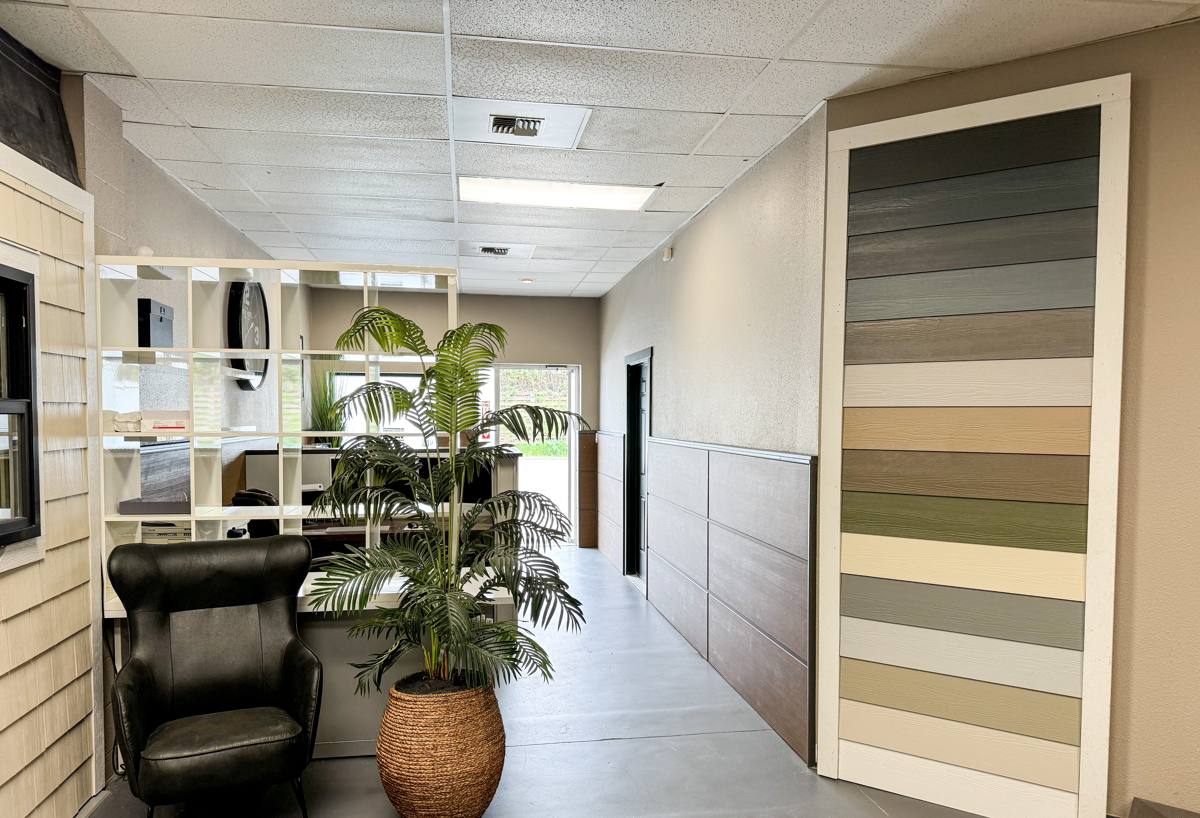
Why We Only Install James Hardie on Coastal Pinellas Homes
We don't install vinyl, LP SmartSide, Cemplank, Allura, or wood siding like primed spruce or cedar. That's not a marketing line — it's a standard we set because of what we've seen these products do in exactly this kind of exposure. Vinyl softens and warps under sustained heat and can crack in high wind. Wood-based and OSB-core products are more sensitive to moisture intrusion, and once water gets behind them, rot and swelling follow. Cheaper fiber cement alternatives exist, but they don't all carry the same factory-cured finish or the same track record in salt-heavy, high-UV markets.
James Hardie fiber cement is cement, sand, and cellulose fiber. It doesn't rot, it doesn't feed termites, and it's non-combustible — which matters on a barrier island where brush fires and lightning strikes are a real, if occasional, risk. Its ColorPlus factory finish is baked on under controlled conditions, which holds color and resists fading far better than field-applied paint exposed to Florida sun day after day. For a home a few blocks from the Gulf, that combination of moisture indifference, UV stability, and non-combustibility is why we standardized on it and stopped installing anything else.
What Salt Air Specifically Does to a Home's Exterior
Salt-laden air is corrosive to exposed metal fasteners and trim, and it accelerates the breakdown of paint films and caulking faster than inland exposure does. It also carries fine moisture that settles on surfaces and works into any gap or seam left by a rushed installation. None of this means a home near the water can't have great siding — it means the installation has to account for corrosion-resistant fasteners, tighter attention to sealed joints, and a finish that isn't relying on a field-applied paint job to hold up.
What a Correct James Hardie Installation Involves
Hardie siding is only as good as the installation underneath it. The board itself is engineered to perform, but a huge share of siding failures — anywhere, not just on the coast — trace back to shortcuts in the parts you can't see once the job is finished.
Weather-Resistive Barrier and Drainage Plane
Behind every board, there needs to be a properly lapped weather-resistive barrier that sheds water downward and outward, with a drainage plane that lets any moisture that does get past the siding escape instead of sitting against the sheathing. On a home this close to the Gulf, we treat this layer as non-negotiable, not an afterthought.
Flashing at Every Penetration
Windows, doors, hose bibs, light fixtures, vents — every single penetration in the wall is a potential entry point for wind-driven rain. Correct flashing detail at each one is what actually keeps water out during a storm, far more than the siding material itself.
Fastening to Hardie's Written Specifications
James Hardie publishes specific fastening requirements — fastener type, spacing, and embedment depth — and those specs change depending on wind exposure category. A coastal, high-wind-exposure home like one in Belleair Beach needs fastening done to that standard, not to whatever the crew is used to doing inland. This is also where corrosion-resistant fasteners matter most; the wrong fastener in a salt environment can fail years before the siding around it does.
Joint Treatment and Caulking
Butt joints, corners, and trim transitions need to be sealed with a caulk rated for the exposure and movement involved, applied to manufacturer spec. Done poorly, these are the first places a coastal home will show water staining or streaking.
Clearance and Ground Contact
Hardie siding needs proper clearance from grade, roof lines, and decks to avoid sustained moisture contact. On barrier island lots where landscaping and grading can push soil or mulch up against a wall, this is a detail worth checking even on homes with siding that's already installed.
Choosing the Right Hardie Product Line for a Barrier Island Home
James Hardie makes several product lines, and they're not interchangeable in terms of what they're built to handle. For a home in Belleair Beach's exposure category, the product line and engineered-for-climate designation matter.
| Consideration | What It Means for Belleair Beach |
|---|---|
| HZ5 vs. other HZ engineering | Hardie engineers its products by climate zone; the HZ5 designation used across Florida accounts for our humidity and moisture exposure specifically, rather than a one-size-fits-all formulation |
| Lap siding vs. panel systems | Both are viable; the choice usually comes down to architectural style and how the home is detailed at trim and corners, not durability differences |
| ColorPlus finish vs. primed for paint | ColorPlus is factory-baked and holds up better against UV and salt exposure than a field-painted finish that will need repainting sooner |
| Trim and soffit materials | Matching Hardie trim products to the siding keeps expansion, finish, and warranty coverage consistent across the whole exterior |
Our Process, Start to Finish
Every job runs through the same sequence, whether it's a small section replacement or a full re-side:
- On-site inspection to assess current siding condition, sheathing condition, and any moisture damage that needs to be addressed before new siding goes on
- Honest walkthrough of what the home actually needs — repair versus full replacement, and which Hardie profile fits the home's style
- Written estimate with the scope, materials, and timeline spelled out plainly
- Removal of old siding and inspection of sheathing and framing underneath, with any rot or water damage repaired before anything new is installed
- Weather-resistive barrier and flashing installed at every penetration and transition
- Hardie siding installed to manufacturer fastening specs for the home's wind exposure category
- Joints, corners, and trim sealed and finished
- Final walkthrough with the homeowner before the job is considered complete
What Drives the Cost of a Belleair Beach Siding Job
Every home is different, but a few factors consistently move the price on jobs like this:
| Factor | Why It Matters |
|---|---|
| Condition of existing sheathing | Water-damaged or rotted sheathing found during tear-off has to be replaced before new siding goes on, which affects both cost and timeline |
| Home size and wall complexity | More corners, dormers, and trim detail mean more labor and material cuts |
| Product line and profile chosen | Panel systems, lap widths, and trim packages vary in material cost |
| Access and site conditions | Narrow barrier island lots, seawalls, and limited staging space can affect labor time |
| Full replacement vs. repair | Section repairs cost less upfront but only make sense when the rest of the siding and the sheathing behind it are still sound |
We give straight answers on which of these apply to a specific home during the estimate — we're not going to quote a number without actually looking at the house first.
Living With Hardie Siding in a Salt Air Environment
One of the practical advantages of fiber cement here is how little ongoing maintenance it asks for compared to wood or vinyl. It won't rot, warp, or attract termites, and the ColorPlus finish is designed to go a long time without repainting. That said, no siding on a barrier island is completely maintenance-free. We recommend homeowners periodically rinse accumulated salt residue off the siding with a garden hose, especially after long dry stretches when salt film can build up, and keep an eye on caulking at joints and trim for any cracking or separation over time. Catching a failed caulk line early is a five-minute fix; ignoring it for a few storm seasons can let moisture behind the siding.
Why Hiring a Crew That Already Works Belleair Beach Matters
Installing siding correctly on a barrier island isn't the same job as installing it three miles inland. A crew that regularly works Belleair Beach and the surrounding Largo area already understands the wind exposure requirements that apply here, knows to plan around tighter lot access on barrier island streets, and isn't guessing at fastening specs for the first time on your house. That experience shows up in the details — flashing done right the first time, fastener choices that account for salt exposure, and a finished job that's actually built for where it sits, not just siding that looks fine until the next named storm.
If you're weighing a siding replacement or want a second opinion on an existing installation, we're happy to take a look and give you a straight, no-pressure estimate — no obligation, just an honest read on what your home actually needs.