 Largo Siding
 Board & Batten in St. Petersburg: A Style That Has to Work as Hard as It Looks
Board and batten has become one of the most requested exterior looks in St. Petersburg over the last several years — the vertical lines read as modern farmhouse, coastal cottage, or clean contemporary depending on the trim color and roofline it's paired with. Homeowners in and around St. Petersburg and greater Largo like it because it breaks up a flat elevation, works well as a full-house siding or as an accent on a gable, porch, or garage face, and photographs well for resale. But board and batten is also a style that punishes bad installation faster than standard lap siding does, and St. Petersburg's climate is not a gentle place to make that mistake.
This page covers what board and batten siding needs to hold up on a St. Petersburg home specifically, what a correct installation actually involves, and how our process works when we build it for you.
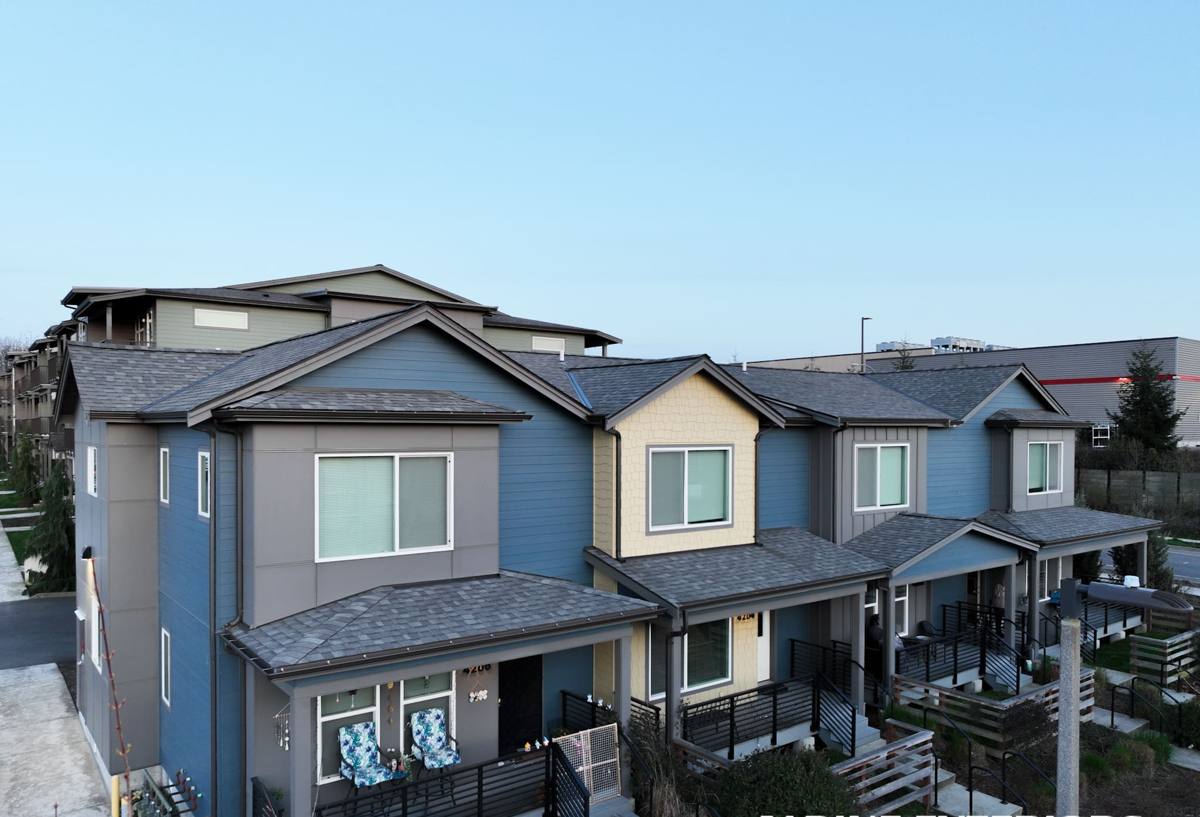
What Pinellas County's Climate Does to Vertical Siding
St. Petersburg sits on a peninsula surrounded by Tampa Bay and the Gulf, which means every exterior surface on a home here deals with a combination of stresses that inland siding rarely sees at the same intensity.
Hurricane-Force Wind Loads
Pinellas County building code requires siding assemblies to meet specific wind-pressure ratings, and vertical board and batten has more seams and more fastening points per square foot than wide lap siding. Every batten strip is another opportunity for a fastener to be placed wrong, spaced too far apart, or driven into unsupported substrate. Under sustained hurricane-force gusts, a siding system is only as strong as its weakest fastening pattern.
Wind-Driven Rain
Storms here rarely arrive straight-on. Wind-driven rain gets pushed sideways and upward into laps, seams, and batten joints that would stay dry in a calmer climate. A board and batten system with poor flashing or gaps behind the battens gives that water a path straight to the wall sheathing.
Year-Round UV Exposure
Florida sun is intense and near-constant. Paint-grade board and batten — especially wood or primed products — chalks, fades, and checks faster here than in most of the country. Vertical boards catch direct sun on both the flat face and, depending on orientation, along one edge of every batten, which accelerates uneven fading if the finish isn't built for it.
Salt Air Corrosion
St. Petersburg's proximity to the Bay and Gulf means airborne salt reaches homes well inland of the immediate waterfront. Salt air corrodes standard fasteners, degrades certain caulks and sealants faster, and accelerates the breakdown of finishes that aren't rated for coastal exposure.
What Correct Board & Batten Construction Actually Involves
Board and batten looks simple from the street — vertical boards with a strip covering each seam — but the assembly behind that look is what determines whether it lasts fifteen years or two hurricane seasons.
- A properly lapped weather-resistive barrier behind the siding, with all penetrations and seams sealed before a single board goes up
- Correct fastener type, length, and spacing driven into structural framing or code-approved sheathing, not just the batten face
- Consistent gap behind the battens or a rainscreen approach where the assembly calls for one, so any moisture that gets past the surface can drain and dry
- Flashing at every horizontal transition — window and door heads, roof-to-wall intersections, and the base of the wall — not just caulk
- Batten spacing and reveal that's measured and planned before installation, not adjusted board-by-board as the crew goes
- Sealed and primed cut ends on every board, since a factory-finished surface with an exposed raw cut edge is where moisture intrusion typically starts
Skipping any one of these doesn't usually show up in year one. It shows up after the first few named storms, when water has had repeated chances to work behind boards that were fastened correctly on the surface but never sealed correctly underneath.
Why We Use James Hardie for Board & Batten — and Nothing Else
This company installs James Hardie fiber cement exclusively. For board and batten specifically, that means HardiePanel vertical siding paired with HardieTrim battens, or in some cases the Artisan siding line where a homeowner wants a more refined, tighter-grain vertical look. We don't install board and batten in vinyl, LP SmartSide, primed wood, or cedar, and on a St. Petersburg home the reasons are practical, not brand loyalty.
Non-Combustible and Dimensionally Stable
Fiber cement doesn't expand and contract with heat and humidity swings the way wood and some engineered wood products do. On a vertical board and batten system, that stability matters more than on lap siding, because every batten seam is a place where movement can open a gap over time.
Engineered for the Climate, Not Just Painted for It
Hardie's HZ5 product line is engineered specifically for high-humidity, storm-prone climates like Florida's, addressing moisture behavior at the material level rather than relying entirely on a surface coating.
ColorPlus Factory Finish
Board and batten's flat vertical faces are unforgiving of uneven fading, and ColorPlus finish is baked on at the factory under controlled conditions, which holds color and resists the chalking and fading that Florida UV causes in field-applied paint. It also comes backed by its own finish warranty separate from the substrate warranty.
A Warranty Built for Real Ownership Timelines
Hardie's transferable limited warranty protects the product through ownership changes, which matters in a market like St. Petersburg where homes turn over.
Comparing Board & Batten Material Options
| Material | Performance in Coastal Wind & Salt Air | UV / Fade Resistance | Long-Term Maintenance |
|---|---|---|---|
| James Hardie Fiber Cement | Non-combustible, dimensionally stable, engineered HZ5 line for humid/storm climates | Factory ColorPlus finish resists fading and chalking | Low — occasional wash, no repainting cycle with ColorPlus |
| Vinyl | Can warp or crack under heat and impact; seams can loosen under wind pressure | Color is through-body but can fade and become brittle over time in intense sun | Low upfront, but panels can't be spot-repaired invisibly |
| LP SmartSide / Engineered Wood | Wood-based substrate is more moisture-sensitive at cut edges and seams | Requires field-applied or factory finish that needs maintenance over time | Moderate — edge sealing and finish upkeep matter more in humid climates |
| Primed Spruce / Cedar | Natural wood movement and moisture absorption are real risks on a vertical seam system | Requires repainting on a regular cycle; UV breaks down primer and finish faster in Florida | Highest — repainting, caulking, and edge maintenance on a recurring schedule |
Our Process for a St. Petersburg Board & Batten Project
Every board and batten job starts with an on-site look at the specific elevations involved — full-house replacement and accent applications (a gable, a porch face, a garage) require different planning for batten layout and transitions.
- Site assessment and measurement — we look at existing wall condition, any water damage behind current siding, and plan batten spacing around windows, corners, and trim so the layout doesn't end in an awkward partial board
- Removal and substrate inspection — old siding comes off and we check sheathing for rot or damage before anything new goes up, since covering a compromised substrate just hides a bigger problem
- Weather barrier installation — a correctly lapped and sealed weather-resistive barrier goes on before any siding, with attention to every penetration
- Flashing at all transitions — window heads, door heads, roof lines, and the base of the wall get flashed before boards go up around them
- Board and batten installation — HardiePanel and HardieTrim battens are fastened to code-specified spacing and into structural framing, with consistent reveal and sealed cut ends throughout
- Final inspection and walkthrough — we walk the finished elevations with you before calling the job complete
What to Check Before You Sign a Board & Batten Contract
- Does the estimate specify the exact Hardie product line (HardiePanel, Artisan) and ColorPlus color, not just "fiber cement"?
- Does the contractor mention flashing and weather barrier work explicitly, or only "siding installation"?
- Is fastener type and spacing specified, or left to whoever's on the ladder that day?
- Does the crew have documented experience with vertical board and batten specifically, not just lap siding?
- Is wind-rating compliance for Pinellas County addressed in writing?
- Does the warranty cover both the material and the finish, and is it transferable?
Why a Crew That Already Works St. Petersburg Matters
Board and batten installation quality depends on judgment calls that don't show up in a spec sheet — how tight to run a reveal on a wall that gets direct afternoon Gulf sun, where to add extra fastening on an elevation that catches the brunt of wind-driven rain, how to sequence flashing around a St. Petersburg home's specific window and roofline details. A crew that installs this system regularly in this county has already made those calls dozens of times and knows which shortcuts fail first when a named storm rolls through. That local repetition is worth more than a lower bid from a crew that treats board and batten as a one-off.
We're based in Largo and work St. Petersburg regularly, which means the crew on your roofline has already built this system on homes facing the same wind exposure, salt air, and UV load as yours.
Ready to Talk Through Your St. Petersburg Home
If you're considering board and batten for a full elevation or as an accent feature, we're happy to walk your property, talk through layout and product options, and give you a straightforward, no-pressure estimate. There's a form below — reach out and we'll get you scheduled.