 Largo Siding
 Safety Harbor's Climate Is Harder on Siding Than It Looks
Safety Harbor sits along Old Tampa Bay in Pinellas County, and that waterfront position is a double-edged sword. The views are part of why people love the area, but that same exposure means homes here take a steady beating that inland Florida properties don't deal with in the same combination. Hurricane-force winds during storm season put real structural load on exterior walls. Between storms, the sun is working against the siding almost every day of the year — Florida's UV index runs high for most of the calendar, and that constant exposure is what causes cheaper siding materials to fade, chalk, or warp years before they should. Add wind-driven rain that gets forced sideways into seams and laps during a squall, plus the slow corrosive effect of salt air drifting off the bay, and you've got a climate that tests every weak point in a siding system.
None of this is unique to Safety Harbor specifically — it's the reality for most of coastal Pinellas County. But it's worth saying plainly because it changes what "good siding" actually means here. A product or installation method that performs fine in a drier, calmer climate can fail early on a home a few blocks from the water. That's the lens we use on every fiber cement job we run in this neighborhood.
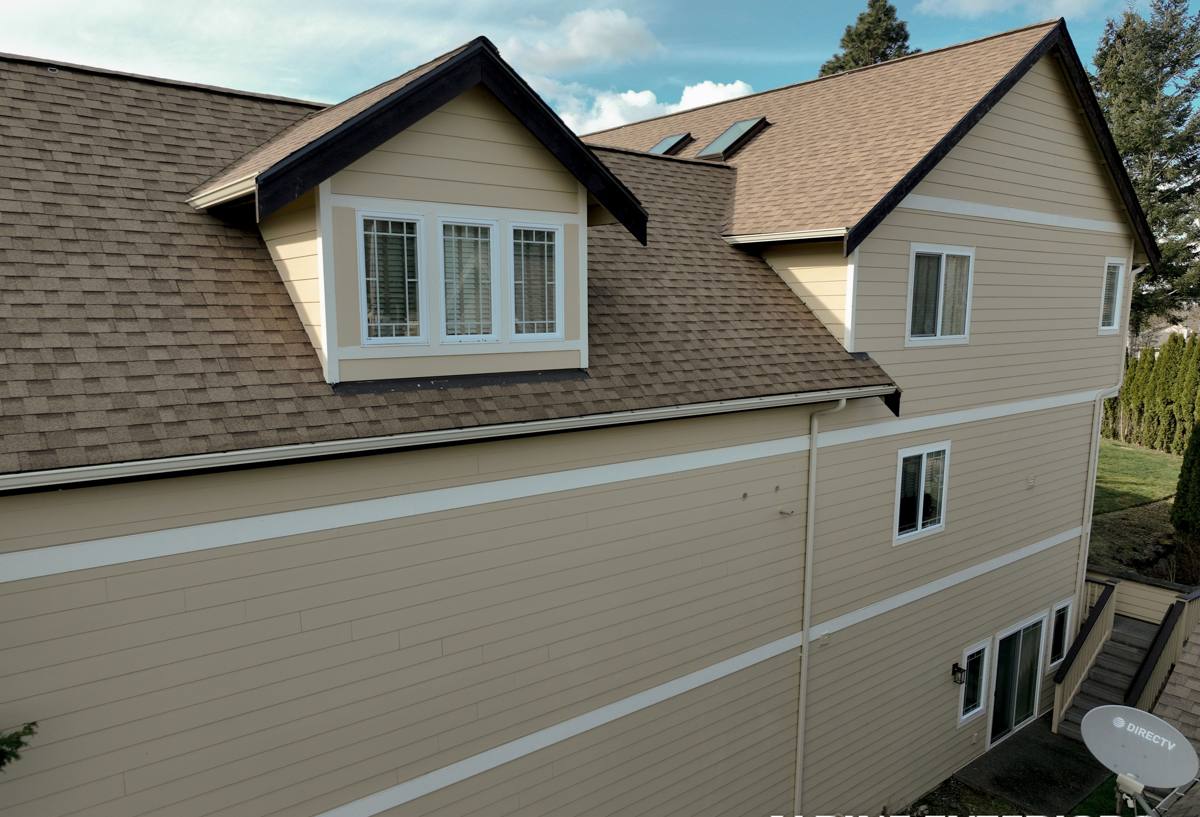
Why We Install Fiber Cement Here — and Only One Brand of It
We install James Hardie fiber cement siding exclusively. We don't install vinyl, LP SmartSide, Cemplank, Allura, or primed wood siding like spruce or cedar, and that's a deliberate standard, not an oversight. Fiber cement as a category holds up to wind-driven rain and salt air far better than vinyl (which can warp and crack under UV and impact) or wood-based products (which are more vulnerable to moisture intrusion and rot in a humid coastal climate). Within fiber cement, we've settled on James Hardie because of how the company engineers its product for specific climate zones, the strength of its factory-applied finish, and the consistency we've seen from proper installations over time.
Built for Humid, Coastal Conditions
James Hardie manufactures its siding in different formulations depending on regional climate. In hot, humid areas like the Tampa Bay region, the product line is engineered to resist the kind of moisture and biological growth that comes with year-round humidity and salt-laden air — a different set of demands than a formulation built for freeze-thaw cycles up north. That distinction matters more than most homeowners realize when they're comparing siding brands, because a product engineered for the wrong climate zone won't perform the way its marketing suggests.
The Factory Finish Matters in This Sun
James Hardie's ColorPlus finish is baked on at the factory under controlled conditions, which gives it better fade resistance than field-applied paint. In a climate where the sun is doing damage twelve months a year, that's not a cosmetic detail — it's the difference between siding that still looks sharp in a decade and siding that needs to be repainted long before its structural life is over.
What a Correct Fiber Cement Installation Actually Involves
Fiber cement siding is only as good as the installation behind it. The material itself is durable, but a rushed or careless install can undermine all of that — and in a climate that pushes wind-driven rain into every gap, installation mistakes tend to show up as real problems, not cosmetic ones. A correct job includes:
- A proper weather-resistive barrier installed behind the siding, lapped correctly so water is directed out and down rather than trapped against the sheathing.
- Correct fastener type, spacing, and placement — Hardie specifies fastening patterns for a reason, and wind-load performance depends on following them, not approximating them.
- Proper clearances at the ground, roofline, decks, and patios, so siding isn't sitting in standing water or trapping moisture against untreated edges.
- Correctly flashed windows, doors, and penetrations, since these transition points are where the majority of water intrusion problems start.
- Factory-cut and factory-primed edges used wherever possible, with any field cuts properly sealed to protect the cut edge from moisture.
- Appropriate caulking and sealant at joints and butt seams — enough to seal, not so much that it traps moisture or looks sloppy.
Skip any one of these and the siding can still look fine on installation day. The problems — swelling at cut edges, water staining, soft spots at the base, premature caulk failure — tend to show up a year or two later, which is exactly why installation quality is harder to judge than it seems when you're hiring.
How We Approach a Safety Harbor Job
Our process doesn't change dramatically from house to house, but the details we pay closest attention to are shaped by what this specific area throws at a home.
1. On-Site Assessment
We walk the exterior and look at more than just the visible siding condition. We check for existing moisture damage, soft sheathing, problem areas around window and door flashing, and anywhere wind-driven rain has clearly been getting in — these are common trouble spots on homes near the water.
2. Tear-Off and Substrate Check
Once the old siding is off, we inspect the sheathing underneath. This is the point where hidden moisture damage from years of a failing install gets found and addressed, rather than sealed back up behind new siding.
3. Weather Barrier and Flashing
We install and lap the weather-resistive barrier correctly and flash all penetrations, windows, and doors before a single piece of siding goes up. This step is invisible once the job is done, which is exactly why it's the step most likely to get shortcut by crews trying to move fast.
4. Installation to Manufacturer Spec
Siding goes up following James Hardie's fastening, clearance, and joint-treatment specifications — not a generic approach adapted from a different siding product. This is also where wind performance is determined, which matters directly for hurricane-season durability.
5. Trim, Caulking, and Final Detail
Trim work, caulking, and touch-up finishing happen last, with attention to the same joints and transitions that take the brunt of wind-driven rain during storms.
6. Walkthrough
We walk the finished job with the homeowner before calling it done, so nothing gets discovered later that should have been caught on-site.
Fiber Cement Compared to Other Siding Options
Homeowners comparing siding materials for a coastal Pinellas County home are usually weighing the same handful of factors. Here's how the categories generally compare in this climate:
| Factor | James Hardie Fiber Cement | Vinyl | Untreated Wood (spruce/cedar) |
|---|---|---|---|
| Wind resistance | Strong when installed to spec | Prone to cracking/blow-off in high wind | Moderate; depends on fastening and material condition |
| UV / color retention | Factory finish resists fading | Can fade and become brittle over time | Needs repainting to maintain color |
| Moisture / salt air resistance | Engineered for humid climates | Doesn't absorb water but seams can allow intrusion | Vulnerable to rot without diligent upkeep |
| Fire resistance | Non-combustible | Combustible | Combustible |
| Typical maintenance | Occasional wash, periodic caulk check | Low, but damage often means full panel replacement | Regular painting/sealing required |
This isn't a claim that every alternative product fails — it's a summary of the trade-offs that led us to standardize on one system rather than offering several. We'd rather do one thing well and stand behind it than install several products with different long-term track records.
Why Hiring a Crew That Already Works This Area Matters
Pinellas County's building codes reflect its coastal exposure — wind design requirements here are stricter than in many inland parts of the state, and permitting and inspection expectations follow accordingly. A crew that regularly works Safety Harbor and the surrounding Largo area already understands those local code requirements, knows what inspectors are looking for, and isn't learning coastal installation details for the first time on your house. That familiarity shows up in small decisions throughout a job — how flashing is detailed around a bay window, how much clearance is left at a paver patio, how joints are treated on a wall that takes direct afternoon sun and gusting wind off the water. None of those are things you can verify by looking at a finished wall, which is exactly why the contractor's track record in this specific area matters as much as the product they're installing.
What to Ask Before You Hire Anyone for This Job
Whether you go with us or another contractor, these are worth asking before signing anything:
- Are you a certified or trained installer for the specific fiber cement product you're proposing?
- Will you follow the manufacturer's published fastening and clearance specifications, and can you explain what those are?
- Who handles the local permit, and has your crew pulled permits in this county before?
- What weather-resistive barrier and flashing details will you use around windows, doors, and penetrations?
- What does your warranty cover, and is it transferable if you sell the home?
- Can you walk me through how you'll handle butt joints, corners, and caulking?
A contractor who can answer these clearly and specifically, without vague reassurances, is a good sign. Hesitation or generic answers on installation details is worth paying attention to.
Maintaining Fiber Cement Siding After Installation
Correctly installed James Hardie siding is low-maintenance, not no-maintenance. In this climate, a little attention goes a long way toward getting the full lifespan out of the product:
- Rinse the exterior periodically to clear salt residue and airborne debris, especially on sides facing the water.
- Inspect caulking at joints and around windows/doors annually and after major storms; recaulk if it's cracking or pulling away.
- Trim vegetation back from siding so leaves and branches aren't holding moisture against the surface.
- After any significant windstorm, do a visual check for cracked panels, loose fasteners, or dislodged trim.
- Keep gutters and downspouts clear so roof runoff isn't sheeting down the siding face.
None of this is demanding, but skipping it is how small issues turn into bigger repairs down the line.
Get a No-Pressure Estimate
If you're weighing siding options for a home in Safety Harbor or elsewhere in the Largo area, we're happy to take a look and give you a straight answer on what your home needs — no pressure, no hard sell. Use the form below to request a free estimate.