 Largo Siding
 Deck Repair Built for Pinellas Park's Climate
Pinellas Park sits close enough to the water and deep enough into Pinellas County's subtropical weather pattern that decks here age differently than decks almost anywhere else in the country. A deck that would last thirty years in a dry, mild climate can start showing real structural problems in a fraction of that time when it's exposed to intense year-round UV, salt-laden air, wind-driven rain, and the occasional hurricane-force gust. We repair decks in this area regularly, and the damage patterns are consistent enough that we can usually tell what's wrong before we even get under the structure.
This page is about one service, in one area: deck repair for homeowners in Pinellas Park. Not a general "we do decks" pitch — a straight explanation of what local decks actually need, what a repair should include if it's done right, and how we approach the job.
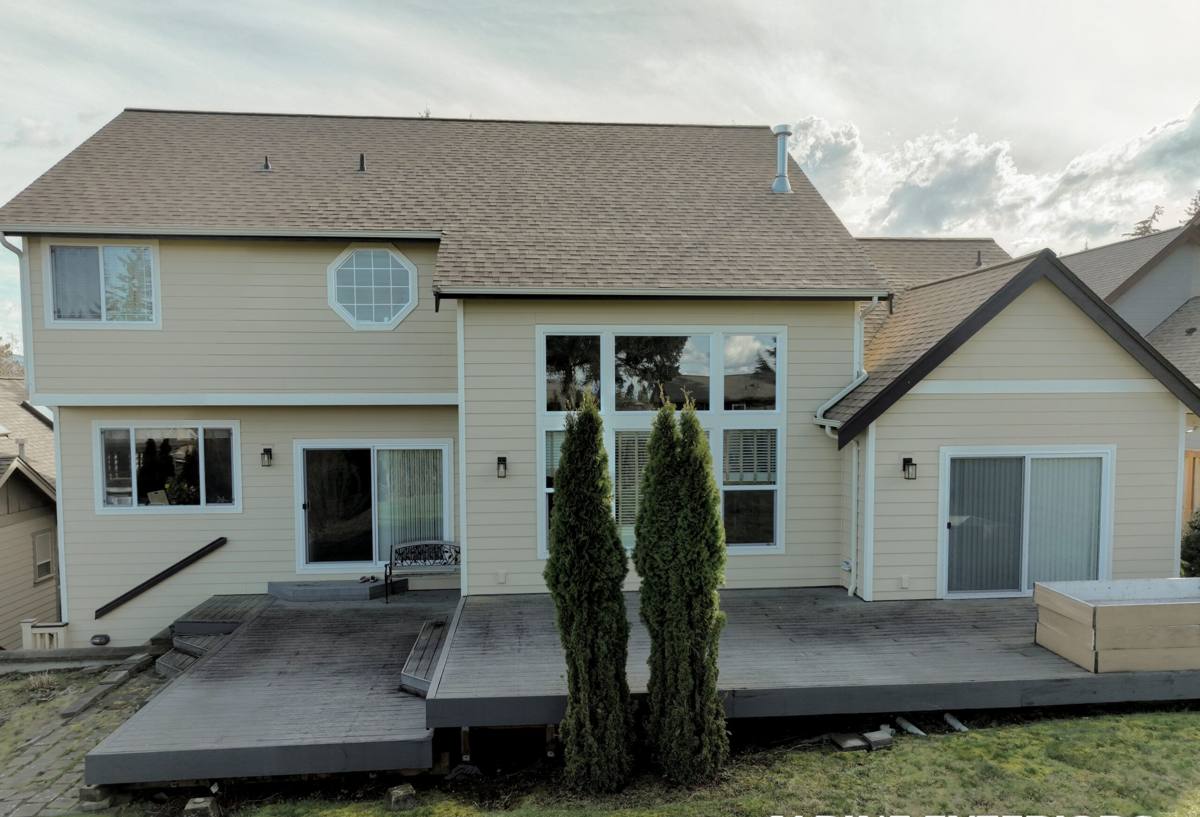
Why Local Decks Fail Faster Here
A few environmental factors combine to shorten deck lifespan across this part of Florida, and Pinellas Park gets the full effect:
- UV exposure. Florida sun breaks down the lignin in wood fibers and degrades the UV inhibitors in composite decking over time, leading to graying, surface checking, and brittleness on wood, and fading or chalking on composite.
- Wind-driven rain. Storms here don't just drop rain straight down — wind pushes water sideways into board gaps, ledger connections, and fastener holes, which is exactly where deck rot usually starts.
- Salt air. Even homes that aren't waterfront get salt exposure carried on Gulf breezes. Salt accelerates corrosion in screws, nails, joist hangers, and other fasteners, which weakens connections long before the visible boards look bad.
- Hurricane-force wind events. High wind doesn't just threaten roofs. It racks deck framing, loosens ledger board connections, and can shear fasteners that were already weakened by corrosion.
- Humidity and ground moisture. Constant humidity slows wood drying between rain events, which keeps moisture content elevated in framing members and speeds up rot in areas with poor airflow.
None of these factors act alone. A deck usually fails from a combination — UV-weakened boards over corroded fasteners over a ledger connection that's been slowly working loose from wind-driven rain intrusion. That's why a real repair has to look at the whole system, not just the board that's obviously cracked.
Signs Your Deck Needs Repair
Some damage is obvious. Some isn't, and that's the kind that leads to a board giving way underfoot or a railing failing when someone leans on it. Walk your deck and check for these:
- Boards that feel spongy, bouncy, or soft when you press on them, especially near the house or around posts
- Visible gaps opening up between boards, or boards that have cupped or crowned
- Rust streaks running down from screw heads or around joist hangers
- A railing or stair rail that wiggles more than it should when you push on it
- Cracking at the ledger board where the deck attaches to the house
- Any post that isn't sitting flush and solid on its footing
- Discoloration or a musty smell coming from underneath the deck
- Fasteners that have backed out, or screw heads that are stripped or missing
If you're seeing more than one or two of these, it's worth having someone look at the structure, not just the surface. Surface-level fixes on a deck with an underlying framing problem just delay the real repair and add cost.
Wood vs. Composite: Repair Considerations Differ
What a repair involves depends heavily on what the deck is built from. We work on both, but the failure points and the right fix aren't the same.
| Factor | Wood Decking | Composite Decking |
|---|---|---|
| Common failure mode | Rot, splitting, splintering, fastener pull-through | Fading, surface flaking on older boards, deflection between joists if spacing was wrong originally |
| UV effect | Graying and surface checking; slows once properly sealed | Gradual fading; most modern composites resist this better than early generations |
| Repair approach | Board-by-board replacement is usually straightforward and can be color-matched with finish | Board replacement is possible but matching older, sun-faded composite exactly can be difficult |
| Fastener sensitivity | Standard coated deck screws work well if corrosion-resistant grade is used | Requires composite-rated fasteners and correct spacing to avoid mushrooming or board damage |
| Maintenance need | Periodic cleaning and re-sealing to hold up under our sun and rain cycle | Lower maintenance, but framing underneath still needs the same inspection wood decks do |
One thing that's true for both: the decking surface is almost never the real point of failure on its own. The framing underneath — joists, beams, posts, and the ledger connection to the house — is what determines whether a deck is actually safe, and that's true whether the boards on top are pine or composite.
Why We're Careful About Full Composite Replacements
When a homeowner wants to switch an old wood deck surface over to composite, we're upfront about the trade-offs rather than just quoting the swap. Composite decking performs differently under thermal expansion in our heat, needs different fastening details, and the framing spacing that worked for wood boards sometimes needs adjustment for composite to avoid excess flex. We'll tell you honestly if your existing framing needs modification first — it's a maintenance and structural decision, not a sales pitch either direction.
What a Correct Deck Repair Actually Involves
Structural Inspection First
Before any board gets pulled or replaced, we check the ledger board attachment, joist condition, post-to-footing connections, and any flashing (or lack of it) at the house connection. This is the part that determines actual safety, and it's also the part that's easiest to skip if a contractor is just trying to make the deck look better quickly.
Decking and Fascia
Damaged boards get replaced with matching material and proper spacing to allow drainage and airflow — tight, no-gap installations trap moisture and shorten lifespan in our climate. Fascia boards get the same scrutiny since they hide a lot of rot that isn't visible from the top.
Fasteners and Hardware
Given how fast salt air corrodes standard hardware here, we use corrosion-resistant, exterior-rated fasteners and joist hangers rated for the coastal environment, not whatever is cheapest at the standard hardware grade. Replacing a rotted board with new lumber over corroded hangers just moves the failure point a few years down the road.
Railings and Stairs
Railing failures are a safety issue, not a cosmetic one. We check post connections down to the framing, not just whether the railing itself is solid, since a wobbly railing is often a symptom of a loosening post-to-joist connection.
Flashing and Water Management
Where the deck meets the house is the single most common point of hidden rot. Proper flashing directs wind-driven rain away from the ledger and the house's wall structure. If it's missing or was installed wrong originally, we address it as part of the repair, not as an upsell.
How Our Repair Process Works
- On-site inspection. We get under and around the deck, not just look at the surface, and check moisture levels in questionable framing members.
- Honest assessment. You get a clear breakdown of what's cosmetic, what's structural, and what can wait versus what shouldn't.
- Written scope and estimate. No vague verbal quotes — you know what's being repaired and roughly what it will cost before work starts.
- Repair work. Framing and structural issues get addressed before or alongside surface repairs, never covered up underneath new boards.
- Final walkthrough. We check railings, stairs, and board fastening with you before calling the job done.
Repair or Replace? How We Decide
Not every deck problem calls for full replacement, and not every deck is worth repairing indefinitely either. A few honest guidelines:
- If the framing (joists, beams, posts) is sound and it's mainly surface boards and fasteners that have failed, repair is usually the right call and the more cost-effective one.
- If the ledger connection or multiple structural joists show rot, especially near the house, that's a safety-first situation that needs to be fixed regardless of the rest of the deck's condition.
- If more than roughly a third of the structure needs replacement, it's often more cost-effective in the long run to rebuild rather than patch repeatedly.
- Decks original to older homes in this area, especially ones without any flashing at the ledger, tend to have chronic rot at that connection point even after repair — worth discussing directly rather than repairing the same spot twice.
Deck Problems We See Often in This Area
Pinellas Park has a mix of older homes with original decks and newer additions, and each brings its own common issue. Ground-level and low-elevation decks tend to develop moisture and rot problems where framing sits close to damp soil with limited airflow underneath. Elevated decks and those attached to second-story living space put more stress on the ledger connection and post footings, especially after wind events. Decks near pools deal with near-constant moisture exposure and chemical splash in addition to everything else the climate throws at them, which tends to accelerate fastener corrosion specifically. None of these are unusual or alarming on their own — they're just the predictable result of building outdoor structures in a coastal Florida climate, and they're very manageable with the right repair approach.
Why Hiring a Crew That Works This Area Matters
Deck repair done by someone unfamiliar with Pinellas County's specific combination of UV load, salt exposure, and storm wind patterns tends to under-spec the fasteners, skip flashing details that matter here more than in drier climates, and treat the job as cosmetic when it's structural. We work in this area regularly, which means we're not guessing at what's driving the damage — we've usually seen the same failure pattern on a similar deck a few streets over. That translates into a repair that actually addresses the cause instead of just replacing what's visibly broken and leaving the same conditions to cause the next failure.
If you're dealing with a soft spot, a wobbly railing, visible rot, or you just want an honest read on whether your deck's framing is holding up the way it should, we're happy to take a look. Estimates are free and there's no pressure to move forward — you'll get a straight answer either way.