 Largo Siding
 Why Palm Harbor Siding Takes a Different Approach
Palm Harbor sits close enough to the water, and close enough to Largo, that its homes take a specific kind of beating year after year. It's not one big problem — it's four smaller ones working together. Hurricane-force wind events test every fastener and seam. Florida's sun runs at a UV intensity most siding products were never rated for. Wind-driven rain gets pushed sideways into laps, corners, and trim during summer storms. And salt-laden air, even well inland from the Gulf, slowly works on anything that isn't built to resist it. Individually, a siding product might handle one of these. Few handle all four for 20-plus years without maintenance creeping up fast.
That combination is why we treat siding replacement in Palm Harbor as a local specialty, not a generic install. The right product, the right prep work, and the right fastening pattern matter more here than they would in a drier, calmer climate. Get any one of those wrong and the siding that looked fine on install day starts showing problems in three to five years instead of holding up for two or three decades.
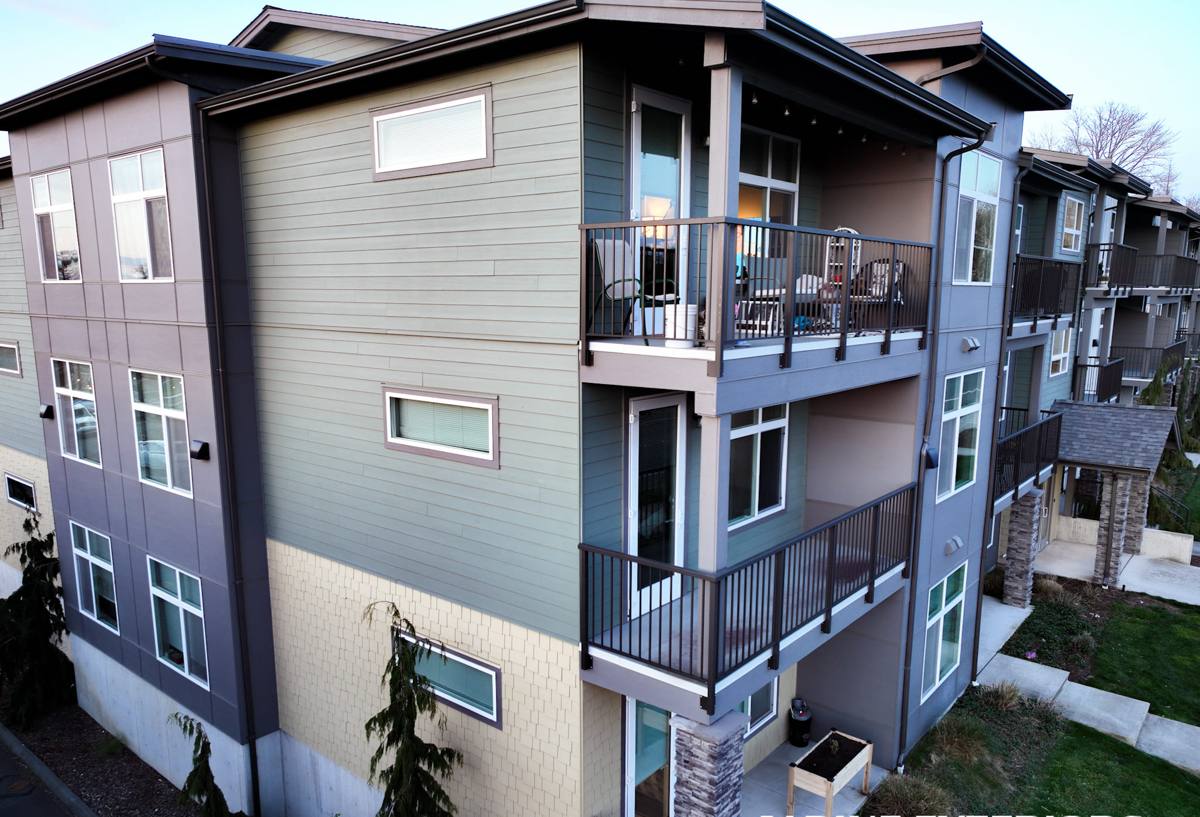
Signs Your Palm Harbor Home's Siding Has Reached the End of the Road
Siding failure in this climate is usually gradual, and homeowners often notice the small stuff without realizing it's actually a warning sign. Here's what we look for during a walkaround, and what you can check yourself before calling anyone out:
- Soft or spongy spots when you press on the siding, especially near the bottom courses and around window trim
- Visible warping, buckling, or panels that no longer sit flat against the wall
- Paint that's chalking, peeling, or fading unevenly across sun-exposed elevations
- Gaps opening up at seams, corners, or where siding meets trim and flashing
- Rising water or energy bills with no other obvious cause — often a sign the siding is no longer doing its job as a weather barrier
- Visible mold, mildew, or dark streaking that keeps coming back after cleaning
- Interior wall staining or a musty smell near exterior walls, which usually means moisture has already gotten past the siding
Any one of these on its own might just need a repair. Several at once, or damage concentrated on the side of the house that takes the worst wind and sun, usually means the siding system itself is failing and a full replacement is the more honest recommendation.
Why We Only Install James Hardie Fiber Cement
We made a decision a while back to stop installing several products that are common in this market — vinyl, LP SmartSide, primed wood, and a few other fiber cement brands — and install James Hardie exclusively. That's not a marketing position, it's a standard we hold ourselves to because of what this climate does to a house.
James Hardie fiber cement is non-combustible, doesn't rot the way wood-based products can, and holds up to sustained UV exposure and humidity swings far better than vinyl, which can warp, fade, or crack under the kind of heat Pinellas County sees most of the year. Hardie's HZ product lines are specifically engineered for climate zones like ours — humid, storm-prone, and salt-influenced — which matters more than most homeowners realize until they've watched a lesser product age out early. The factory-applied ColorPlus finish is baked on under controlled conditions, so it resists fading and chipping in a way that field-applied paint jobs on other materials struggle to match. And Hardie backs it with a strong, transferable limited warranty, which adds real value if you sell the house down the road.
None of this means other products are junk — vinyl is inexpensive and easy to source, and wood has a look some homeowners genuinely prefer. But we've seen enough of how those products perform ten and fifteen years into a Florida climate that we're not willing to put our name on the installation. Fiber cement, installed correctly, is the standard we're comfortable standing behind.
Material Comparison for Pinellas County Conditions
| Factor | James Hardie Fiber Cement | Vinyl | Wood / Engineered Wood |
|---|---|---|---|
| UV / fade resistance | Factory-baked ColorPlus finish resists fading | Can fade, chalk, or discolor under sustained heat | Needs regular repainting to hold color |
| Wind performance | Rated for high-wind installation when fastened to spec | Can crack or blow off in sustained high winds | Performance depends heavily on fastening and product quality |
| Moisture / rot resistance | Non-combustible, engineered to resist moisture damage | Doesn't rot, but seams can allow water intrusion behind panels | Vulnerable to rot and moisture without vigilant maintenance |
| Maintenance burden | Low — occasional wash, no repainting for years | Low — but early wear shows as brittleness over time | Higher — regular painting, caulking, and inspection needed |
| Typical lifespan (Florida) | 25-30+ years installed to spec | 15-25 years, shorter in intense sun/heat | 10-20 years, heavily maintenance-dependent |
What a Correct Siding Replacement Actually Involves
The siding itself is only part of the job. Most siding failures we see in Palm Harbor and the surrounding area trace back to what happened — or didn't happen — underneath it, not the product itself.
Tear-Off and Substrate Inspection
Every job starts with full removal of the old siding, not a cover-over install. That's the only way to actually see the sheathing underneath. Soft or water-damaged sheathing gets identified and replaced before anything new goes up — installing new siding over a compromised substrate just hides the problem for a few more years instead of fixing it.
Weather-Resistive Barrier and Flashing
A correctly lapped weather-resistive barrier, along with proper flashing at windows, doors, and every horizontal trim transition, is what actually keeps wind-driven rain out of the wall assembly. This is the step that gets rushed on cut-rate jobs, and it's the one most likely to cause hidden damage years later — by the time a homeowner notices, the sheathing behind it may already be compromised.
Fastening and Clearances
James Hardie specifies exact fastener types, spacing, and embedment depth, along with minimum clearances from grade, roof lines, and other siding elements. Getting these details right is what allows the siding to perform in high-wind events and keeps moisture from wicking up from the ground or pooling where it shouldn't.
Caulking and Finish Work
Joints and penetrations get sealed with a caulk rated for exterior movement and UV exposure, not whatever's cheapest at the supply house. Trim, corners, and transitions get finished so water sheds away from the wall instead of collecting at a seam.
What Siding Replacement Costs in Palm Harbor — And What Drives the Price
We won't quote a number without seeing the house, but the factors that move the price are consistent from project to project. Knowing them ahead of time makes it easier to understand a quote when you get one.
| Cost Factor | Why It Matters |
|---|---|
| Home size and elevation complexity | More square footage, gables, and dormers mean more cutting, more waste, and more labor hours |
| Substrate condition | Rotted or water-damaged sheathing found at tear-off adds material and labor to replace it before siding goes on |
| Siding profile and plank width | Hardie offers several plank widths and textures; wider reveals and specialty profiles run higher than standard lap siding |
| Trim and accessory work | Corner boards, window trim, and fascia work add to the scope beyond the flat wall area |
| Story height and access | Second-story and steep-roof sections require more scaffolding, staging, and time |
| Color and finish | Factory ColorPlus finishes cost more upfront than primed siding but eliminate a repaint cycle |
As a general rule, replacing failing or aging siding costs less over a 20-year window than repeatedly patching, repainting, and repairing a product that's already past its useful life. It's a bigger check up front, but it's usually the cheaper path when you look at the whole ownership period.
Our Process for Palm Harbor Projects
- Walkthrough and assessment — we look at every elevation, note sun and wind exposure, and check for existing moisture or substrate issues
- Written estimate — a clear scope and price, with the reasoning behind it, no pressure to sign on the spot
- Material selection — choosing the right Hardie plank profile, texture, and ColorPlus finish for the home
- Permitting — pulling the required permits through Pinellas County or the applicable local jurisdiction before work starts
- Tear-off and inspection — full removal of old siding, sheathing repair where needed
- Weather barrier, flashing, and installation — installed to Hardie's specifications and local wind-zone requirements
- Final walkthrough — checking finish, caulking, and trim details before we call the job done
Why a Crew That Already Works in Palm Harbor Matters
Siding installation standards aren't identical everywhere. Homes in this part of Pinellas County are typically built to specific wind-zone requirements, and permitting expectations can differ from what a crew coming in from another region is used to. A contractor who already works in and around Largo and Palm Harbor knows what the local permitting office expects, understands the wind and moisture demands this specific stretch of Gulf coast puts on a house, and has already made the mistakes elsewhere so they don't happen on your roofline.
There's also a practical side to it: a local crew can get back out to your property quickly if a question comes up after the job, without a multi-hour drive or a subcontractor relationship that changes every season. That matters more with siding than with a lot of other home projects, because siding problems that go unaddressed for a few months can turn into sheathing repairs.
Choosing a Contractor for Siding Replacement
- Confirm they're licensed and insured in Florida, and ask to see current documentation
- Ask specifically what siding brand and product line they install, and why
- Get the fastening and flashing details in writing, not just "we'll do it right"
- Ask how they handle substrate damage discovered during tear-off, and how that affects price
- Check that the estimate breaks down material, labor, and any trim or accessory work separately
- Ask about their warranty — both the manufacturer's and their own labor warranty
If you're weighing a siding replacement for a Palm Harbor home, we're happy to walk the property, look at what's actually going on with your current siding, and put together a straightforward estimate — no pressure, no obligation. Use the form below to get started.