 Largo Siding
 Why Siding Repair Looks Different in Dunedin
Dunedin sits on the Gulf side of Pinellas County, just up the coast from Largo, and that location shapes what its siding goes through year after year. Homes here take on more than the average share of wind, sun, and salt-laden air, and the repair work that follows has to account for all three — not just patch what's visible and move on. A siding repair that works fine on an inland home can fail fast on a Dunedin home if it doesn't respect the specific way this coastal climate attacks a wall system.
That's the difference between a repair that holds and one that's back on our schedule in eighteen months: understanding not just what broke, but why it broke where it did, and fixing the underlying cause along with the visible damage.
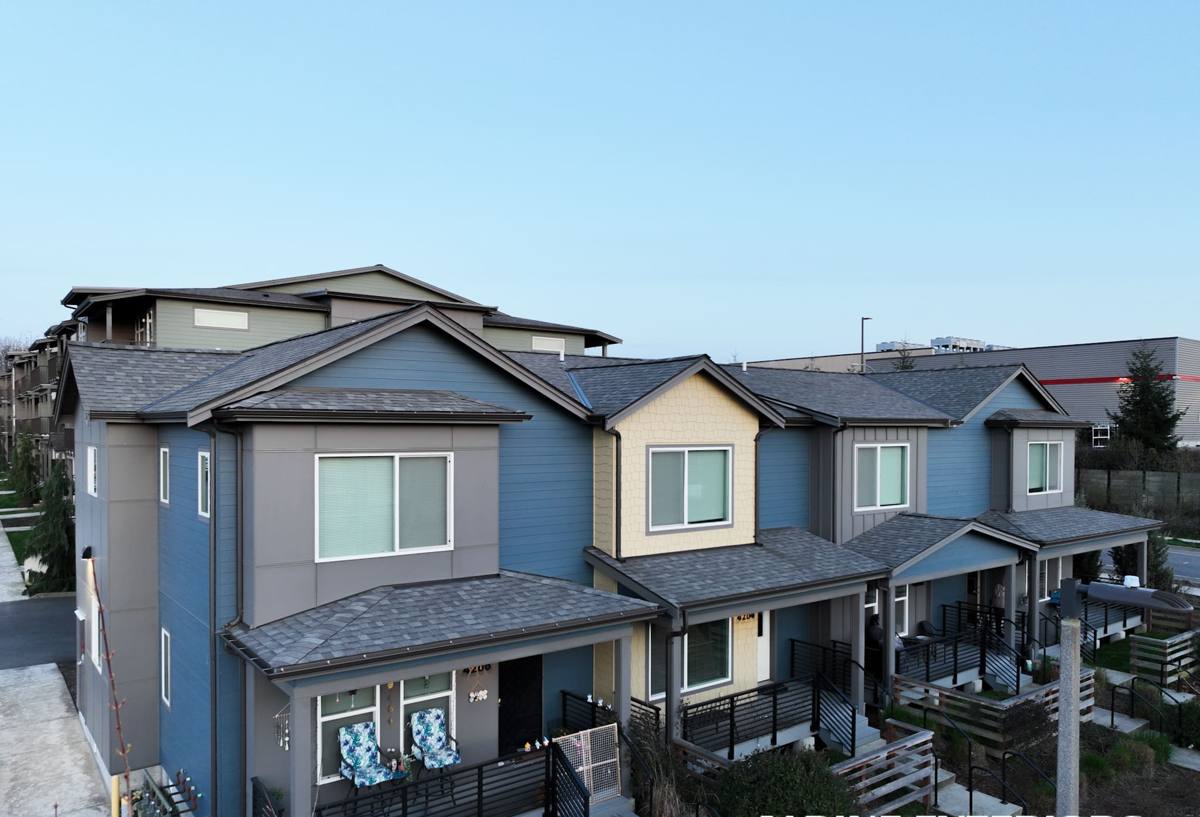
What Damages Dunedin Siding Fastest
Hurricane-Force Wind and Wind-Borne Debris
Pinellas County sits in a high-velocity hurricane zone, and even storms that don't make direct landfall here can push sustained winds and gusts strong enough to lift panel edges, snap fasteners, or drive debris into a wall. Wind doesn't just damage the panel it hits — it can work a whole section loose at the nailing line, which shows up later as rattling, gaps, or panels that flex when pushed.
Year-Round UV Exposure
Florida's sun is intense nearly every month of the year, not just in summer. Constant UV breaks down paint film, dries out caulk and sealants, and — on products not engineered for this exposure — causes fading, chalking, and surface degradation that starts as a cosmetic issue and becomes a moisture entry point once the protective finish is compromised.
Wind-Driven Rain and Moisture Intrusion
It's rarely straight-down rain that causes trouble here. Storms push rain sideways and upward into laps, seams, and trim intersections that were never designed to shed water from that angle. Once moisture gets behind siding, the damage often isn't visible until it's already reached the sheathing or framing underneath.
Salt Air and Coastal Corrosion
Being close to the Gulf means salt in the air, even at properties that aren't waterfront. Salt accelerates corrosion on fasteners, flashing, and any exposed metal components, and it can degrade lower-quality caulks and sealants faster than inland exposure would. A repair that ignores this ages poorly no matter how good it looks on installation day.
Signs Your Siding Needs Repair Now
Some damage is obvious. Some isn't — until it's expensive. Here's what we tell Dunedin homeowners to watch for between inspections:
- Panels that are cracked, split, or visibly bowing away from the wall
- Soft or spongy spots when you press on the siding near the bottom courses or under windows
- Gaps opening up at seams, corners, or trim joints
- Peeling, bubbling, or heavily chalking paint on specific sections
- Rust streaks running down from fasteners or metal trim
- Visible daylight or drafts around window and door casing
- A musty smell or discoloration on interior walls that back up to exterior siding
- Siding that rattles or flexes noticeably in wind
Any one of these on its own might be minor. Several together, especially clustered on one elevation, usually points to a moisture or fastening problem that's been developing for a while.
Repair or Replace? How We Make the Call
Not every damaged section needs a full re-side, and we don't push replacement when a proper repair will hold. The honest answer depends on how far the damage has spread and what's happening behind the siding, not just what's visible on the surface.
| Factor | Usually Points to Repair | Usually Points to Replacement |
|---|---|---|
| Extent of damage | Isolated to one or two sections or elevations | Spread across multiple walls or the whole house |
| Sheathing condition | Dry, solid framing behind the damaged area | Soft, rotted, or water-stained sheathing found on inspection |
| Age of existing siding | Recently installed, still within its expected service life | Near or past the end of its practical lifespan |
| Material match | Matching material and profile are available | Original product is discontinued or incompatible with current code |
| Cause of damage | One-time event (storm impact, isolated flashing failure) | Systemic issue — original installation defects, chronic moisture intrusion |
We won't know which column your home falls into until we actually open up the affected area and look. That inspection is the whole point of the first visit — guessing from the driveway leads to repairs that don't last.
What a Correct Repair Actually Involves
Diagnosing the Real Problem, Not Just the Symptom
A cracked panel is a symptom. The cause might be a fastener that backed out, a flashing detail that was never sealed correctly, or wind uplift at an unsupported edge. We look for the cause first, because replacing the panel without fixing what damaged it just buys you a few more years before the same spot fails again.
Matching Material, Texture, and Finish
Patch jobs that mismatch texture, reveal, or color are one of the most common complaints we hear about other companies' repair work. We match plank width, texture profile, and finish as closely as the product line allows, so a repair reads as a repair only up close, not from the street.
Flashing and Water Management
Every repair that touches a window, door, corner, or penetration is a chance to correct flashing that wasn't right to begin with. Water has to have a planned path off the wall — house wrap, flashing tape, drip caps, and properly lapped panels working together. Skipping this step is how a "repaired" wall ends up with the same rot problem two years later.
Fastening and Attachment to Code
Pinellas County's wind load requirements aren't optional guidance — they're what keeps siding on the wall in a storm. We fasten to the manufacturer's specification for this wind zone, not a generic pattern, and we don't cut corners on nailing schedules to save time on a repair.
Our Process for Dunedin Siding Repairs
Inspection and Written Estimate
We start by opening up the damaged area enough to see what's actually going on behind the siding — not just eyeballing it from the ground. You get a plain-English explanation of what we found, what caused it, and a written estimate before any work starts.
The Repair Itself
We remove only what needs to come off, address the underlying cause — flashing, sheathing, fastening, whatever it is — and install matching material to the same standard we'd use on a full installation. A repair isn't a lesser job; it's a smaller-scope version of the same correct installation practices.
Cleanup and Final Walkthrough
We clear debris, walk the repair with you, and point out exactly what was done and why. If there's a broader issue we spotted elsewhere on the home during the repair, we'll tell you honestly — even if it's not something we're there to fix that day.
Why We Repair With James Hardie Fiber Cement
We install and repair with James Hardie fiber cement exclusively — no vinyl, no LP SmartSide, no primed wood. For repair work specifically, that standardization matters: it means we're almost always working with material we know inside and out, with a ColorPlus factory finish engineered to hold up under intense Florida UV without the fading and chalking that plagues field-painted surfaces. Hardie's fiber cement is also non-combustible and dimensionally stable in the heat and humidity swings this area sees, which is a large part of why repairs done to spec tend to stay solved instead of recurring.
If your home currently has a different siding material and needs repair, we'll give you a straight assessment of your options — including an honest look at whether continuing to patch the existing product still makes sense, or whether it's time to talk about a Hardie re-side instead.
Why Hiring a Crew That Already Works Dunedin Matters
A contractor who works this part of Pinellas County regularly knows the wind zone requirements without having to look them up, understands how Gulf-side exposure ages a wall differently than an inland home a few miles away, and has already seen how local permitting and inspection works. That familiarity shows up in fewer surprises, fewer callbacks, and a repair that's built for the conditions your home actually faces — not a generic national average.
It also means better availability after the storms that cause a lot of this damage in the first place. A crew with local roots isn't starting from scratch to understand your neighborhood, your HOA's expectations, or the way weather moves through this stretch of coast.
If your Dunedin home has siding damage — visible or just suspected — we're happy to take a look, explain what we find, and put together a straightforward, no-pressure estimate using the form below.