 Largo Siding
 Belleair Beach Roofs Work Harder Than Most
Belleair Beach sits on a narrow barrier island with open Gulf exposure on one side and the Intracoastal on the other, which means roofs here take a different kind of punishment than roofs even a few miles inland in Largo. There's no tree line or row of buildings to break up the wind, so gusts hit rooflines at full force during tropical systems and even during ordinary summer thunderstorms. Add in wind-driven rain that gets pushed sideways under shingle tabs and flashing, salt-laden air that accelerates corrosion on fasteners and metal components, and near year-round UV exposure that dries out roofing materials faster than in shadier, inland neighborhoods, and you end up with a roof that ages differently than the manufacturer's warranty numbers might suggest.
We're based in Largo and work Belleair Beach regularly, so we're not guessing at what this island does to a roof — we see the same failure points repeat from house to house because the exposure is similar across the whole community. That local pattern recognition is a big part of doing storm repair correctly here.
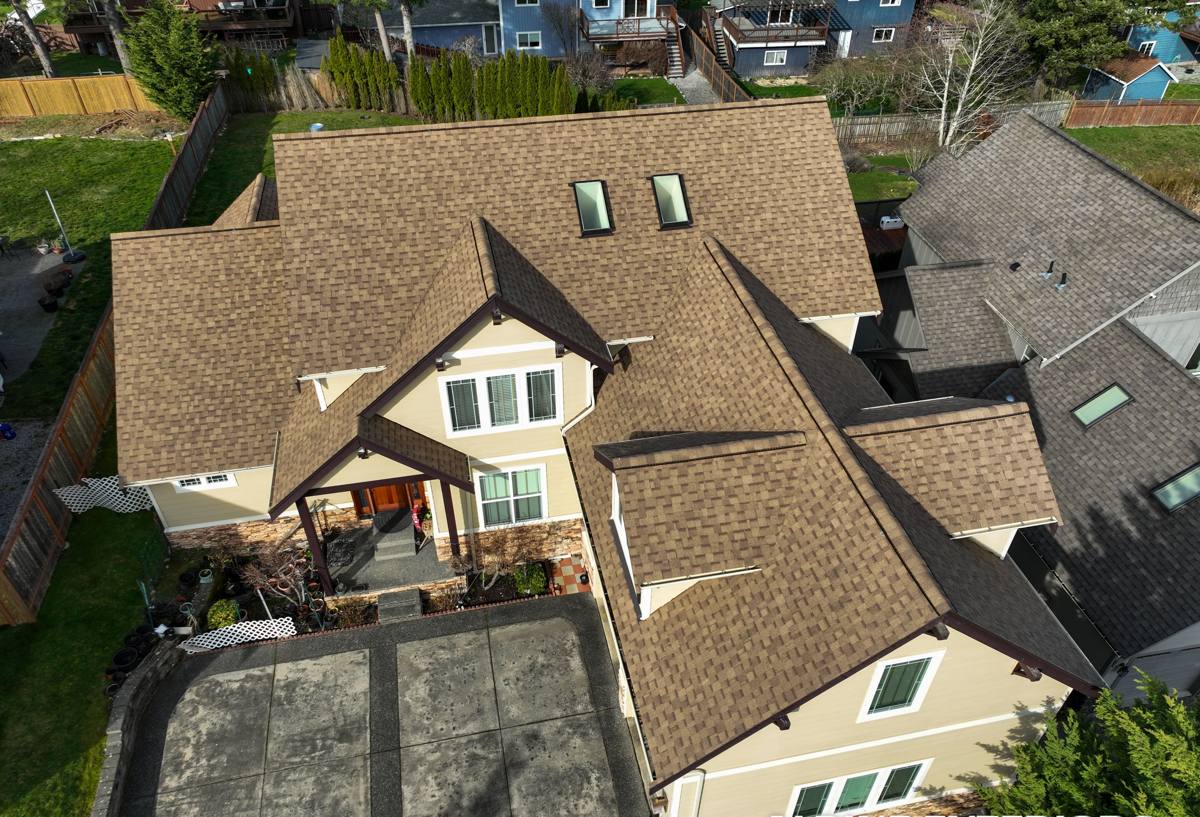
What Actually Counts as Storm Damage
Storm damage isn't always obvious. Some of it is dramatic — missing shingles, a tarp-worthy hole, a soffit torn loose. But a lot of the damage that causes real problems down the line is subtle, and it's the kind that gets missed by a quick ground-level look after a storm passes.
Damage you can usually see
- Missing, cracked, or curled shingles, especially near ridges, edges, and valleys
- Lifted or bent flashing around chimneys, vents, and roof-to-wall transitions
- Dented or creased metal roofing panels or trim
- Visible granule loss collecting in gutters or downspouts
- Debris punctures from tree limbs or wind-blown objects
Damage that hides
Wind can lift a shingle just enough to break its seal without tearing it off, which leaves a spot where wind-driven rain can work its way underneath during the next storm. Nail heads can back out slightly under repeated flexing, breaking the waterproof seal around the shank. Underlayment can tear beneath intact-looking shingles. None of this shows from the ground, and it's exactly the kind of damage that turns into a slow leak, then a soffit stain, then rot — weeks or months after the storm that actually caused it.
Our Storm Damage Repair Process
We approach storm repair the same way regardless of the storm's size, because the risk of missing something is the same whether it was a named hurricane or a rough afternoon squall.
1. Full roof inspection, not just the obvious spot
We walk the entire roof plane, not just the area where damage is visible from the driveway. Wind damage clusters near edges, ridges, and valleys, but it isn't limited to those areas, so we check the whole surface, the flashing details, and the attic side if access allows.
2. Document before we touch anything
We photograph and note damage before starting repairs. If you're planning to file an insurance claim, this documentation needs to happen before materials get replaced, not after.
3. Temporary protection when needed
If there's an active leak path or exposed decking, we get it covered and watertight first. That's a stopgap, not a fix, but it stops interior damage from compounding while repair details get worked out.
4. Repair using matched, wind-rated materials
We repair with materials that match your existing roof as closely as possible and that carry wind ratings appropriate for this exposure — not whatever happens to be on the truck.
5. Final walkthrough
We show you what was damaged, what was repaired, and why — plain explanations, not a sales pitch for a full replacement you don't need.
Repair or Replace? How We Make That Call Honestly
Not every storm-damaged roof needs to be replaced, and not every roof that looks fine after a storm actually is fine. The right call depends on a handful of factors, and we walk through them with you rather than defaulting to whichever answer is more profitable for us.
| Factor | Favors Repair | Favors Replacement |
|---|---|---|
| Age of existing roof | Under 10-12 years, in otherwise good condition | Nearing or past expected service life for the material |
| Extent of damage | Localized to one section or a few isolated spots | Widespread across multiple roof planes |
| Underlying decking | Solid, no rot or soft spots found | Water intrusion has reached and damaged the decking |
| Material availability | Matching shingles or panels are still available | Discontinued product, visible mismatch is unavoidable |
| Storm history | First significant damage event | Repeated storm damage claims over recent years |
If a repair is the honest answer, that's what we'll recommend. If the damage or the roof's condition genuinely points toward replacement, we'll explain exactly why before you commit to anything.
Materials That Make Sense for a Barrier Island
Salt air corrodes exposed metal faster than it does further inland, which matters for fasteners, flashing, and drip edge. We favor corrosion-resistant fastener types and flashing metals for barrier island work, and we pay close attention to fastener placement and sealing, since a properly seated, properly sealed fastener is one of the more common weak points we find on wind-damaged roofs out here.
On shingle roofs, we look for products with wind ratings that hold up to sustained coastal gusts, not just the minimum spec. On metal or tile roofs, correct flashing detail work at penetrations and transitions matters more than the base material itself — most of the leaks we trace back on storm calls start at a flashing detail, not in the middle of an open roof field. We'll talk through material options honestly, including trade-offs in cost, maintenance, and appearance, rather than steering you toward whatever carries the best margin.
Insurance Claims: What to Expect
Every insurance policy and every adjuster is different, so we can't promise a specific outcome on a claim. What we can do is give you documentation that supports your case honestly — clear photos, a written description of the damage, and a repair scope that reflects what actually needs to be fixed, not an inflated estimate.
A few things that tend to help homeowners in Belleair Beach and around Largo when a claim is involved:
- Getting an inspection soon after the storm, before secondary damage (like interior water staining) muddies the picture
- Keeping your own photos and notes in addition to ours
- Understanding your policy's distinction between wind damage and flood damage, since roofs and flooding are often covered under different provisions
- Getting repair estimates from a contractor who will document conditions accurately, not one who promises to "find" more damage to inflate a claim
We'll work with your adjuster and answer their questions directly if that's helpful, but the insurance relationship is between you and your carrier — our job is to give you an honest, well-documented account of the roof's condition.
Why a Crew That Already Works Belleair Beach Matters
Belleair Beach is a small barrier island community, and that has practical implications for storm repair work that a contractor unfamiliar with the area won't anticipate. Access is limited to a couple of bridge crossings, which can matter for scheduling and material delivery right after a widespread storm event when demand across Pinellas County spikes. The town has its own permitting requirements separate from unincorporated Pinellas County or the City of Largo, and building department turnaround can affect how quickly a repair gets started.
Beyond logistics, a crew that has already worked multiple roofs on the island knows what this specific exposure does to a roof over time — which flashing details tend to fail first, which fastener types hold up and which don't, where wind-driven rain typically finds its way in on the common roof styles out here. That's knowledge you build by doing the work here repeatedly, not by showing up once after a storm.
After-Storm Checklist for Belleair Beach Homeowners
- Do a ground-level visual check of your roofline, gutters, and yard for missing shingles or metal debris
- Check ceilings and upper closets for new water stains or soft spots
- Photograph anything unusual before cleaning up debris
- Avoid getting on the roof yourself, especially with standing water or wind still present
- Call for an inspection promptly — small unsealed spots get worse with every subsequent rain, not just the next big storm
- Hold off on major repairs until damage is documented if you plan to file an insurance claim
Serving Belleair Beach from Largo
We're a Largo-based crew that treats Belleair Beach as regular service territory, not an occasional job site. Whether you've got obvious storm damage today or you just want a professional set of eyes on your roof after the last round of weather came through, we're glad to take a look and give you a straight answer — repair, monitor, or replace — with no pressure attached.
If you'd like a free, no-obligation estimate on storm damage roof repair for your Belleair Beach home, use the form below and we'll get in touch to schedule an inspection.